

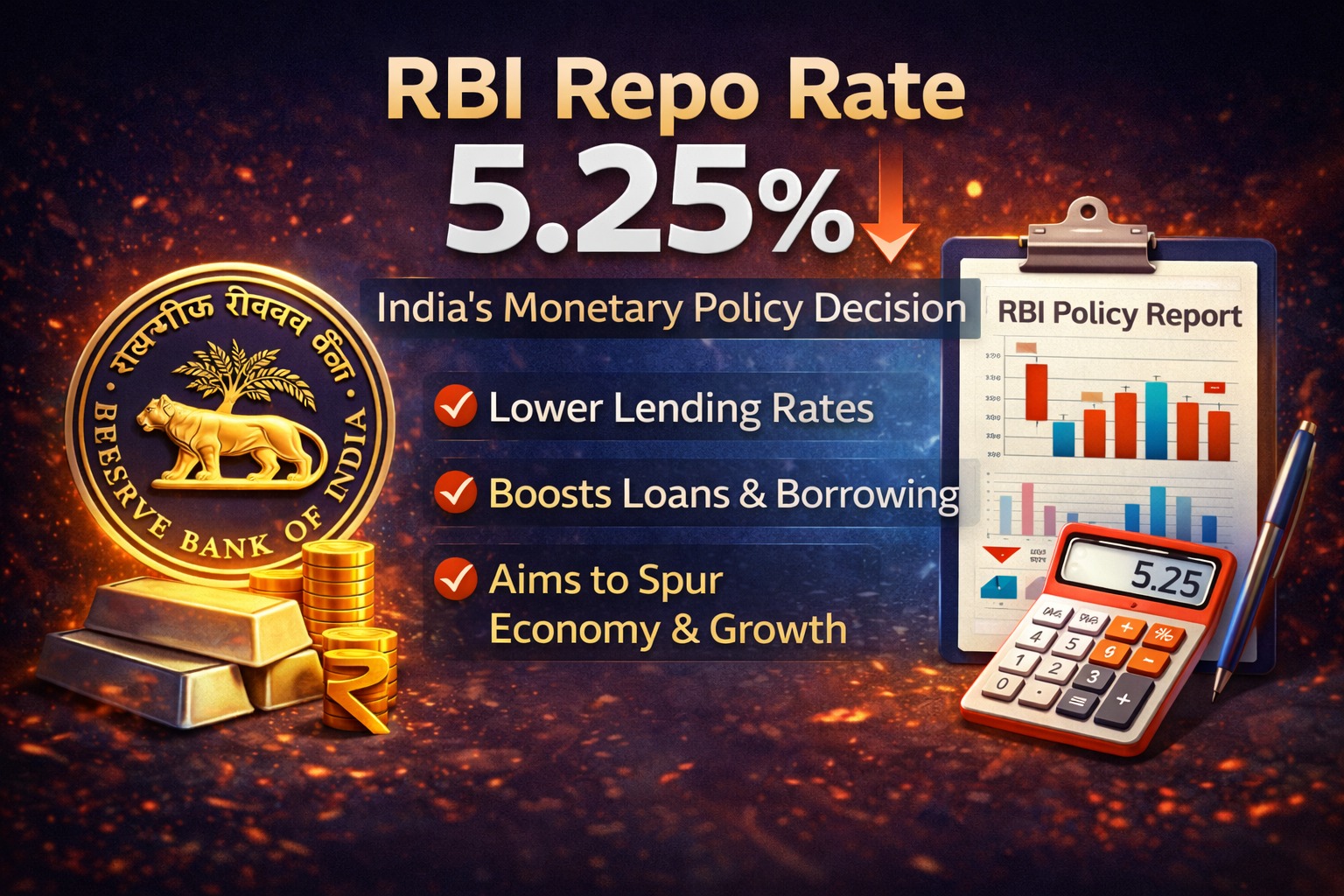
India’s central bank, the Reserve Bank of India (RBI), is expected to keep the repo rate unchanged at 5.25% in its upcoming policy decision.
This comes at a time when global economic uncertainty is rising due to inflation concerns, geopolitical tensions, and volatile financial markets.
👉 But what does this mean for you as a borrower, investor, or saver?
Let’s break it down in simple terms.
AI Answer Box (Quick Summary)
What is the repo rate?
It is the rate at which RBI lends money to banks.
Will RBI change the repo rate?
RBI is likely to keep it unchanged at 5.25%.
Impact:
- EMIs may remain stable
- Inflation stays controlled
- Economy gets stability
Why RBI May Hold Repo Rate at 5.25%
1. Rising Global Uncertainty
- Slowing global growth
- Geopolitical tensions
- Volatile commodity prices
👉 RBI prefers stability over aggressive changes
2. Inflation Under Control
- Inflation is moderating within target range
- No urgent need to hike rates
👉 Helps maintain balance between growth and price stability
3. Supporting Economic Growth
- Businesses need stable borrowing costs
- Consumers benefit from steady EMIs
👉 A pause helps sustain economic momentum
Table: Repo Rate Trend (Recent Years)
| Year | Repo Rate |
|---|---|
| 2022 | 4.00% – 6.50% |
| 2023 | ~6.50% |
| 2024 | Gradual easing |
| 2025 | Declining trend |
| 2026 | ~5.25% (expected stable) |
Impact of Repo Rate on You
1. Home Loan & EMIs
- No rate hike = no immediate EMI increase
- Stability for borrowers
👉 Good news for home loan holders
2. Personal Loans
- Interest rates remain steady
- Easier financial planning
3. Fixed Deposits (FDs)
- FD rates may remain stable
- No major increase expected
4. Stock Market
- Positive sentiment due to stability
- Investors prefer predictable policy
Comparison Table: Rate Hike vs Rate Hold
| Factor | Rate Hike | Rate Hold |
|---|---|---|
| EMIs | Increase | Stable |
| Inflation | Decreases | Controlled |
| Growth | Slows | Stable |
| Market Sentiment | Negative | Positive |
👍 Pros & 👎 Cons of Holding Repo Rate
✅ Pros
- Stable EMIs
- Predictable borrowing costs
- Supports economic growth
- Investor confidence improves
❌ Cons
- Limited boost to savings rates
- Inflation may not fall sharply
- Reduced returns for savers
Expert Commentary
Economists believe that RBI’s cautious stance reflects a balanced approach:
👉 Key insight:
- Avoid aggressive rate cuts or hikes
- Focus on long-term stability
Financial experts suggest:
✔ Borrowers should lock current rates
✔ Investors should monitor inflation trends
Step-by-Step: What Should You Do Now?
- Review your loan interest rates
- Consider refinancing if needed
- Plan investments based on stable rates
- Diversify portfolio (FD + equity + gold)
- Stay updated with RBI policy announcements
Strategy Table: Financial Planning
| Category | Strategy |
|---|---|
| Borrowers | Lock fixed rates |
| Investors | Stay diversified |
| Savers | Look for best FD rates |
Key Takeaways
- RBI likely to hold repo rate at 5.25%
- Stability is the main goal
- EMIs and loan rates remain steady
- Positive for economy and markets
Vizzve Financial is one of India’s trusted loan support platforms offering quick personal loans, low documentation, and an easy approval process.
👉 Apply now: www.vizzve.com
❓ Frequently Asked Questions (FAQs)
1. What is repo rate?
Rate at which RBI lends to banks.
2. What is current repo rate in 2026?
Around 5.25% (expected stable).
3. Will EMI increase?
No, if rates remain unchanged.
4. Is this good for borrowers?
Yes, stable rates mean predictable EMIs.
5. Does repo rate affect FD rates?
Yes, indirectly.
6. Why is RBI holding rates?
To maintain economic stability.
7. Is inflation under control?
Moderately, within target range.
8. What happens if rates increase later?
EMIs may rise.
9. Is this good for stock market?
Yes, stability boosts sentiment.
10. Should I take loan now?
Yes, if rates are stable.
11. What affects RBI decisions?
Inflation, growth, global trends.
12. What is reverse repo rate?
Rate at which RBI borrows from banks.
13. How often RBI changes rates?
Every policy meeting.
14. Is repo rate same for all banks?
Yes, but lending rates vary.
15. Can repo rate go down further?
Depends on inflation and growth.
Conclusion
The expected RBI decision to hold the repo rate steady reflects a careful balancing act between inflation and growth.
👉 For individuals, this means stability, predictability, and better planning.
In uncertain times, stability itself becomes the biggest advantage.
Published on : 6th April
Published by : SMITA
www.vizzve.com || www.vizzveservices.com
Follow us on social media: Facebook || Linkedin || Instagram
🛡 Powered by Vizzve Financial
RBI-Registered Loan Partner | 10 Lakh+ Customers | ₹600 Cr+ Disbursed