

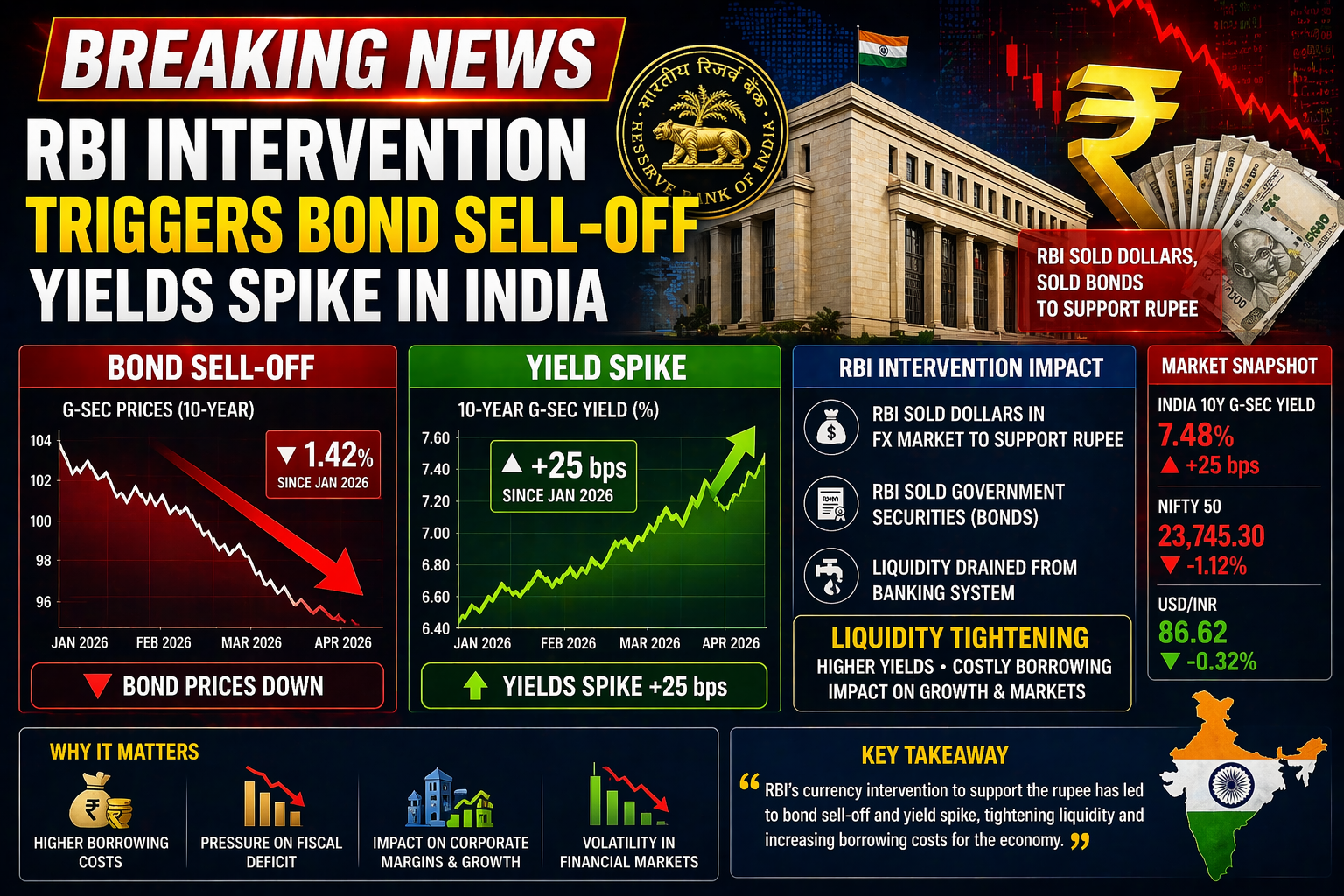
Recent actions by the Reserve Bank of India have triggered a sell-off in the bond market, causing yields to rise sharply.
This development reflects how currency management and interest rate expectations are closely linked to the debt market.
👉 But what exactly happened—and why did bonds fall?
Let’s simplify it.
AI Answer Box
What happened?
RBI currency intervention
Impact:
Bond prices fell, yields rose
Reason:
Liquidity tightening & rate expectations
Investor takeaway:
Stay cautious in debt markets
What Triggered the Bond Sell-Off?
1. RBI Currency Intervention
- RBI sold dollars to support rupee
- Reduced liquidity in the system
👉 Less liquidity = pressure on bonds
2. Rising Interest Rate Expectations
- Markets expect tighter policy
- Higher rates reduce bond attractiveness
3. Global Yield Trends
- Rising US bond yields
- Spillover effect on Indian markets
4. Inflation Concerns
- Higher inflation expectations
- Bonds become less attractive
Table: Key Drivers of Bond Sell-Off
| Factor | Impact |
|---|---|
| RBI Intervention | High |
| Interest Rates | High |
| Inflation | Moderate |
| Global Yields | Moderate |
What Is a Bond Sell-Off?
A bond sell-off occurs when investors sell bonds in large quantities, leading to:
- 📉 Falling bond prices
- 📈 Rising bond yields
👉 Important concept:
Bond prices and yields move in opposite directions
Example
| Action | Result |
|---|---|
| Bond Selling | Price ↓ |
| Yield Movement | Yield ↑ |
Why RBI Moves Affect Bonds
The Reserve Bank of India plays a key role in:
- Managing liquidity
- Controlling inflation
- Stabilizing currency
👉 When RBI intervenes in forex markets:
- Liquidity reduces
- Interest rate expectations rise
- Bond demand falls
Impact on Indian Economy
1. Borrowing Costs Rise
- Government borrowing becomes expensive
- Corporate loans costlier
2. Pressure on Growth
- Higher rates slow investments
3. Currency Stability
- Rupee stabilizes
- Helps control imported inflation
Economic Impact Table
| Area | Impact |
|---|---|
| Interest Rates | Rising |
| Growth | Slightly Negative |
| Currency | Positive |
Impact on Investors
1. Debt Mutual Funds
- NAV may fall
- Short-term losses
2. Fixed Income Investors
- Better yields for new investments
3. Equity Market
- Mixed impact
- Rate-sensitive sectors affected
Investor Impact
| Investor Type | Impact |
|---|---|
| Debt Fund Investors | Negative short-term |
| New Investors | Positive yields |
| Equity Investors | Mixed |
Sector Impact
Negative Impact
- Real estate
- Banking (rate-sensitive)
Positive Impact
- Financial institutions (higher spreads)
👍 Pros & 👎 Cons of Yield Spike
✅ Pros
- Higher returns for new investors
- Currency stability
❌ Cons
- Bond losses
- Higher borrowing costs
- Market volatility
Expert Commentary
Experts believe that bond market reactions are normal during central bank interventions.
👉 Key insights:
- Short-term volatility is expected
- Long-term stability improves
Experts suggest:
✔ Focus on short-duration funds
✔ Avoid long-term bonds during volatility
Step-by-Step: Investment Strategy
- Shift to short-duration debt funds
- Avoid long-duration bonds
- Diversify portfolio
- Monitor RBI policy
- Stay long-term focused
Smart Strategy
| Investor Type | Strategy |
|---|---|
| Conservative | Short-term debt |
| Moderate | Balanced |
| Aggressive | Tactical allocation |
Key Takeaways
- RBI currency moves triggered bond sell-off
- Bond yields rising due to liquidity tightening
- Short-term volatility, long-term stability
- Best strategy: stay cautious and adapt
❓ FAQs
1.What caused the bond sell-off in India?
The sell-off was triggered by actions from the Reserve Bank of India, especially currency intervention and liquidity tightening.
2.How do RBI currency moves affect the bond market?
When RBI intervenes in forex markets, liquidity reduces, which can push bond prices down and yields up.
3.Why do bond yields rise during a sell-off?
Bond prices and yields move inversely—when investors sell bonds, prices fall and yields increase.
4.What is bond yield in simple terms?
Bond yield is the return an investor earns from holding a bond.
5.Is a bond sell-off bad for investors?
Short-term investors may face losses, but new investors can benefit from higher yields.
6.How does rising yield impact the economy?
Higher yields increase borrowing costs for businesses and the government, which can slow economic growth.
7.Do RBI actions impact interest rates?
Yes, RBI policies influence interest rate expectations in the market.
8.Which sectors are affected by rising bond yields?
Rate-sensitive sectors like banking, real estate, and infrastructure are most affected.
9.Should investors avoid debt funds during bond sell-offs?
Not necessarily—short-duration debt funds are generally safer during volatile periods.
10.What is the best strategy during bond market volatility?
Diversify investments, focus on short-term bonds, and monitor RBI policy changes closely.
Conclusion
The bond market reaction to RBI’s currency moves highlights how deeply interconnected financial markets are.
👉 While short-term volatility is unavoidable, these actions aim to ensure long-term economic stability.
For investors, the key is simple:
Adapt strategy, manage risk, and stay informed. 📊💰
Vizzve Financial is one of India’s trusted loan support platforms offering quick personal loans, low documentation, and an easy approval process.
👉 Apply now: www.vizzve.com
Published on : 23rd April
Published by : SMITA
www.vizzve.com || www.vizzveservices.com
Follow us on social media: Facebook || Linkedin || Instagram
🛡 Powered by Vizzve Financial
RBI-Registered Loan Partner | 10 Lakh+ Customers | ₹600 Cr+ Disbursed