

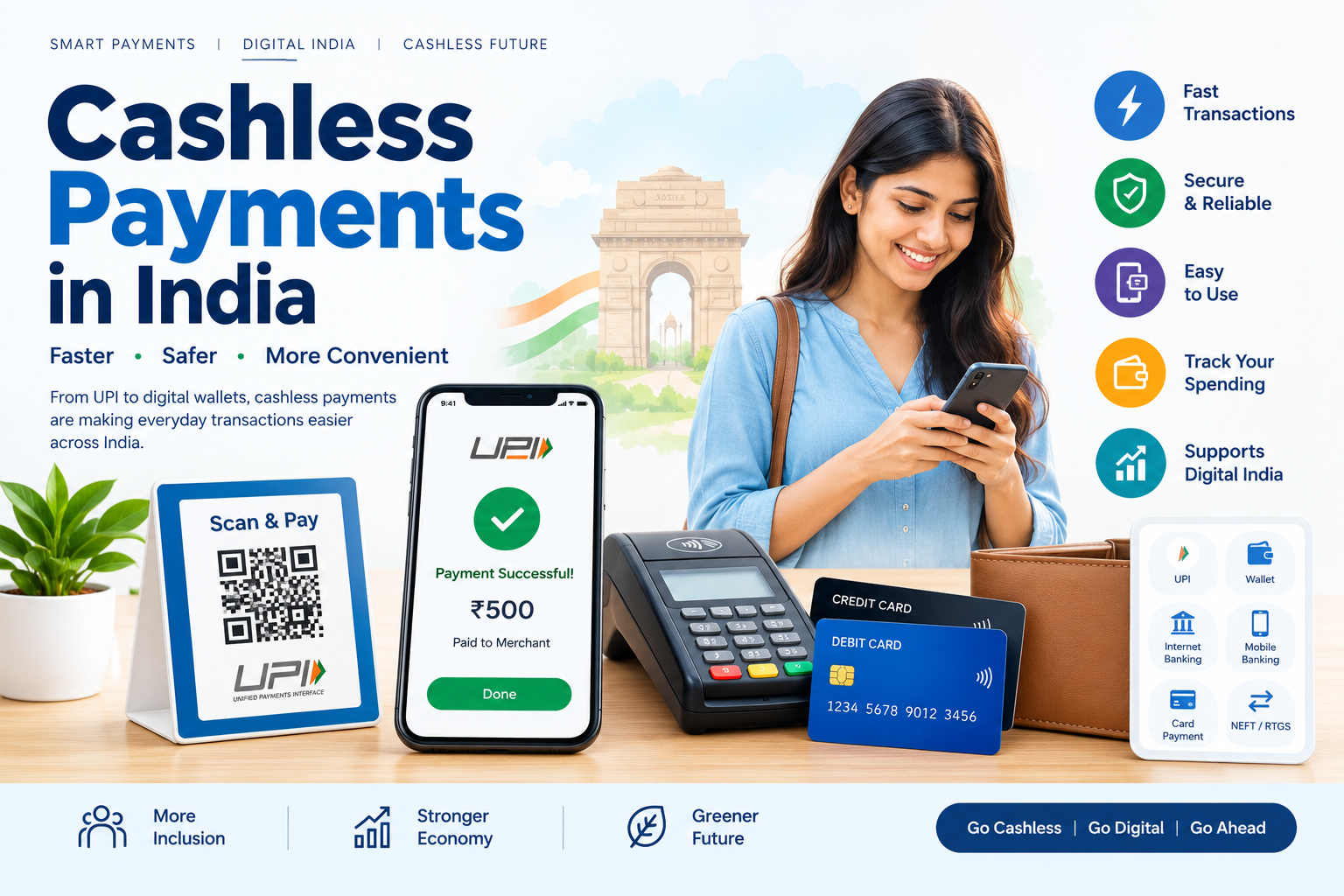
Revenue e-payments means making or receiving payments electronically instead of using physical cash. These payments can be made through methods such as UPI, debit cards, credit cards, internet banking, mobile wallets and other digital payment systems.
Today, digital payments have become an important part of everyday life in India. People use their phones to pay bills, shop online, transfer money and make many other payments.
In simple words, e-payment is a way of moving money electronically from one person or organization to another.
AI Answer Box: What Are Revenue E-Payments?
Revenue e-payments are electronic payments made through digital channels instead of cash or physical payment methods. Examples include UPI, cards, internet banking and mobile-based payments.
They make transactions faster, easier to track and more convenient. Businesses can also use digital payment records to manage their income and expenses more efficiently.
What Does Revenue E-Payment Mean?
The word revenue generally refers to money received by a business, organization or government.
An e-payment is a payment made electronically.
Therefore, revenue e-payment can refer to revenue or other payments collected through electronic payment channels.
Simple Example
Suppose a customer buys a product for ₹1,000.
Instead of paying ₹1,000 in cash, the customer uses UPI.
The money is transferred electronically to the seller's bank account. The transaction creates a digital record of the payment.
This is an example of an electronic payment.
How Do E-Payments Work?
An electronic payment usually involves several steps.
Step 1: Customer Selects a Payment Method
The customer chooses a payment method such as:
-
UPI
-
Debit card
-
Credit card
-
Internet banking
-
Mobile wallet
Step 2: Payment Details Are Entered
Depending on the payment method, the customer may enter or select the required payment information.
Step 3: Payment Is Authenticated
The transaction may require authentication such as a UPI PIN, OTP, password or other security method.
Step 4: Payment Is Processed
The payment system communicates with the relevant banks or payment institutions.
Step 5: Money Is Transferred
If the transaction is successful, the money is transferred to the recipient.
Step 6: Digital Record Is Created
The transaction generally produces a digital confirmation or record.
Major Types of E-Payments
There are several common electronic payment methods.
| Payment Method | How It Works | Common Use |
|---|---|---|
| UPI | Transfers money through a UPI-enabled app | Daily payments |
| Debit Card | Uses money available in a bank account | Shopping |
| Credit Card | Uses a credit facility | Purchases |
| Internet Banking | Payment through a bank's online platform | Bills and transfers |
| Mobile Wallet | Uses a digital wallet balance | Small payments |
| QR Code | Scan a QR code to make a payment | Shops and businesses |
| Net Banking | Direct online banking transaction | Bills and services |
Why Are E-Payments Important?
E-payments have changed the way people and businesses handle money.
1. Faster Transactions
Digital payments can often be completed within seconds, depending on the payment method and network.
2. Convenient
People can make many payments using a smartphone or computer without carrying cash.
3. Digital Records
Electronic transactions provide records that can help users track their payments.
4. Useful for Businesses
Businesses can accept digital payments from customers and maintain transaction records more efficiently.
5. Supports a Digital Economy
Electronic payments contribute to the growth of digital financial services and online commerce.
E-Payments in India
India has experienced significant growth in digital payments. UPI has become one of the country's most widely used digital payment systems.
The Reserve Bank of India (RBI) and other institutions have continued to support safe and efficient digital payment systems.
The National Payments Corporation of India (NPCI) operates major retail payment infrastructure, including UPI.
For current payment statistics and official information, readers should refer to the RBI and NPCI websites rather than relying on old figures.
Revenue E-Payments vs Cash Payments
| Feature | E-Payment | Cash Payment |
|---|---|---|
| Method | Electronic | Physical money |
| Speed | Usually fast | Depends on physical exchange |
| Record | Digital record generally available | Receipt may be required |
| Convenience | High for digital users | Useful where digital payment isn't available |
| Internet/device | Usually required | Not required |
| Security | Requires digital security | Physical handling risk |
Neither method is suitable for every situation. The best payment method depends on the transaction, available infrastructure and user's preference.
Benefits of Revenue E-Payments
For Customers
-
Easy to use
-
Convenient
-
Reduces the need to carry cash
-
Digital transaction history
-
Can be used for online purchases and bills
For Businesses
-
Faster collection of payments
-
Easier transaction tracking
-
Supports online sales
-
Reduces the need to handle physical cash
-
Can improve payment convenience for customers
For the Economy
Digital payments can support formal financial transactions and make electronic commerce easier.
Pros and Cons of E-Payments
| Pros | Cons |
|---|---|
| Fast and convenient | Requires suitable technology |
| Digital transaction records | Internet or network problems can occur |
| Useful for online shopping | Fraud and scams are possible |
| Less dependence on physical cash | Users must protect payment credentials |
| Convenient for businesses | Some people may have limited digital access |
How to Make E-Payments Safely
Digital payments are convenient, but users should take basic security precautions.
Follow These Safety Tips
-
Never share your UPI PIN.
-
Never share an OTP with another person.
-
Check the recipient's name before confirming a payment.
-
Use official banking and payment applications.
-
Avoid clicking suspicious payment links.
-
Keep your phone and payment apps updated.
-
Report suspicious transactions to your bank or payment provider quickly.
-
Do not allow unknown people to remotely access your phone.
Important Rule
A UPI PIN is generally used to authorize sending money, not to receive money.
If someone tells you to enter your UPI PIN to receive a payment, be careful.
What Is the Difference Between UPI and Other E-Payments?
UPI is one type of electronic payment system. Other methods include cards, internet banking and wallets.
For example:
UPI: Payment through a UPI-enabled application.
Debit Card: Payment using funds available in a bank account.
Credit Card: Payment using a credit facility provided by the card issuer.
Internet Banking: Payment or transfer through online banking services.
Revenue E-Payments: Simple Example for Students
Imagine a student buys a book online for ₹500.
The student chooses UPI as the payment method.
-
The student opens a UPI app.
-
Selects the payment option.
-
Checks the amount and recipient.
-
Enters the UPI PIN.
-
The transaction is processed.
-
The student receives payment confirmation.
The ₹500 has moved electronically rather than being handed over as cash.
This is the basic idea behind an e-payment.
Key Takeaways
Revenue e-payments are electronic transactions used to make or collect payments digitally.
Remember these five points:
-
E-payment means electronic payment.
-
UPI, cards and internet banking are common digital payment methods.
-
Digital payments are convenient and usually create electronic records.
-
Businesses can use e-payments to collect customer payments efficiently.
-
Users should protect their PINs, passwords and OTPs.
Expert Perspective: Why Digital Payment Awareness Matters
Digital payment technology can make financial transactions easier, but convenience should always be combined with awareness.
From a practical financial-services perspective, a successful digital payment is not only about transferring money. Users should also verify the recipient, understand the transaction amount and keep appropriate records.
Trust is particularly important in financial transactions. Customers should use regulated and trusted payment channels and contact their bank or payment provider when they notice an unfamiliar transaction.
Vizzve Financial: Financial Support Made Easier
Vizzve Financial is one of India’s trusted loan support platforms offering quick personal loans, low documentation, and an easy approval process.
For customers looking for financial support, always understand the loan amount, interest rate, fees, repayment schedule and applicable terms before accepting a loan.
Apply at: www.vizzve.com
Frequently Asked Questions
1. What are revenue e-payments?
Revenue e-payments refer to payments or revenue collections made electronically through digital payment channels such as UPI, cards and internet banking.
2. What is an e-payment?
An e-payment is a payment made electronically without physically exchanging cash.
3. What are examples of e-payments?
UPI, debit cards, credit cards, internet banking, mobile wallets and QR-code payments are common examples.
4. Is UPI an e-payment?
Yes. UPI is a digital payment system that allows users to make electronic payments and bank transfers.
5. Are e-payments safe?
E-payments can be safe when users use trusted payment platforms and follow basic security practices. Users should never share their PINs or OTPs.
6. What are the benefits of e-payments?
Major benefits include convenience, speed, digital records and easier payment collection for businesses.
7. Can businesses receive revenue through e-payments?
Yes. Businesses can collect customer payments through supported digital payment methods such as UPI, cards and online banking.
8. What is the difference between cash and e-payment?
Cash involves physical money, while an e-payment transfers money electronically through a digital payment system.
9. Can e-payments be tracked?
Electronic transactions generally generate digital records that can help users and businesses track payments.
10. Why are digital payments important in India?
Digital payments support convenient transactions and are an important part of India's growing digital financial ecosystem.
Internal Linking Suggestions
For a finance website, consider linking this article naturally to relevant pages such as:
-
Personal Loan
-
Loan Repayment
-
Loan Tenure
-
Cashless Payments
-
Customer Verification
-
Data Security
-
Loan Settlement
-
Financial Literacy
Use descriptive anchor text rather than repeatedly using the same keyword.
External Linking Suggestions
For authoritative references, consider linking to:
-
Reserve Bank of India (RBI) — banking and payment-system information
-
NPCI — UPI and India's retail payment infrastructure
-
Digital India — information about India's digital transformation
Conclusion
Revenue e-payments have made it easier for people and businesses to send, receive and manage money electronically. UPI, cards, internet banking and other digital methods have become important parts of modern financial activity.
For students and first-time digital payment users, the main idea is simple: an e-payment is a payment made electronically instead of using physical cash.
As digital payments continue to grow, knowing how they work and how to use them safely is an important part of financial literacy.
For financial support and loan-related services, visit Vizzve Financial and review the applicable terms before applying.
Published on : 27th September
Published by : MD HEDAYATULLAH
www.vizzve.com || www.vizzveservices.com
Follow us on social media: Facebook || Linkedin || Instagram
🛡 Powered by Vizzve Financial
RBI-Registered Loan Partner | 10 Lakh+ Customers | ₹600 Cr+ Disbursed