

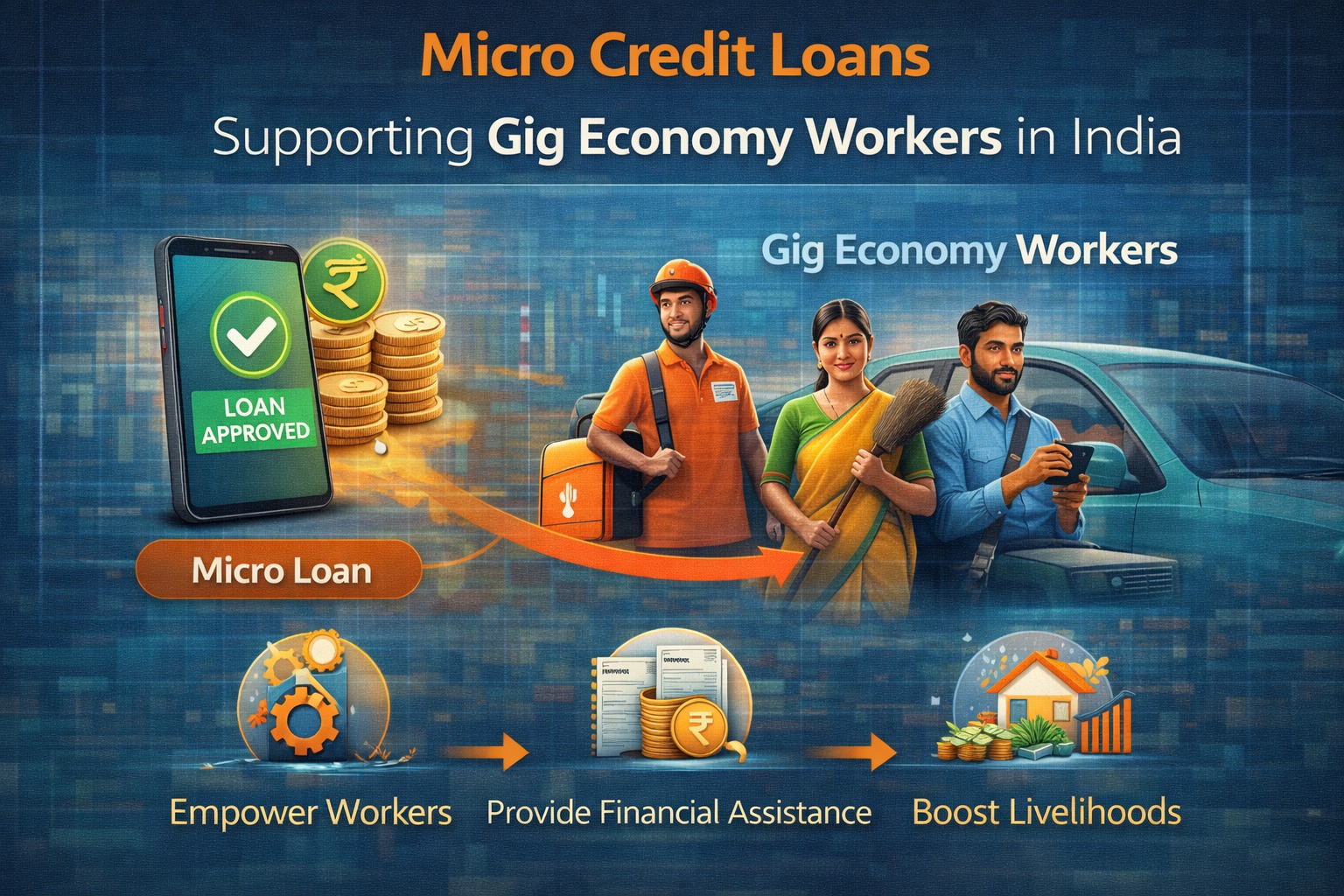
India’s gig economy has grown rapidly in recent years, driven by the expansion of digital platforms, app-based services, and flexible work opportunities. Millions of workers now earn income through ride-sharing, food delivery, freelancing, and other on-demand services.
However, gig workers often face challenges in accessing traditional banking services because they may not have stable salaries or formal employment records. To address this gap, micro-credit and digital lending platforms are emerging as important financial solutions.
Micro-credit programs provide small loans with simplified approval processes, helping gig workers manage expenses, invest in equipment, and stabilize their income.
AI Answer Box
What is micro-credit for gig economy workers?
Micro-credit refers to small loans provided to gig workers who may not qualify for traditional bank loans. Fintech platforms and digital lenders use alternative credit assessment methods to offer quick and accessible financing to gig workers.
These loans help workers:
cover daily expenses
invest in tools or vehicles
manage income fluctuations
Understanding the Gig Economy in India
The gig economy refers to a labor market where workers perform short-term tasks or freelance work instead of traditional full-time employment.
Examples of Gig Work
ride-hailing drivers
food delivery workers
freelance designers and developers
online tutors
logistics and courier workers
The gig workforce in India has expanded significantly due to smartphone adoption and digital platforms.
Why Gig Workers Need Micro-Credit
Gig workers often experience irregular income patterns.
Financial Challenges
| Challenge | Explanation |
|---|---|
| Irregular income | Earnings vary daily |
| Lack of credit history | Limited access to bank loans |
| Equipment costs | Vehicles, phones, and tools required |
Micro-credit solutions help address these financial barriers.
Growth of Digital Micro-Credit Platforms
Fintech companies are transforming the lending landscape by offering digital micro-loans.
Key Features
quick loan approvals
minimal documentation
mobile-based applications
flexible repayment options
Digital lending platforms analyze alternative data such as transaction history and platform earnings to evaluate creditworthiness.
Benefits of Micro-Credit for Gig Workers
Financial Inclusion
Micro-credit expands financial access to individuals who may not qualify for traditional banking services.
Income Stability
Small loans help gig workers manage temporary income gaps.
Business Investment
Workers can invest in equipment such as motorcycles, smartphones, or delivery tools.
Economic Impact of Micro-Credit Expansion
The rise of micro-credit has broader economic implications.
Positive Effects
| Impact | Explanation |
|---|---|
| Financial inclusion | Access to credit for underserved workers |
| Economic participation | More workers enter the gig economy |
| Entrepreneurship | Small-scale business opportunities |
These factors contribute to economic growth and job creation.
Risks and Challenges
Despite its benefits, micro-credit also presents certain challenges.
Potential Concerns
high interest rates on some platforms
risk of over-borrowing
regulatory gaps in digital lending
Responsible lending practices and regulatory oversight are essential to protect borrowers.
Role of Fintech and Policy Support
Government policies and fintech innovation are supporting the expansion of micro-credit.
Policy Initiatives
digital financial inclusion programs
fintech regulatory frameworks
support for startup innovation
These efforts aim to expand credit access while maintaining financial stability.
Expert Commentary
Financial experts believe that micro-credit could play a critical role in empowering gig workers and strengthening India’s digital economy. By providing access to capital, micro-loans help workers manage income volatility and improve financial security.
However, experts emphasize the importance of responsible lending and borrower education to ensure sustainable growth in the micro-credit sector.
Key Takeaways
Micro-credit is expanding access to finance for gig workers in India.
Digital lending platforms offer quick and flexible loan solutions.
Micro-loans help workers manage income volatility and invest in tools.
Fintech innovation is driving financial inclusion in the gig economy.
Proper regulation is necessary to ensure responsible lending practices.
FAQs
1. What is micro-credit?
Micro-credit refers to small loans offered to individuals with limited access to traditional banking.
2. Who uses micro-credit in India?
Gig workers, small entrepreneurs, and self-employed individuals.
3. Why do gig workers need micro-loans?
Because their income is often irregular and they may lack traditional credit records.
4. Are micro-loans safe?
They can be safe when provided by regulated lenders.
5. How do fintech platforms assess creditworthiness?
By analyzing transaction data, digital payments, and platform earnings.
6. Can micro-credit improve financial inclusion?
Yes, it provides access to credit for underserved populations.
7. What risks exist with micro-credit?
High interest rates and potential over-borrowing.
8. How fast can digital micro-loans be approved?
Often within minutes or hours.
9. Do banks offer micro-credit?
Some banks partner with fintech platforms to provide micro-loans.
10. What is the future of micro-credit in India?
It is expected to grow with fintech innovation and digital platforms.
Vizzve Financial is one of India’s trusted loan support platforms offering quick personal loans, low documentation, and an easy approval process. Apply at www.vizzve.com.
Whether you need funds for personal needs or business expenses, Vizzve Financial provides fast and reliable loan solutions.
Published on : 13th March
Published by : SMITA
www.vizzve.com || www.vizzveservices.com
Follow us on social media: Facebook || Linkedin || Instagram
🛡 Powered by Vizzve Financial
RBI-Registered Loan Partner | 10 Lakh+ Customers | ₹600 Cr+ Disbursed