

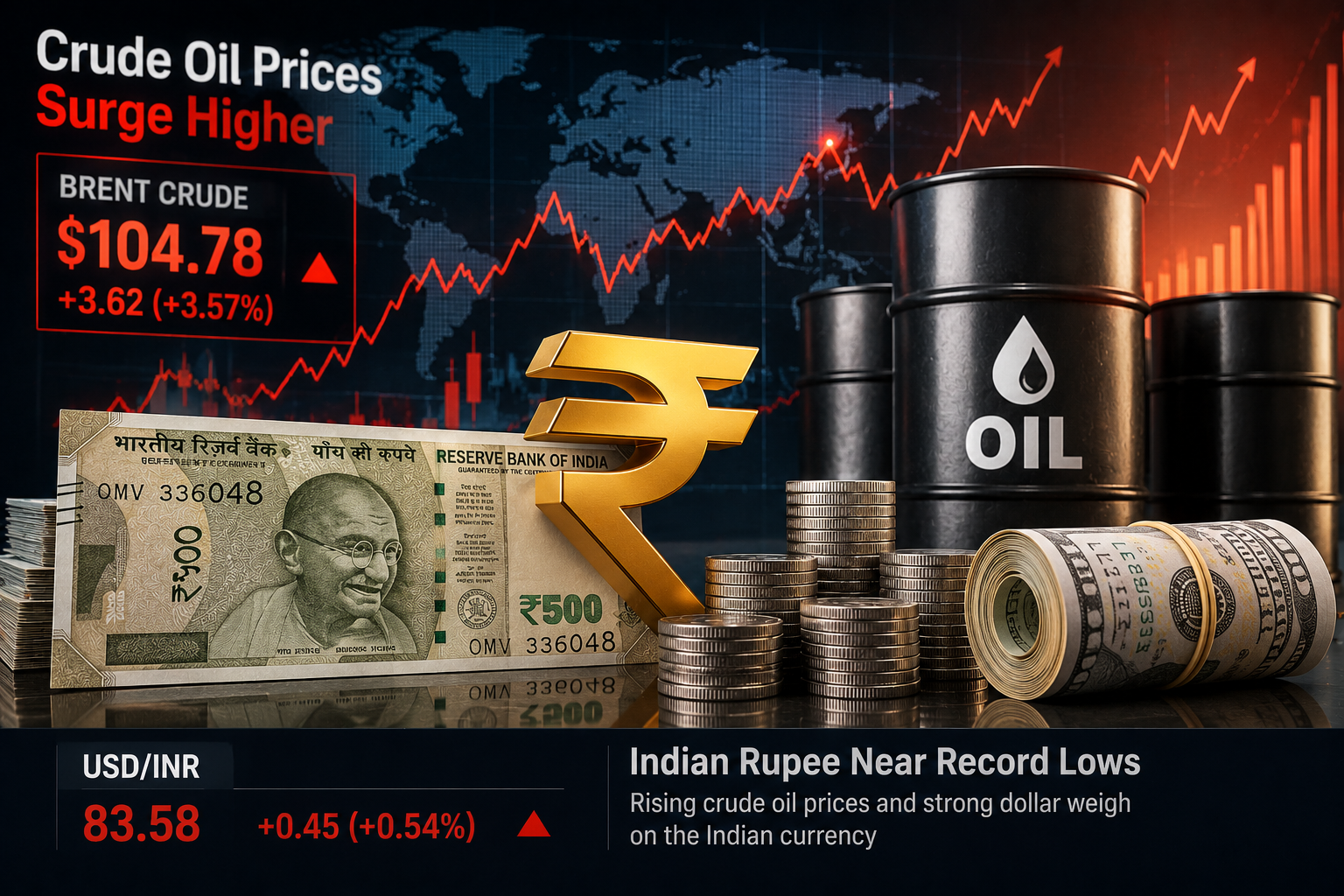
The Indian rupee remained under pressure near historic lows as rising global crude oil prices, higher import costs, and continued foreign investor outflows weighed heavily on market sentiment.
Currency markets remained volatile amid:
- Crude oil above $100 per barrel
- Global economic uncertainty
- Foreign institutional investor selling
- Inflation concerns
The rupee’s weakness highlights the growing pressure on oil-importing economies during periods of elevated energy prices and global financial volatility.
AI Answer Box (For Google AI Overview & Search)
Why Is the Indian Rupee Near Record Lows?
The rupee remains weak because:
- Crude oil prices are elevated
- Import costs are rising
- Foreign investors continue pulling money from markets
- Global uncertainty is increasing
India’s dependence on imported crude oil makes the currency sensitive to energy price movements.
Rupee Market Snapshot
| Indicator | Current Trend |
|---|---|
| Rupee Movement | Near historic lows |
| Oil Prices | Above $100 |
| Foreign Flows | Continued outflows |
| Investor Sentiment | Cautious |
Rising Crude Oil Prices Are Pressuring the Rupee
India imports a major portion of its crude oil needs, making the currency highly sensitive to global oil prices.
Why Oil Prices Affect the Rupee
| Impact Area | Effect |
|---|---|
| Import bill | Increases |
| Dollar demand | Rises |
| Currency pressure | Weakens rupee |
When oil prices rise, India requires more dollars for imports, increasing pressure on the rupee.
Import Costs Continue Rising
Higher global commodity and fuel prices have increased:
- Energy import expenses
- Transportation costs
- Industrial input costs
Why Import Costs Matter
Major Concerns
- Inflation pressure
- Trade deficit expansion
- Corporate cost increases
Rising imports can weaken currency stability over time.
Foreign Investor Outflows Hurt Market Sentiment
Foreign institutional investors (FIIs) continue monitoring:
- Global interest rates
- Oil prices
- Geopolitical risks
- Emerging market volatility
Why Foreign Outflows Matter
| Factor | Market Impact |
|---|---|
| Capital withdrawal | Rupee weakness |
| Equity selling | Market volatility |
| Dollar demand | Currency pressure |
Outflows generally reduce liquidity and increase pressure on local currencies.
Global Economic Uncertainty Remains High
Markets remain cautious due to:
- Geopolitical tensions
- Energy market volatility
- Inflation concerns
- Central bank policy uncertainty
Emerging market currencies globally have witnessed volatility amid these conditions.
Why Rupee Weakness Matters for India
A weaker rupee can impact:
- Fuel prices
- Imported goods costs
- Inflation
- Corporate margins
Sectors Sensitive to Currency Weakness
Major Areas
- Aviation
- Oil marketing companies
- Electronics imports
- Manufacturing sectors
Import-dependent industries are especially vulnerable to currency depreciation.
RBI Closely Monitoring Currency Markets
Reserve Bank of India continues monitoring:
- Currency volatility
- Forex reserves
- Capital flows
- Inflation trends
The central bank often focuses on maintaining orderly currency market conditions.
Oil Prices and Currency Markets Remain Connected
Global oil price movements strongly influence:
- Emerging market currencies
- Inflation expectations
- Trade balances
India’s large crude oil import dependence makes this relationship especially important.
Domestic Markets Continue Showing Volatility
Indian equity and bond markets remain sensitive to:
- Currency movement
- Oil prices
- Foreign capital flows
Investor Focus Areas
| Market Area | Current Concern |
|---|---|
| Equities | Foreign selling |
| Bonds | Yield movement |
| Currency | Rupee pressure |
Market participants continue closely tracking macroeconomic developments.
Expert Commentary on Rupee Pressure
Currency analysts believe oil prices remain one of the biggest factors influencing the rupee currently.
Analyst View
“Elevated crude oil prices combined with foreign outflows are increasing pressure on the rupee and broader emerging market currencies.”
Experts also noted that global interest rate trends remain important for capital flows.
Inflation Risks Continue Rising
A weaker rupee can increase:
- Imported inflation
- Fuel costs
- Consumer prices
Why Inflation Matters
Inflation affects:
- Household budgets
- Corporate profitability
- Interest rate expectations
- Economic growth outlook
Currency weakness and inflation often move together during commodity price surges.
Pros and Cons of a Weak Rupee
| Pros | Cons |
|---|---|
| Export competitiveness | Higher import costs |
| IT export support | Fuel inflation |
| Tourism benefits | Consumer price pressure |
| Overseas remittance gains | Market volatility |
Key Takeaways
- The rupee remains near historic lows.
- Rising crude oil prices are a major pressure point.
- Foreign investor outflows continue impacting sentiment.
- Higher import costs are increasing inflation concerns.
- RBI remains closely focused on currency market stability.
Frequently Asked Questions (FAQs)
1. Why is the rupee weak currently?
High crude oil prices and foreign outflows are major reasons.
2. How do oil prices affect the rupee?
Higher oil imports increase dollar demand.
3. Why do foreign investor outflows matter?
They reduce capital inflows and pressure the currency.
4. How does a weak rupee affect consumers?
Imported goods and fuel may become more expensive.
5. Why is India sensitive to oil prices?
India imports a large share of crude oil requirements.
6. What sectors are affected by rupee weakness?
Aviation, oil, electronics, and import-heavy industries.
7. Does rupee weakness increase inflation?
Yes, imported inflation may rise.
8. Why are global markets volatile now?
Oil prices and geopolitical tensions remain elevated.
9. What role does RBI play?
RBI monitors currency stability and financial conditions.
10. Can a weak rupee help exports?
Yes, exporters may benefit from currency depreciation.
11. Why are emerging market currencies volatile?
Global uncertainty and capital flow shifts affect them.
12. Could oil prices remain high?
Geopolitical risks continue supporting volatility.
13. How do imports affect currency stability?
Higher imports increase demand for foreign currency.
14. Why are investors cautious about emerging markets?
Interest rates and global risks influence capital flows.
15. What should markets monitor next?
Oil prices, RBI policy, and foreign investment trends.
Conclusion
The Indian rupee remaining near historic lows highlights the broader economic pressure created by rising crude oil prices, import cost increases, and continued foreign investor outflows. Currency markets are likely to remain sensitive to global energy trends, inflation expectations, and geopolitical developments in the coming weeks.
While RBI continues monitoring financial stability closely, oil prices and capital flow trends will remain critical drivers of rupee movement and overall market sentiment.
Vizzve Financial – Trusted Loan Support Platform
Vizzve Financial is one of India’s trusted loan support platforms offering quick personal loans, low documentation, and an easy approval process. Apply at www.vizzve.com.
Whether you need financial support for household expenses, business growth, or emergencies, Vizzve Financial provides fast approvals with minimal paperwork.
Published on : 15th May
Published by : SMITA
www.vizzve.com || www.vizzveservices.com
Follow us on social media: Facebook || Linkedin || Instagram
🛡 Powered by Vizzve Financial
RBI-Registered Loan Partner | 10 Lakh+ Customers | ₹600 Cr+ Disbursed