

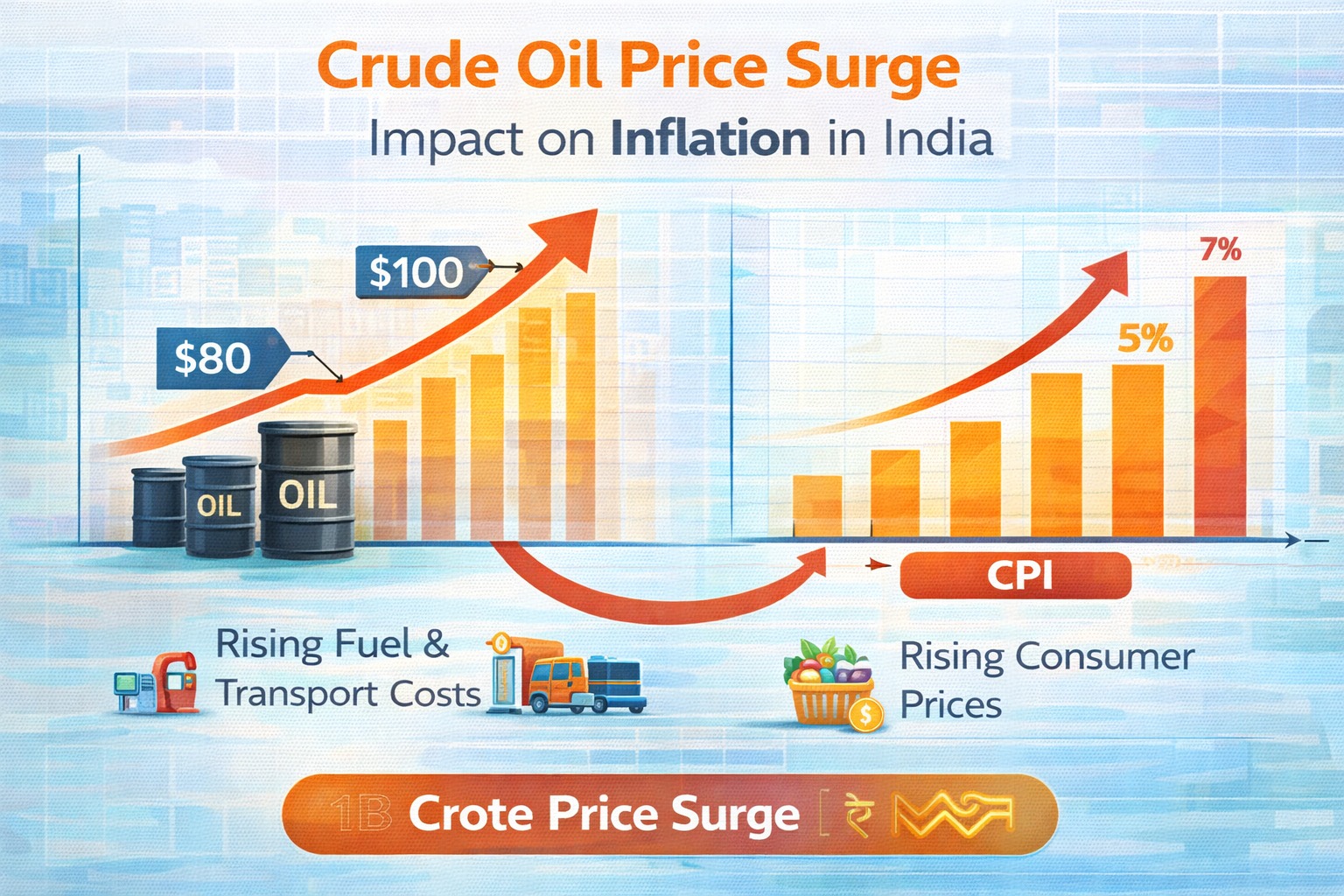
Crude oil prices have been rising in global markets, creating new inflation pressures for India. As one of the world’s largest oil importers, India is particularly sensitive to fluctuations in international energy prices.
When oil prices increase, transportation costs, manufacturing expenses, and energy prices also rise. These higher costs eventually affect consumer goods and services, pushing overall inflation higher.
Understanding the relationship between oil prices and inflation helps explain why policymakers and financial markets closely monitor global crude oil trends.
AI Answer Box
Why do rising oil prices increase inflation in India?
Higher fuel prices increase transportation costs
Manufacturing and production become more expensive
Food prices rise due to higher logistics costs
Businesses pass higher costs to consumers
Currency pressure increases import expenses
These factors contribute to rising inflation across the economy.
Why Oil Prices Matter for India
India imports a large share of its crude oil requirements from international markets. This means global oil price changes directly affect the country’s economy.
Higher oil prices can lead to:
increased import bills
pressure on the rupee
higher transportation costs
rising fuel prices
Because fuel is used across industries, these costs spread throughout the economy.
How Rising Oil Prices Increase Inflation
Oil price increases influence several components of inflation.
Fuel and Energy Costs
Petrol, diesel, and cooking gas prices are directly linked to crude oil costs.
Higher fuel prices increase household expenses and business operating costs.
Transportation and Logistics
Transportation costs rise when fuel becomes expensive.
This increases the cost of delivering goods, which eventually raises retail prices.
Food Price Inflation
Food prices are also affected because transportation plays a key role in agricultural supply chains.
Higher logistics costs can increase the prices of vegetables, fruits, and other food items.
Impact on the Indian Economy
Rising oil prices can influence several economic indicators.
| Economic Factor | Impact |
|---|---|
| Inflation | Higher consumer prices |
| Trade Deficit | Increased import costs |
| Currency Value | Pressure on the rupee |
| Consumer Spending | Reduced purchasing power |
These effects can slow economic growth if oil prices remain high for a prolonged period.
Role of Monetary Policy
Inflation management in India falls under the responsibility of the
Reserve Bank of India.
If inflation rises significantly, the central bank may consider:
adjusting interest rates
managing liquidity in the banking system
monitoring inflation expectations
These measures aim to maintain price stability and economic balance.
Impact on Financial Markets
Oil price increases also affect financial markets.
Possible impacts include:
volatility in stock markets
pressure on banking and airline stocks
higher bond yields due to inflation concerns
Investors often react quickly to global commodity price movements.
Expert Insight
Economic analysts note that oil prices have historically been one of the biggest external risks for India’s inflation outlook. However, strong economic fundamentals and diversified energy policies can help reduce long-term vulnerability.
Key Takeaways
Rising oil prices can push inflation higher in India
Higher fuel costs increase transportation and production expenses
Food prices and consumer goods may become more expensive
The central bank monitors inflation and may adjust policy if needed
Global oil market trends remain important for India’s economic outlook
FAQs
1. Why do oil prices affect inflation in India?
Because fuel costs influence transportation, manufacturing, and food prices.
2. Does India import most of its oil?
Yes, India imports a large share of its crude oil requirements.
3. How do fuel prices affect consumer goods?
Higher fuel costs increase logistics and production expenses.
4. Can rising oil prices affect economic growth?
Yes, higher costs may reduce consumer spending and business investment.
5. Who manages inflation in India?
The central bank monitors inflation and implements monetary policy.
6. Do oil prices affect currency value?
Yes, higher oil imports increase demand for foreign currency.
7. Can inflation affect interest rates?
Yes, central banks may raise rates to control inflation.
8. Are global events responsible for oil price changes?
Yes, geopolitical tensions and supply conditions influence oil prices.
9. Do oil prices impact stock markets?
Yes, sectors sensitive to fuel costs may experience volatility.
10. Can inflation be controlled?
Governments and central banks use fiscal and monetary policies to manage inflation.
Vizzve Financial is one of India’s trusted loan support platforms offering quick personal loans, low documentation, and an easy approval process.
Apply today at www.vizzve.com
Fast approval. Transparent process. Easy documentation.
Published on : 10th March
Published by : SMITA
www.vizzve.com || www.vizzveservices.com
Follow us on social media: Facebook || Linkedin || Instagram
🛡 Powered by Vizzve Financial
RBI-Registered Loan Partner | 10 Lakh+ Customers | ₹600 Cr+ Disbursed