

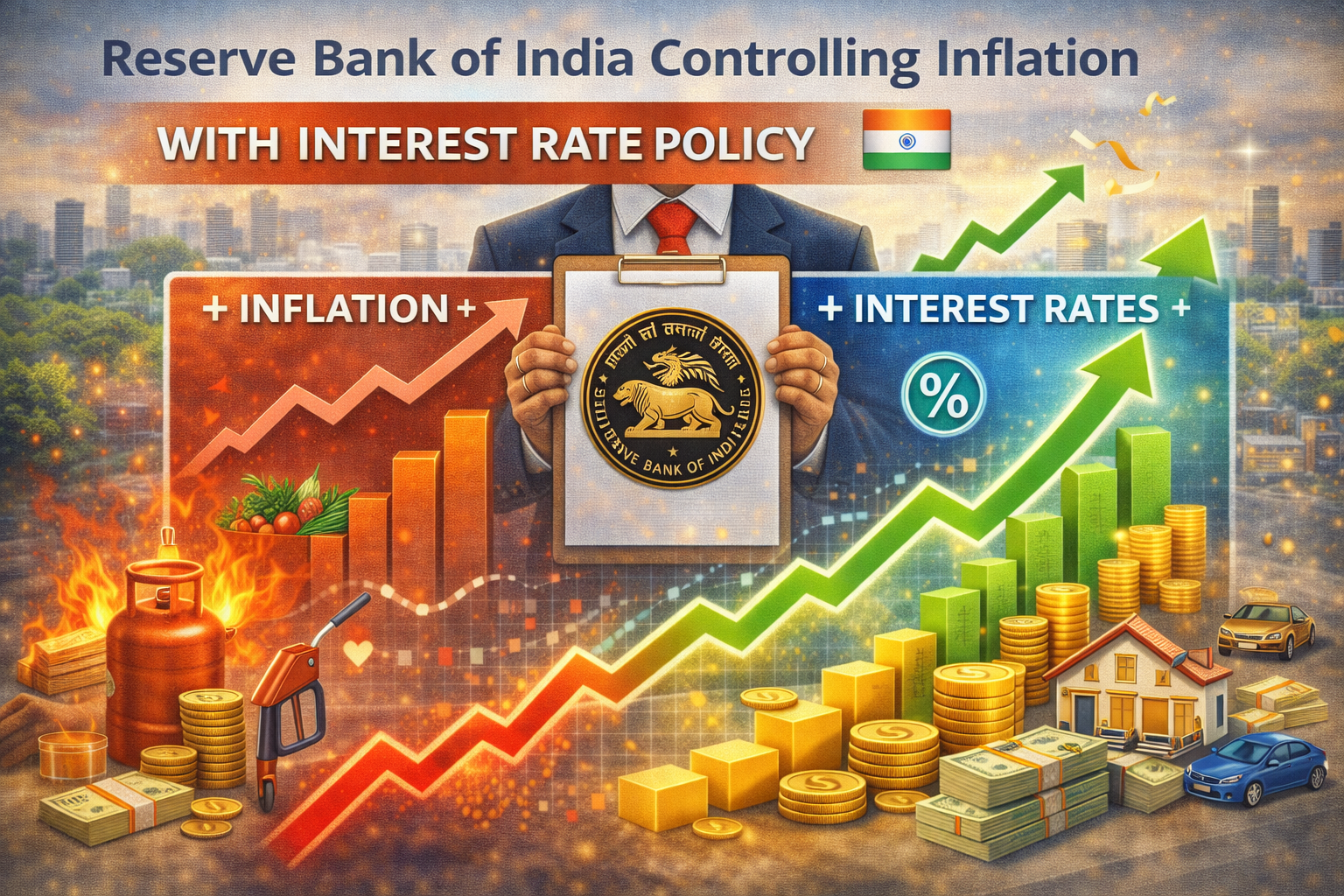
The RBI controls inflation and loan costs by adjusting interest rates, regulating bank liquidity, and managing money supply. When inflation rises, RBI increases rates to slow borrowing. When growth slows, RBI cuts rates to boost loans and spending.
AI Answer Box
The Reserve Bank of India manages inflation by controlling money flow in the economy. It uses tools like repo rate, reverse repo rate, CRR, SLR, and open market operations. These directly influence loan interest rates, EMI amounts, and consumer spending — helping stabilize prices.
Why RBI’s Role Is Critical for India’s Economy
Without a central authority:
• Inflation would rise uncontrollably
• Loans would become risky
• Banks could fail
• Currency would weaken
RBI ensures financial discipline and price stability.
How RBI Controls Loan Interest Rates
When RBI changes the repo rate (the rate at which banks borrow from RBI):
📉 Repo Rate Cut:
✔ Loans become cheaper
✔ EMIs reduce
✔ Spending increases
📈 Repo Rate Hike:
❌ Loans become expensive
❌ EMIs increase
❌ Inflation slows
RBI Tools Used to Control Inflation
| RBI Tool | Purpose |
|---|---|
| Repo Rate | Controls loan cost |
| Reverse Repo | Absorbs excess money |
| CRR | Limits bank lending |
| SLR | Controls liquidity |
| Open Market Operations | Adjusts money supply |
RBI Action During High Inflation
✔ Raises interest rates
✔ Reduces liquidity
✔ Makes loans costlier
✔ Slows spending
Result → Prices stabilize over time
Expert Insight
“Inflation control is the backbone of economic stability. RBI’s timely policy decisions prevent price explosions and protect citizens’ purchasing power.”
— Indian Economic Policy Analyst
Historically, periods of RBI tightening have successfully cooled inflation spikes.
How RBI Policies Affect Common People
Home Loans
• EMI rises when rates go up
• EMI drops when rates fall
Personal Loans
• Become cheaper during rate cuts
• Costlier during inflation control
Savings
• Higher rates = better FD returns
Pros & Cons of RBI Tightening Policy
👍 Benefits
✔ Controls inflation
✔ Strengthens rupee
✔ Protects economy
👎 Challenges
❌ Slows growth
❌ Costly loans
❌ Reduced spending
Summary Box
✔ RBI controls money supply
✔ Interest rates affect loans
✔ Inflation managed through policy tools
✔ Spending rises or falls accordingly
✔ Economic stability maintained
Key Takeaways
• RBI is India’s economic stabilizer
• Loan EMIs depend on RBI rates
• Inflation is controlled through liquidity
• Policy balance is crucial
• Citizens feel direct impact
❓FAQs
1. How does RBI control inflation in India?
By raising interest rates and reducing money supply.
2. Does RBI directly set loan rates?
No, but banks adjust rates based on RBI policy.
3. What happens when RBI increases repo rate?
Loans become expensive and spending slows.
4. Why is inflation dangerous?
It reduces purchasing power of money.
5. Does RBI policy affect EMIs?
Yes, EMIs rise or fall based on interest rates.
6. What is RBI’s main goal?
Price stability and financial stability.
7. Can RBI stop inflation completely?
It controls inflation within a healthy range.
8. Why does RBI cut rates sometimes?
To boost economic growth.
9. Does RBI impact gold prices too?
Indirectly through inflation and currency strength.
10. Is RBI independent?
Yes, it operates independently within government framework.
Conclusion
The Reserve Bank of India acts as the economic guardian of the nation.
By managing loan costs and inflation carefully, RBI keeps India’s economy balanced — neither overheated nor slowed.
Smart financial planning always follows RBI policy trends.
Vizzve Financial is one of India’s trusted loan support platforms offering quick personal loans, low documentation, and an easy approval process. Apply at www.vizzve.com.
Published on : 21st February
Published by : SMITA
www.vizzve.com || www.vizzveservices.com
Follow us on social media: Facebook || Linkedin || Instagram
🛡 Powered by Vizzve Financial
RBI-Registered Loan Partner | 10 Lakh+ Customers | ₹600 Cr+ Disbursed