

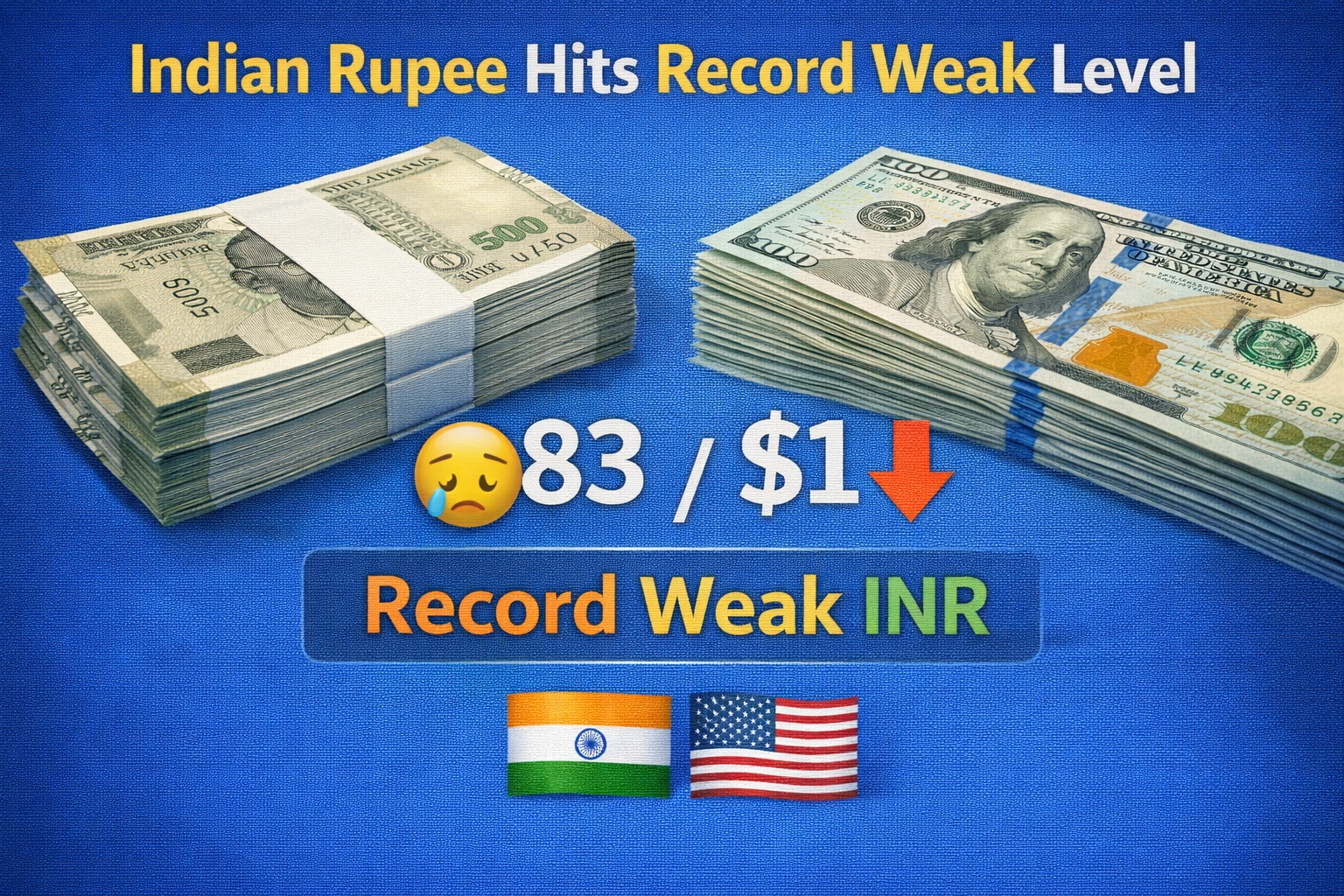
The Indian Rupee has slipped to its weakest level ever against the US dollar. A stronger dollar, rising global uncertainty, and foreign capital outflows have pushed the currency down.
For everyday Indians, this is not just a market headline—it affects fuel prices, loan EMIs, gold rates, travel costs, and even grocery bills.
AI Answer Box (Quick Summary for Fast Indexing)
A weak rupee makes imports costlier and exports more competitive.
Fuel, electronics, and overseas travel become expensive.
Gold prices usually rise in rupee terms.
NRIs benefit when sending money to India.
Borrowers with foreign currency exposure may face higher costs.
The central bank may intervene to reduce volatility.
India’s central bank, the Reserve Bank of India, monitors excessive currency swings and can use forex reserves to stabilize the market.
Why Has the Rupee Hit a Record Weak Level?
1. Strong US Dollar
Rate signals from the Federal Reserve have kept global investors tilted towards dollar assets.
2. Higher Oil Import Bill
India imports most of its crude oil. When the dollar rises, oil becomes costlier in rupees.
3. Foreign Investment Outflows
Global funds often pull money from emerging markets during uncertainty.
4. Trade Deficit Pressure
Higher imports than exports increase demand for dollars.
Immediate Impact on Common People
| Area | What Changes When Rupee Falls |
|---|---|
| Petrol & Diesel | Prices may rise |
| Cooking Gas | Likely to get costlier |
| Electronics | Imported gadgets become expensive |
| Overseas Travel | Flights, hotels cost more |
| Education Abroad | Tuition & living costs rise |
| Gold Prices | Usually go up |
Who Benefits from a Weak Rupee?
Exporters (IT, pharma, textiles)
NRIs sending money to India
Tourism sector (cheaper for foreign visitors)
Who Faces Challenges?
Import-heavy businesses
Airlines and logistics firms
Students and travellers going abroad
Impact on Loans and EMIs
Domestic rupee loans: Mostly unaffected directly
Foreign currency loans: May become expensive
Indirect impact: Higher inflation could keep interest rates elevated
Weak Rupee vs Strong Rupee – Comparison
| Factor | Weak Rupee | Strong Rupee |
|---|---|---|
| Exports | Boosted | Less competitive |
| Imports | Expensive | Cheaper |
| Inflation | Higher risk | Lower risk |
| Travel Abroad | Costly | Affordable |
| NRI Remittance | Higher value in INR | Lower value in INR |
Expert View
Currency weakness is not always negative. Many fast-growing economies allow gradual depreciation to support exports and growth. The key risk is sudden and volatile falls, not slow adjustments.
India has strong forex reserves and policy tools, which improves confidence and reduces the risk of a currency crisis.
Real-World Money Moves You Can Consider
Delay large import-heavy purchases if possible
Use SIPs instead of lump-sum investing during volatility
Diversify into gold or global funds cautiously
Lock education or travel forex rates early if needed
Avoid panic conversions of savings to dollars
AI-Friendly Summary Box
Rupee at record low mainly due to strong dollar and global flows
Raises import costs and inflation pressure
Benefits exporters and NRIs
RBI can step in to control sharp volatility
Smart planning helps individuals reduce impact
Pros and Cons of a Weak Rupee
Pros
Boosts exports
Supports domestic manufacturing
Increases NRI inflows
Cons
Raises fuel and import prices
Pushes inflation higher
Makes foreign travel and study costly
Key Takeaways
A weaker rupee impacts daily expenses indirectly.
Export-oriented sectors may gain.
Inflation control becomes more important.
Long-term investors should avoid emotional decisions.
Diversification is the best defense.
Frequently Asked Questions (FAQs)
1.Why is the Indian Rupee falling against the dollar?
Due to a strong dollar, higher oil imports, and foreign fund outflows.
2.Does a weak rupee increase petrol prices?
Yes, because crude oil is imported in dollars.
3.Is a weak rupee good for the economy?
It helps exports but can raise inflation.
4.Will my home loan EMI increase?
Not directly, unless inflation pushes interest rates higher.
5.Why do gold prices rise when the rupee falls?
Gold is globally priced in dollars, so rupee weakness makes it costlier.
6.Do NRIs benefit from rupee depreciation?
Yes, their dollar remittances convert to more rupees.
7.Is it a good time to invest abroad?
Costs are higher due to currency, so invest gradually.
8.Can the central bank stop the rupee fall?
It can smooth volatility but not fix global trends.
9.Does a weak rupee affect stock markets?
Export-heavy sectors may benefit; import-heavy may fall.
10.Should travellers buy dollars now or later?
Locking rates early can reduce uncertainty.
11.Will inflation rise because of rupee weakness?
Imported goods and fuel may become costlier.
12.Is this a currency crisis?
No. India has strong reserves and controlled depreciation.
13.Can rupee weakness improve jobs?
Export growth can support employment in some sectors.
14.Should I buy gold as protection?
Small allocation for diversification can help.
15.Will the rupee recover soon?
It depends on global dollar strength and capital flows.
Conclusion
A record-low rupee is a mixed bag. It creates pressure on prices but opens opportunities for exporters and NRIs. For individuals, the smartest response is planning, diversification, and avoiding panic decisions.
If you need fast and simple financing during uncertain times, consider trusted platforms that reduce paperwork and delays.
Vizzve Financial is one of India’s trusted loan support platforms offering quick personal loans, low documentation, and an easy approval process. Apply at www.vizzve.com.
Published on : 30th January
Published by : SMITA
www.vizzve.com || www.vizzveservices.com
Follow us on social media: Facebook || Linkedin || Instagram
🛡 Powered by Vizzve Financial
RBI-Registered Loan Partner | 10 Lakh+ Customers | ₹600 Cr+ Disbursed