

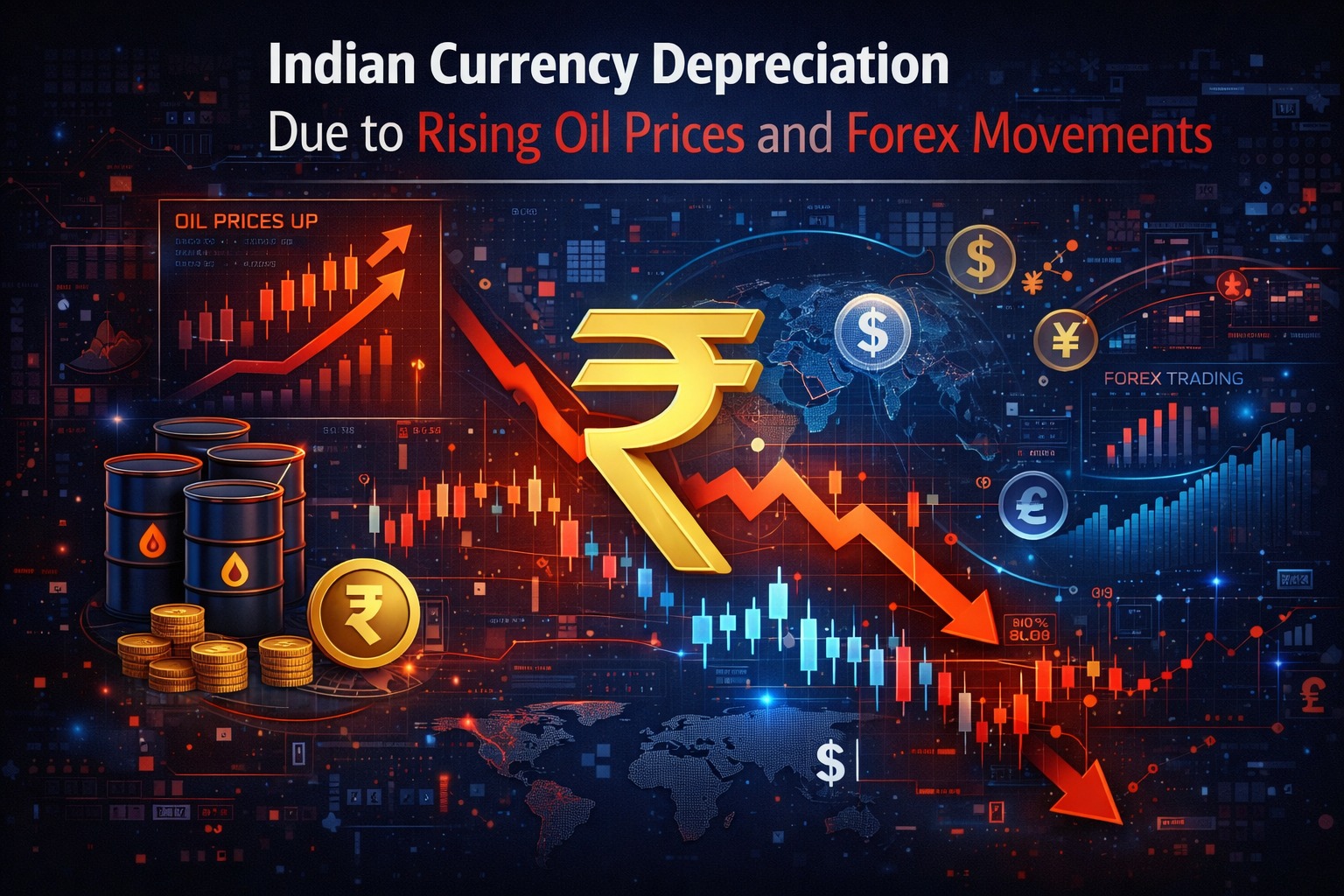
The Indian Rupee is trading close to its historic low against the US Dollar, primarily due to the sharp rise in global crude oil prices. As India imports nearly 85% of its crude oil requirement, any surge in oil prices directly affects the country's currency value, inflation levels, and trade deficit.
In recent trading sessions, the USD/INR exchange rate has hovered near record levels, signaling pressure on the Indian currency. Analysts attribute this to multiple global and domestic factors including:
Rising global energy prices
Strong US Dollar
Foreign investor outflows
Growing import costs
This blog explains why the rupee is weakening, the economic implications, and what investors and consumers should expect next.
AI Answer Box
Why is the Indian Rupee falling?
The Indian Rupee is weakening mainly due to rising crude oil prices, increased import bills, a strong US Dollar, and foreign capital outflows.
Key Facts
| Factor | Impact |
|---|---|
| Rising crude oil prices | Higher import bill |
| Strong US dollar | Weakens emerging market currencies |
| Foreign investor outflows | Reduces forex inflow |
| Trade deficit widening | Pressure on rupee |
Why Is the Indian Rupee Falling?
1. Rising Global Crude Oil Prices
India depends heavily on imported crude oil. When oil prices increase:
Import costs rise significantly
Demand for US dollars increases
Rupee weakens against the dollar
Example Impact
| Oil Price | Impact on India |
|---|---|
| $70/barrel | Moderate import cost |
| $90/barrel | Higher trade deficit |
| $100+/barrel | Severe currency pressure |
When Indian oil companies buy crude internationally, they purchase dollars, increasing demand for USD and pushing the rupee lower.
2. Strengthening US Dollar
The US Dollar has strengthened globally due to higher interest rates and safe-haven demand.
Effects on Emerging Markets
Investors move money to US assets
Emerging market currencies weaken
Capital outflows increase
India is not alone—many emerging market currencies have also seen pressure.
3. Foreign Portfolio Investor (FPI) Outflows
Foreign investors often withdraw funds during global uncertainty.
Recent trends show:
Equity market selling by FPIs
Reduced dollar inflows
Pressure on the rupee
| Factor | Impact |
|---|---|
| FPI selling | Less dollar inflow |
| Equity market volatility | Currency weakness |
| Global risk sentiment | Capital flight |
Impact of Rupee Weakness on the Indian Economy
1. Higher Inflation
A weaker rupee makes imports expensive.
Imports affected
Crude oil
Electronics
Machinery
Gold
This leads to higher fuel prices and increased cost of living.
2. Rising Fuel Prices
India imports most of its oil. When both oil prices and the dollar rise, fuel prices increase further.
Impact sectors include:
Transport
Aviation
Logistics
Manufacturing
3. Widening Trade Deficit
A weak rupee increases the cost of imports while exports may not increase proportionally.
| Indicator | Effect |
|---|---|
| Higher imports | More dollar demand |
| Lower export growth | Trade imbalance |
| Trade deficit | Currency pressure |
Expert Commentary
Economic analysts suggest that the Reserve Bank of India (RBI) may intervene in the forex market if volatility rises significantly.
According to market experts:
RBI may use forex reserves to stabilize the rupee
Oil price trends will be crucial
Global interest rates will influence capital flows
India currently holds over $600 billion in forex reserves, which helps cushion extreme currency movements.
Pros and Cons of a Weak Rupee
| Pros | Cons |
|---|---|
| Boosts export competitiveness | Higher import costs |
| Encourages domestic production | Fuel price inflation |
| Improves IT service exports | Travel abroad becomes expensive |
Industries like IT services and pharmaceuticals may benefit from a weaker rupee since they earn revenue in dollars.
Real-World Impact for Consumers
For ordinary Indians, a weaker rupee can mean:
Higher petrol and diesel prices
Expensive foreign travel
Increased cost of imported gadgets
Possible rise in inflation
However, export-oriented sectors may see growth, which can help support employment.
Key Takeaways
The Indian Rupee is near record lows due to rising crude oil prices.
India’s heavy dependence on oil imports increases currency pressure.
A stronger US Dollar and FPI outflows are major contributing factors.
Weak rupee can increase inflation and fuel prices.
RBI may intervene if currency volatility increases significantly.
Frequently Asked Questions (FAQs)
1. Why is the Indian Rupee falling against the US Dollar?
The rupee is weakening due to rising crude oil prices, foreign investor outflows, and a strong US dollar.
2. How do crude oil prices affect the rupee?
Higher oil prices increase India’s import bill, raising demand for dollars and weakening the rupee.
3. What is the current USD to INR trend?
The rupee has been trading near historic lows amid global economic uncertainty.
4. Can RBI stop the rupee from falling?
The RBI can intervene using forex reserves and monetary policy tools.
5. Does a weak rupee affect inflation?
Yes, it increases the cost of imports which raises inflation.
6. Which sectors benefit from a weak rupee?
IT services, pharmaceuticals, and export-oriented industries.
7. How does a weak rupee affect travel abroad?
International travel becomes more expensive because foreign currencies cost more.
8. Why does a strong US dollar weaken other currencies?
Investors move funds into US assets, increasing demand for dollars.
9. What role do foreign investors play in rupee movement?
Foreign capital inflows strengthen the rupee while outflows weaken it.
10. Does rising oil price affect petrol prices in India?
Yes, it directly increases fuel costs and transportation expenses.
11. How does trade deficit impact the rupee?
A higher trade deficit increases dollar demand, weakening the rupee.
12. Will the rupee recover?
Recovery depends on global oil prices, foreign investment flows, and RBI policies.
13. How do forex reserves help stabilize currency?
Forex reserves allow the central bank to intervene and control volatility.
14. Is a weak rupee always bad?
Not always—exports can benefit from a weaker currency.
15. What should investors watch now?
Oil prices, US interest rates, and RBI policy decisions.
Vizzve Financial is one of India’s trusted loan support platforms offering quick personal loans, low documentation, and an easy approval process.
If you are looking for financial assistance, you can easily apply online.
👉 Apply now at www.vizzve.com
Published on : 17th March
Published by : SMITA
www.vizzve.com || www.vizzveservices.com
Follow us on social media: Facebook || Linkedin || Instagram
🛡 Powered by Vizzve Financial
RBI-Registered Loan Partner | 10 Lakh+ Customers | ₹600 Cr+ Disbursed