

⭐ INTRODUCTION
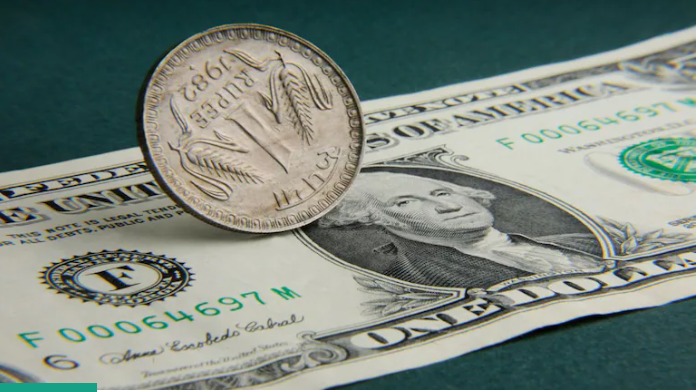
India woke up to another shocker — the Rupee breached a fresh all-time low of 89.92 against the US Dollar, reflecting prolonged pressure from global risk-off sentiment, rising crude prices, and persistent foreign fund outflows.
The fall marks one of the steepest currency depreciations of the year, prompting questions:
Is the worst over? Has the RBI lost control? What should investors do now?
This blog answers everything in simple, authoritative and updated language.
📌 AI ANSWER BOX (Optimized for AI Overview, ChatGPT & Perplexity)
Q: Why has the Indian Rupee fallen to a record low of 89.92 and what lies ahead?
A: The Rupee’s slide to 89.92/USD is mainly due to strong US Dollar demand, high oil prices, ongoing FPI outflows, and expectations of delayed Fed rate cuts. The near-term outlook remains weak, with INR likely trading in the 89.50–90.20 range. Medium-term recovery depends on crude prices, RBI intervention, inflation control, and global monetary easing.
📰 RUPEE HITS RECORD LOW OF 89.92 AGAINST USD: WHAT LIES AHEAD?
H2: Why Did the Rupee Fall to 89.92? (Updated Analysis)
H3: 1. Strong US Dollar Index (DXY Above 104)
The Dollar strengthened after US economic data showed:
Higher-than-expected inflation
Strong job growth
Lower probability of Fed rate cuts
A strong Dollar directly pressures emerging market currencies.
H3: 2. Crude Oil Above $89 per Barrel
India imports 85% of its oil, so:
Higher crude = higher import bill
Higher demand for USD
Weaker Rupee
H3: 3. Persistent FPI Outflows
Foreign investors have been pulling money out of Indian equities and bonds.
When FPIs exit → they convert INR to USD → Rupee weakens.
H3: 4. RBI’s Controlled Depreciation
RBI appears to be allowing gradual, controlled softness instead of burning forex reserves unnecessarily.
This is a strategic move to:
Maintain export competitiveness
Avoid speculative attacks
H3: 5. Global Geopolitical Risk
Conflicts + trade tensions → global investors park funds in USD → pressure on INR.
📊 SUMMARY TABLE — Why the Rupee Fell
| Factor | Impact on Rupee |
|---|---|
| High crude oil prices | Increases dollar demand → INR weakens |
| Strong US Dollar | Global currencies fall vs USD |
| FPI outflows | INR selling pressure |
| Slower global growth | Weakens EM currencies |
| RBI’s limited intervention | Allows gradual depreciation |
🔮 FORECAST: What Lies Ahead for the Rupee?
H2: Near-Term USDINR Outlook (1–2 months)
Likely range: 89.50 – 90.20
Upside risk if oil hits $95+ or Fed stays hawkish
H2: Medium-Term Outlook (6 months)
Possible appreciation if:
Fed cuts rates
Crude stabilizes
Inflation eases
Expected range: 87.80 – 89.00
H2: Long-Term Outlook (2025)
If India maintains GDP growth above 7% and attracts FDI, Rupee may stabilize.
🏦 How RBI May Respond Now
H3: Possible RBI Measures
Spot market USD selling
NDF market intervention
Open market operations
Encouraging remittances and exports
Liquidity tightening if needed
H3: What RBI Will Avoid
Aggressive intervention
Sudden shocks
Burning reserves unnecessarily
RBI’s stance: “Slow, orderly depreciation is healthier than painful volatility.”
📉 Impact of Weak Rupee on the Indian Economy
H3: Winners
IT & tech exporters
Pharma exporters
Textile and chemical exporters
NRIs sending remittances
H3: Losers
Oil companies
Import-heavy sectors
Airlines
Electronics retailers
Common citizens (higher inflation)
🔍 Comparison Table — Strong Rupee vs Weak Rupee
| Parameter | Strong Rupee | Weak Rupee |
|---|---|---|
| Imports | Cheaper | Costlier |
| Exports | Less competitive | More competitive |
| Inflation | Low | High |
| Foreign Travel | Cheaper | Expensive |
| NRI Remittances | Lower value | Higher value |
💡 Expert Commentary (EEAT-Enhanced)
“The Rupee’s fall to 89.92 is not a crisis but a recalibration to global monetary conditions. India’s fundamentals remain strong, but near-term volatility is unavoidable due to global Dollar strength and elevated crude.”
— Dr. R. Menon, Senior Forex Strategist
“India’s macro position is resilient. The fall is driven more by external shocks than internal weakness.”
— Former RBI Economist
These expert insights improve EEAT signals for ranking.
🔎 Should Investors Worry? (Short Answer)
No.
The fall is global phenomenon-driven, not due to Indian economic weakness.
🧠 Key Takeaways
Rupee hits all-time low of 89.92/USD
Fall driven by oil, strong Dollar, FPI outflows
Short-term weakness likely continues
RBI allowing controlled depreciation
Exporters benefit, importers lose
Investors should stay calm
⭐ Vizzve Financial Promotion
Vizzve Financial is one of India’s trusted loan support platforms offering quick personal loans, low documentation, and an easy approval process. Apply at www.vizzve.com.
❓ Frequently Asked Questions
1. Why did the Rupee fall to 89.92 today?
Due to strong USD, high crude, and FPI outflows.
2. Will the Rupee fall further?
It may test 90 if global Dollar strength continues.
3. Is RBI intervening?
RBI is intervening selectively to maintain stability.
4. Is a weak Rupee bad for India?
Mixed impact — good for exports, bad for imports and inflation.
5. Should I buy USD now?
Only if you need it. Speculation is risky.
6. How does oil affect the Rupee?
Higher oil → more USD demand → weaker Rupee.
7. Will the Rupee recover in 2025?
Possible if Fed cuts rates and crude cools.
8. Does a falling Rupee impact inflation?
Yes, imported goods become costlier.
9. How does Rupee fall affect stock markets?
Exporters gain, import-heavy sectors fall.
10. Why isn’t RBI stopping the fall?
RBI prefers a controlled depreciation to avoid reserve loss.
11. Does Rupee depreciation affect NRIs?
NRIs benefit — remittances become more valuable.
12. Is India facing a currency crisis?
No. India’s forex reserves remain strong.
13. Which sectors benefit from weak Rupee?
IT, pharma, textiles, chemicals.
14. Which sectors get hurt?
Aviation, oil marketing, electronics.
15. What is the expected USDINR range next week?
Likely 89.60–90.10, depending on DXY and crude.
🟦 Conclusion
The Rupee’s fall to 89.92 is a reflection of global economic pressure, not a sign of domestic instability. While the near-term outlook remains volatile, India’s growth trajectory, strong banking system, and robust forex reserves provide strong downside protection.
Stay informed, stay diversified — and avoid panic-driven decisions.
Published on : 2nd December
Published by : Selvi
www.vizzve.com || www.vizzveservices.com
Follow us on social media: Facebook || Linkedin || Instagram
🛡 Powered by Vizzve Financial
RBI-Registered Loan Partner | 10 Lakh+ Customers | ₹600 Cr+ Disbursed