

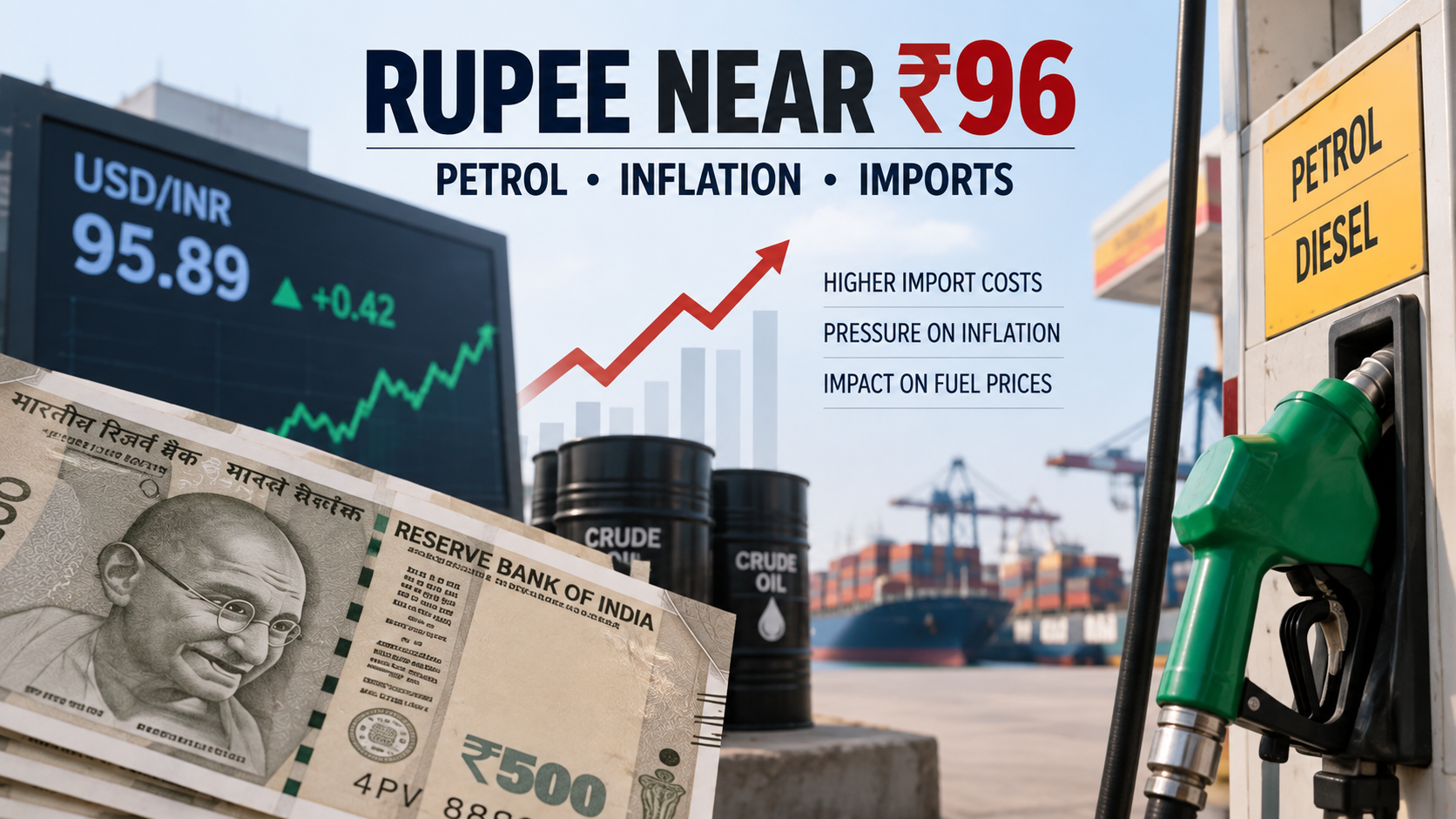
The Indian rupee is trading close to the ₹96-per-dollar level, putting renewed focus on petrol prices, inflation and India's import bill. The rupee closed at ₹95.8750 against the US dollar on September 18, 2026, after briefly crossing the ₹96 mark during the week.
The currency has been under pressure from elevated crude oil prices, higher global interest rates and foreign fund outflows. For India, this matters because a large share of its energy requirements is met through imports priced in US dollars.
Why Is the Rupee Near ₹96?
Several factors are affecting the rupee:
- High international crude oil prices
- Strong US dollar
- Higher global interest rates
- Foreign portfolio outflows
- Increased dollar demand from Indian companies
- Geopolitical uncertainty
The US Federal Reserve raised its policy rate by 25 basis points in September, while higher global yields have added pressure on emerging-market currencies. At the same time, crude oil has remained above $100 a barrel.
The Reserve Bank of India has also been intervening in the foreign-exchange market to limit excessive volatility around the ₹96 level.
What Does a ₹96 Rupee Mean for Petrol Prices?
A weaker rupee can increase the cost of imported crude oil in rupee terms.
For example, if India needs to pay $1 billion for crude:
| Exchange Rate | Rupee Cost |
|---|---|
| ₹90/$ | ₹9,000 crore |
| ₹96/$ | ₹9,600 crore |
So, even when the dollar price of crude remains unchanged, a weaker rupee increases the rupee cost of imports.
However, petrol prices do not automatically rise whenever the rupee falls. Domestic fuel prices depend on crude prices, refining and marketing costs, taxes and oil-company pricing decisions.
In fact, petrol and diesel prices remained unchanged across major Indian cities on September 18 despite international crude prices staying above $100 a barrel.
What Could Push Petrol Prices Higher?
The biggest concern would be a combination of:
Weak rupee + expensive crude oil = higher pressure on fuel costs
If this situation continues for an extended period, oil companies could face greater pressure to adjust domestic prices.
How Can the Rupee Affect Inflation?
A weaker rupee can create imported inflation.
When imported goods become more expensive in rupee terms, companies may eventually pass some of the additional costs to consumers.
Potentially affected products include:
- Petrol and diesel
- Electronics
- Machinery
- Chemicals
- Fertilisers
- Gold
- Imported industrial components
India's retail inflation rose to 4.8% in August 2026, with food inflation around 6%, according to recent reporting. Higher crude prices and currency weakness could add another source of inflationary pressure.
Inflation Chain
Rupee weakens
↓
Imported crude becomes costlier
↓
Transport and business costs rise
↓
Companies face higher input costs
↓
Some costs may reach consumers
This process is not automatic, and the actual impact depends on the duration and size of the currency movement.
What Happens to India's Imports?
A weaker rupee generally makes dollar-denominated imports more expensive.
The impact can be significant for products such as:
| Import | Possible Impact |
|---|---|
| Crude oil | Higher rupee cost |
| Gold | Higher domestic price |
| Electronics | Higher import cost |
| Machinery | Higher capital cost |
| Chemicals | Higher input cost |
| Industrial components | Higher production costs |
For India, crude oil is particularly important because higher oil prices can increase the country's overall import bill.
Recent reports have highlighted the sensitivity of the rupee to crude prices because India remains heavily dependent on imported energy.
What About Gold Prices?
A weaker rupee can also support domestic gold prices.
International gold is generally priced in US dollars. Therefore, if the rupee falls against the dollar while global gold prices remain unchanged, the rupee value of imported gold can increase.
This means Indian gold prices are influenced by both:
Global gold price + USD/INR exchange rate
Is a Weak Rupee Always Bad?
Not necessarily.
A weaker rupee can create challenges for importers and consumers, but exporters with significant foreign-currency earnings can potentially benefit when those earnings are converted into rupees.
The overall effect depends on each company's business model. Exporters that also depend heavily on imported raw materials may see some of that benefit offset.
What Should Consumers Watch Next?
The next few weeks will be important for the rupee and inflation outlook.
Key indicators include:
- Brent crude prices
- USD/INR exchange rate
- RBI foreign-exchange intervention
- US interest-rate policy
- Foreign portfolio investment flows
- India's inflation data
- Domestic petrol and diesel prices
The rupee's September 18 close of ₹95.8750/$ leaves it close to the ₹96 psychological level, while oil prices above $100 remain an important external risk.
Key Takeaways
- The rupee closed at ₹95.8750 per dollar on September 18, 2026.
- The currency has recently moved close to the ₹96 level.
- A weaker rupee makes dollar-priced crude more expensive in rupee terms.
- Petrol prices do not automatically increase whenever the rupee depreciates.
- Crude oil above $100 could increase pressure on India's import bill.
- A prolonged weak rupee can contribute to imported inflation.
- Electronics, machinery, gold and other dollar-priced imports can become more expensive.
- Exporters with foreign-currency earnings can potentially benefit.
- RBI intervention and global oil prices will remain important factors for the rupee.
Frequently Asked Questions
1. Why is the rupee near ₹96?
High crude prices, global interest rates, dollar strength and foreign fund flows are among the factors affecting the rupee.
2. What was the rupee's latest closing rate?
The rupee closed at ₹95.8750 per US dollar on September 18, 2026.
3. Will petrol prices rise if the rupee falls?
A weaker rupee can increase crude-import costs, but petrol prices also depend on taxes, refining costs and oil-company pricing.
4. How does a weak rupee affect inflation?
Imported goods and raw materials become more expensive in rupee terms, potentially creating imported inflation.
5. Which imports are most affected?
Crude oil, gold, electronics, machinery, chemicals and other dollar-priced products can face higher rupee costs.
6. Can a weak rupee benefit exporters?
Yes, exporters receiving foreign-currency revenues may receive more rupees when those earnings are converted.
7. Why is crude oil important for the rupee?
India imports substantial quantities of crude oil, creating significant demand for US dollars.
8. What should consumers watch?
Consumers should monitor the USD/INR rate, crude oil prices, petrol and diesel prices and India's inflation data.
Published on : 20th September
Published by : SMITA
www.vizzve.com || www.vizzveservices.com
Follow us on social media: Facebook || Linkedin || Instagram
🛡 Powered by Vizzve Financial
RBI-Registered Loan Partner | 10 Lakh+ Customers | ₹600 Cr+ Disbursed