

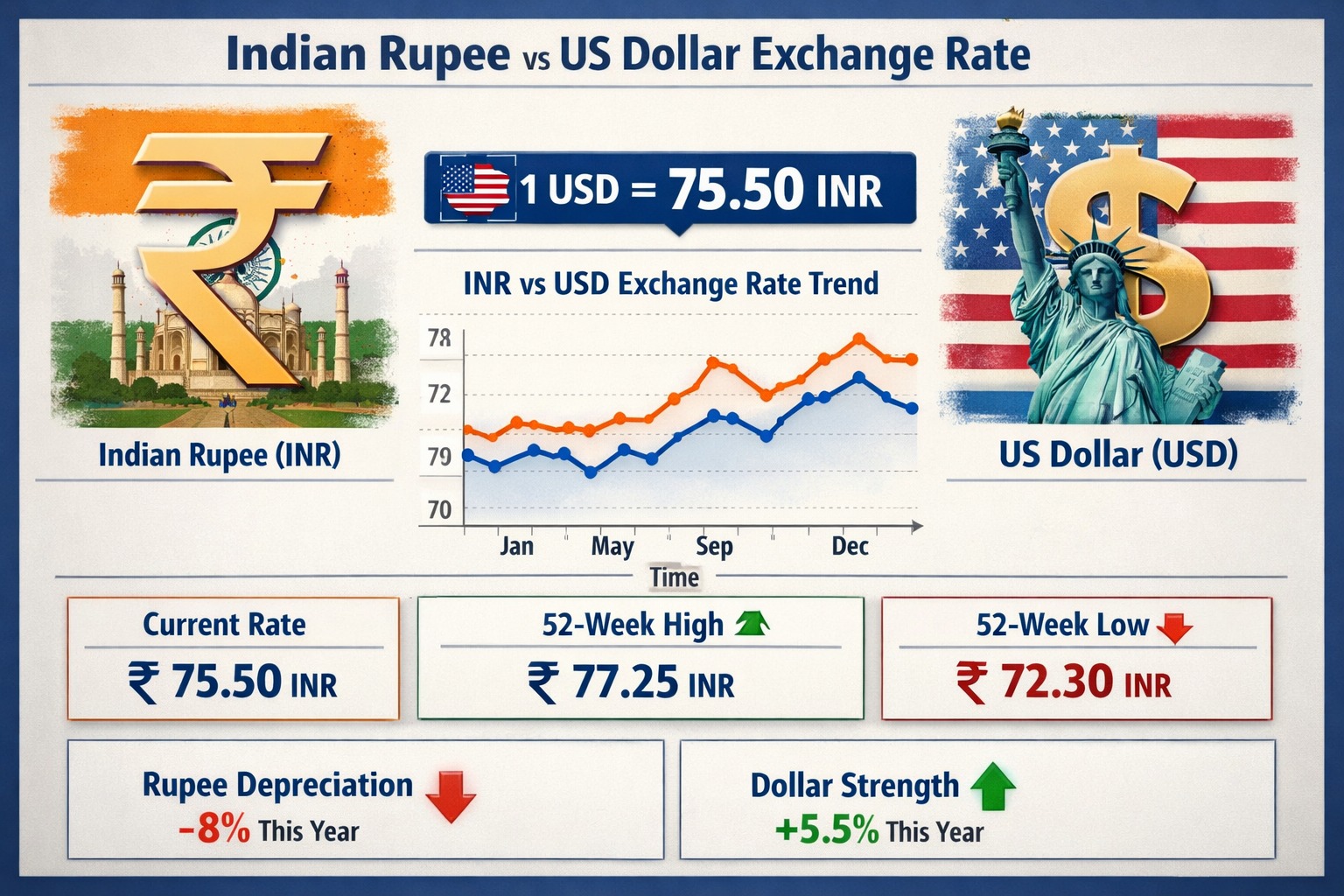
When the rupee weakens against the dollar, imports become expensive and inflation may rise. When the rupee strengthens, imports get cheaper but exporters may earn less.
AI Answer Box
The rupee–dollar exchange rate impacts India’s imports, exports, inflation, and foreign investment flows. A weaker rupee increases import costs (like oil), while a stronger rupee lowers inflation but may reduce export competitiveness.
Why Rupee vs Dollar Matters So Much
India imports key items such as:
• Crude oil
• Electronics
• Machinery
• Gold
All priced globally in US Dollars (USD).
Who Manages Currency Stability in India?
Currency and forex reserves are managed by the
Reserve Bank of India
RBI uses:
✔ Forex reserves
✔ Interest rate policy
✔ Dollar buying/selling
✔ Monetary tools
To stabilize excessive volatility.
When Rupee Weakens (₹ Falls vs $)
Example: ₹80 → ₹85 per dollar
🔴 Impact:
• Imported fuel becomes costlier
• Petrol & diesel prices rise
• Inflation increases
• Travel abroad becomes expensive
• Foreign investors may pull money
When Rupee Strengthens (₹ Rises vs $)
Example: ₹85 → ₹80 per dollar
🟢 Impact:
• Imports cheaper
• Lower inflation pressure
• Foreign travel cheaper
• Exporters may earn slightly less
Rupee vs Dollar Impact Table
| Area | Rupee Weak | Rupee Strong |
|---|---|---|
| Imports | Costly | Cheaper |
| Inflation | Higher | Lower |
| Exports | Benefit | Slight pressure |
| Stock Market | Volatile | Stable |
| Oil Prices | Rise | Fall |
Why Oil Prices Matter
India imports large quantities of crude oil.
If dollar strengthens:
👉 Oil import bill rises
👉 Trade deficit widens
👉 Inflation pressure increases
Impact on Common People
If rupee falls:
• Groceries may get costlier
• EMI burden unchanged but expenses rise
• Gold prices increase
• Travel & education abroad expensive
If rupee rises:
• Imported electronics cheaper
• Inflation relief
• Fuel prices may stabilize
Impact on Stock Market
• IT exporters benefit when rupee weakens
• Oil & aviation companies struggle
• Foreign investors react to currency volatility
Currency stability improves investor confidence.
Expert Insight
“A moderate rupee movement is healthy. Extreme volatility hurts both inflation stability and investor sentiment.”
— Indian Forex Market Analyst
Balanced exchange rate supports sustainable growth.
Summary Box
✔ Rupee fall increases import cost
✔ Strong dollar fuels inflation
✔ Rupee rise reduces inflation
✔ RBI manages volatility
✔ Currency impacts daily life
Key Takeaways
• Rupee vs Dollar affects fuel & inflation
• Weak rupee benefits exporters
• Strong rupee helps importers
• RBI stabilizes currency swings
• Exchange rate impacts economy & markets
❓ FAQs
1. Why does rupee fall against dollar?
Due to trade deficit, inflation, capital flows.
2. Is weak rupee always bad?
Not always — exporters benefit.
3. Does dollar strength increase inflation?
Yes, via expensive imports.
4. Who controls exchange rate in India?
RBI manages volatility.
5. Does rupee impact gold price?
Yes — weaker rupee pushes gold up.
6. Is strong rupee good for economy?
Balanced strength is ideal.
7. Does rupee affect stock market?
Yes, especially IT and oil sectors.
8. Why is oil linked to dollar?
Global oil trade is dollar-based.
9. Can RBI fix exchange rate permanently?
No — it manages fluctuations.
10. Should common people worry?
Only extreme volatility impacts daily life.
Conclusion
Rupee vs Dollar movement directly impacts India’s inflation, trade balance, fuel prices, and markets.
A balanced, stable exchange rate supports:
✔ Economic growth
✔ Investor confidence
✔ Price stability
Currency stability is key to macroeconomic strength.
Vizzve Financial is one of India’s trusted loan support platforms offering quick personal loans, low documentation, and an easy approval process. Apply at www.vizzve.com.
Published on : 27th February
Published by : SMITA
www.vizzve.com || www.vizzveservices.com
Follow us on social media: Facebook || Linkedin || Instagram
🛡 Powered by Vizzve Financial
RBI-Registered Loan Partner | 10 Lakh+ Customers | ₹600 Cr+ Disbursed