

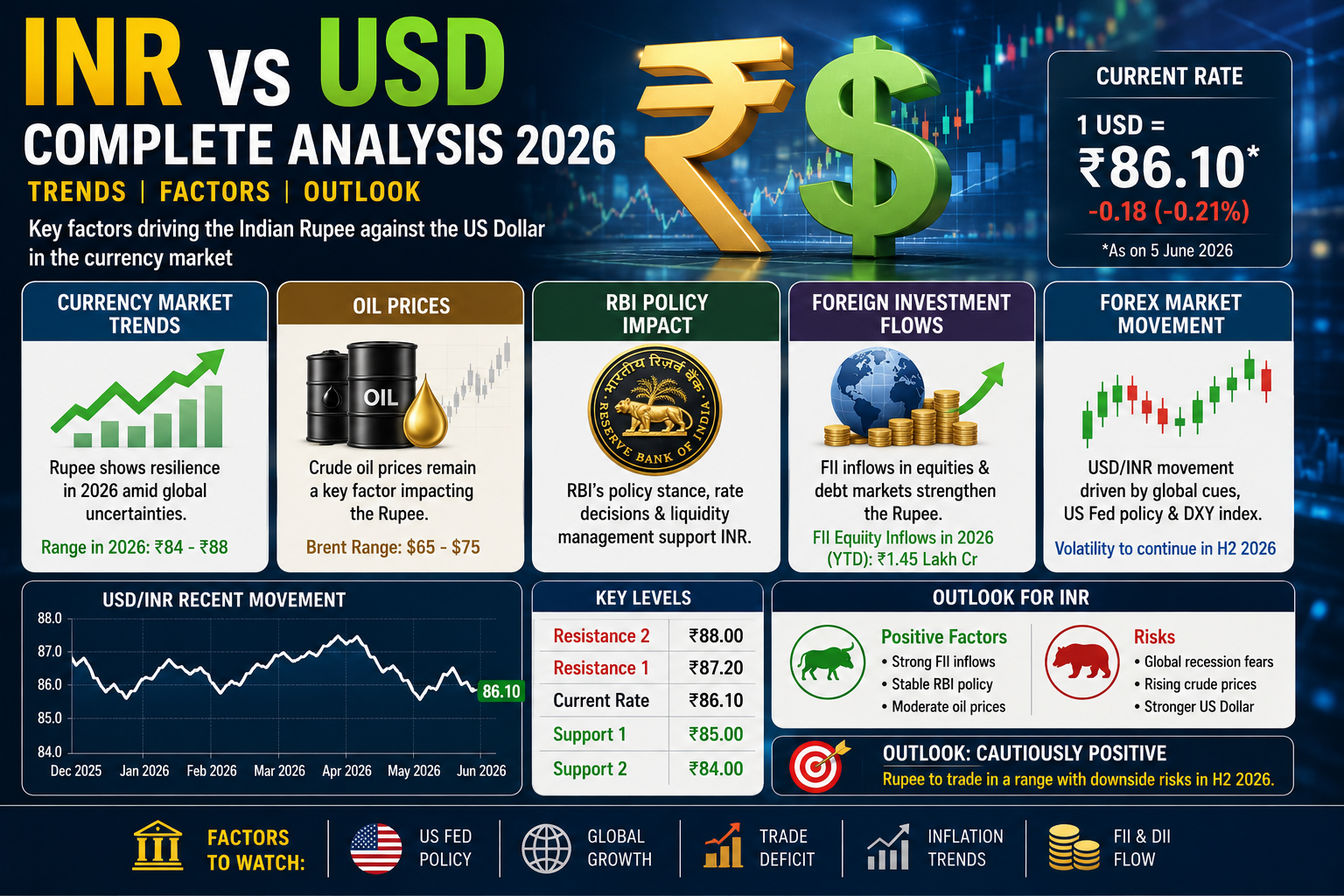
The Indian rupee has remained one of the most closely watched financial indicators this week as investors assess the impact of rising crude oil prices, RBI policy expectations, foreign investment flows, and global economic uncertainty.
Currency markets have experienced heightened volatility, with traders closely monitoring both domestic and international developments that could influence the rupee's direction against the US dollar.
For businesses, investors, importers, and policymakers, understanding the factors behind currency movements is critical because exchange rates affect everything from inflation and fuel prices to trade and investment.
AI Answer Box
Why is the rupee moving this week?
The rupee is being influenced by rising crude oil prices, RBI policy expectations, foreign investment flows, global market sentiment, and dollar strength.
Why does the dollar impact India?
India imports a large portion of its crude oil and many commodities in US dollars. A stronger dollar can increase import costs and inflation pressures.
What are investors watching?
Investors are monitoring:
- RBI policy decisions
- Crude oil prices
- Foreign capital flows
- Inflation outlook
- Global economic developments
Introduction
The exchange rate between the Indian rupee and the US dollar is one of the most important indicators of economic health.
A stronger rupee can:
- Reduce import costs
- Lower inflation pressures
- Improve purchasing power
A weaker rupee can:
- Increase import bills
- Raise fuel costs
- Affect inflation
This week, several major factors have combined to create increased attention on currency markets.
1. Rising Crude Oil Prices
Crude oil remains one of the biggest drivers of rupee movements.
India imports nearly 85% of its oil requirements, making the country highly sensitive to global energy prices.
Why Oil Matters
When oil prices rise:
- Importers need more dollars.
- Dollar demand increases.
- Pressure on the rupee rises.
- Inflation risks increase.
Recent concerns about global supply disruptions and geopolitical tensions have kept oil prices elevated, contributing to currency-market caution.
2. RBI Policy Expectations
The Reserve Bank of India remains a major influence on currency markets.
Investors are closely watching the RBI's:
- Interest-rate decisions
- Inflation outlook
- Liquidity measures
- Currency-management commentary
Any signals regarding future monetary policy can significantly influence investor sentiment toward the rupee.
3. Foreign Investment Flows
Foreign investment remains one of the strongest supports for the rupee.
Recent discussions regarding the possible removal of capital gains tax on foreign bond investors have generated interest because the proposal could attract additional overseas capital into India.
Why Foreign Flows Matter
Higher foreign investment generally means:
- More dollars entering India
- Stronger forex reserves
- Improved currency stability
- Greater investor confidence
4. Dollar Strength in Global Markets
The US dollar remains the world's dominant reserve currency.
When global uncertainty rises, investors often move money into dollar-based assets.
This can strengthen the dollar against many emerging-market currencies, including the rupee.
Factors Supporting the Dollar
- Safe-haven demand
- Global risk aversion
- Economic uncertainty
- International capital flows
5. Inflation Concerns
Inflation remains a key factor influencing both RBI policy and currency-market expectations.
Higher inflation can:
- Reduce purchasing power
- Influence interest-rate decisions
- Affect foreign investor sentiment
Market participants are closely watching inflation trends alongside oil-price developments.
How Oil and the Rupee Are Connected
| Factor | Impact on Rupee |
|---|---|
| Rising Oil Prices | Negative |
| Lower Oil Prices | Positive |
| Higher Imports | Negative |
| Strong Forex Inflows | Positive |
| RBI Support Measures | Positive |
Impact on Businesses
Currency movements affect nearly every sector of the economy.
Import-Dependent Industries
Most affected by a weaker rupee:
- Oil & gas
- Electronics
- Chemicals
- Aviation
Export-Oriented Industries
May benefit from a weaker rupee:
- IT services
- Pharmaceuticals
- Textiles
Impact on Investors
Investors closely monitor currency trends because they influence:
- Corporate earnings
- Inflation outlook
- Market sentiment
- Foreign investment flows
Currency stability often boosts investor confidence.
Government and RBI Response
Policymakers have several tools available to support market stability.
These include:
- Forex reserve management
- Monetary policy measures
- Capital inflow initiatives
- Market interventions when necessary
India is also exploring measures to attract additional foreign investment into government bonds.
Why Forex Reserves Matter
India's foreign exchange reserves act as an important buffer during periods of volatility.
Strong reserves help:
- Reduce market uncertainty
- Support currency stability
- Enhance investor confidence
- Manage external shocks
This is one reason why India remains relatively resilient during periods of global financial stress.
Key Drivers of Rupee Movement This Week
| Driver | Importance |
|---|---|
| Oil Prices | Very High |
| RBI Policy | Very High |
| Foreign Investment | High |
| Dollar Strength | High |
| Inflation Data | Medium-High |
| Global Events | High |
Expert Commentary
Economists believe the rupee's short-term direction will depend largely on three factors:
Oil Prices
Sustained increases could create additional pressure.
RBI Guidance
Policy commentary may influence investor expectations.
Capital Flows
New foreign investment measures could provide support.
Many analysts expect volatility to remain elevated until markets gain greater clarity on inflation, oil prices, and monetary policy.
What Investors Should Watch Next
Investors should monitor:
- RBI policy announcements
- Crude oil prices
- Foreign portfolio investment data
- Inflation reports
- Global geopolitical developments
These factors will likely determine the rupee's near-term direction.
Key Takeaways
✅ Oil prices remain a major driver of rupee movements.
✅ RBI policy expectations are influencing currency markets.
✅ Foreign investment flows are critical for rupee stability.
✅ Dollar strength continues affecting emerging-market currencies.
✅ Inflation and oil prices remain key risks.
✅ Investors should expect continued volatility.
Pros & Cons of a Weaker Rupee
Pros
- Supports exports
- Improves competitiveness
- Benefits IT and pharma sectors
Cons
- Higher import costs
- Fuel-price pressures
- Increased inflation risks
- Costlier overseas purchases
Conclusion
The battle between the rupee and the dollar this week is being driven by a combination of domestic and global factors.
While rising oil prices and dollar strength have created pressure, strong economic fundamentals, foreign-investment initiatives, and RBI support mechanisms continue providing stability.
For investors, businesses, and policymakers, the coming days will be crucial as RBI policy signals, inflation trends, and global developments shape the next phase of currency-market movements.
Frequently Asked Questions (FAQs)
1. Why is the rupee under pressure?
Mainly due to rising oil prices and global uncertainty.
2. How does oil affect the rupee?
Higher oil prices increase India's dollar demand for imports.
3. Why is the dollar strengthening?
Safe-haven demand and global economic uncertainty.
4. Can RBI support the rupee?
Yes, through policy tools and market interventions.
5. Why are foreign investments important?
They bring dollars into the economy and support currency stability.
6. Does a weaker rupee help exports?
Yes, exports become more competitive globally.
7. Which sectors benefit from a weaker rupee?
IT services, pharmaceuticals, and export-oriented businesses.
8. Which sectors are negatively affected?
Oil, aviation, electronics, and import-heavy industries.
9. Why do investors track exchange rates?
Currency movements affect earnings, inflation, and investment returns.
10. What should investors watch next?
RBI policy, oil prices, inflation data, and foreign investment trends.
Published on : 5th June
Published by : SMITA
www.vizzve.com || www.vizzveservices.com
Follow us on social media: Facebook || Linkedin || Instagram
🛡 Powered by Vizzve Financial
RBI-Registered Loan Partner | 10 Lakh+ Customers | ₹600 Cr+ Disbursed