

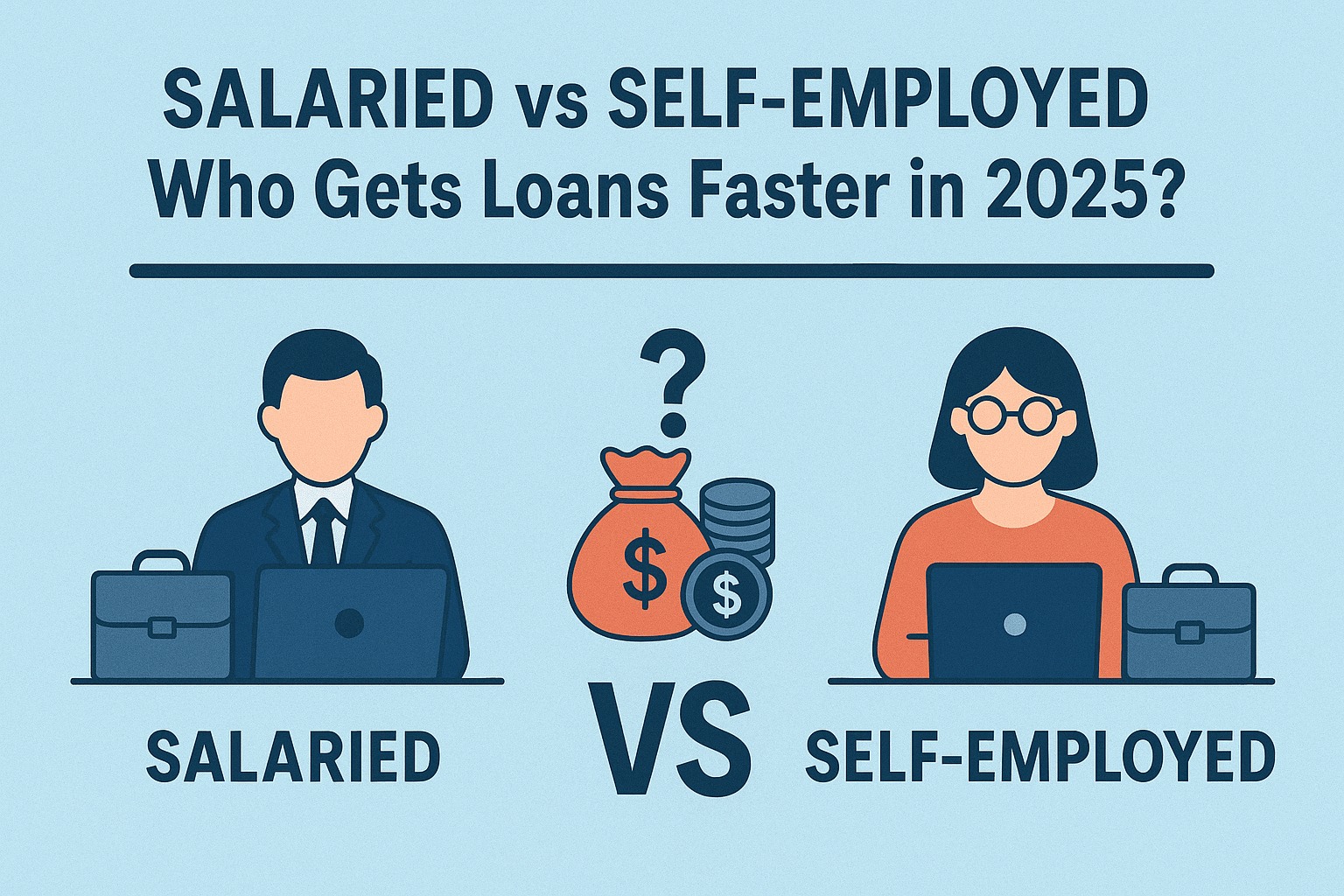
When applying for a loan, one of the first things lenders assess is your employment type. Whether you’re self-employed or salaried, your job profile plays a crucial role in determining loan eligibility, interest rates, and repayment terms. With India’s rapidly evolving workforce—freelancers, entrepreneurs, and gig workers growing alongside traditional salaried professionals—understanding how your job impacts borrowing is more important than ever.
In this blog, we’ll explore how employment type influences loans, what lenders look for, and how borrowers—whether self-employed or salaried—can improve their chances of approval.
Why Employment Type Matters in Loan Applications
Banks and fintech lenders like Vizzve Finance assess risk before approving any loan. Your employment type indicates income stability, which directly affects repayment capacity.
Salaried borrowers are seen as lower-risk due to fixed monthly income.
Self-employed individuals may have fluctuating earnings, making lenders more cautious.
Gig workers/freelancers fall into a mixed category, with growing recognition but still limited trust from traditional banks.
Loan Eligibility for Salaried Borrowers
If you’re a salaried employee, lenders usually evaluate:
Job stability – longer tenure with the same employer improves credibility.
Company profile – working in a reputed organization often helps.
Salary amount – higher take-home pay increases loan limits.
Credit history – timely repayment records build trust.
✅ Benefits for Salaried Borrowers:
Easier access to personal loans, home loans, and auto loans.
Lower interest rates compared to self-employed individuals.
Pre-approved loan offers from banks/fintech apps like Vizzve.
Loan Eligibility for Self-Employed Borrowers
Entrepreneurs, business owners, and professionals (doctors, lawyers, freelancers) fall into this category. Lenders check:
Business income consistency (profit and loss statements, ITR filings).
Years in business – longer stability = better trust.
Cash flow strength – proves ability to handle EMI payments.
Tax compliance & documentation – key to proving financial health.
⚠️ Challenges for Self-Employed:
Higher documentation requirements.
Interest rates may be slightly higher due to income unpredictability.
Some lenders may require collateral for large loans.
Impact of Job Type on Loan Amount & Interest Rates
| Factor | Salaried Borrower | Self-Employed Borrower |
|---|---|---|
| Income Stability | Fixed monthly salary | Variable income |
| Documentation | Salary slips, bank statements | ITR, business proof, balance sheet |
| Interest Rates | Lower (due to lower risk) | Slightly higher |
| Loan Processing Speed | Faster (pre-approved possible) | Slower, due to verification |
| Loan Amount | Based on salary & employer | Based on profits & cash flow |
How to Improve Loan Eligibility (For Both Categories)
No matter your employment type, here are steps to boost approval chances:
Maintain a good credit score (750+).
Show stable income records – salaried: salary slips; self-employed: audited ITRs.
Avoid frequent job or business changes.
Keep debt-to-income ratio low (less than 40%).
Use fintech lenders like Vizzve Finance that are more flexible in evaluating non-traditional borrowers.
Future of Borrowing: Changing Landscape
With India’s Digital India push, fintech innovations, and UPI-based loan disbursements, the gap between salaried and self-employed borrowers is narrowing. Startups and digital lenders are building models that use cash flow data, digital footprints, and alternative credit scores to assess eligibility—giving self-employed professionals equal footing in the credit ecosystem.
Conclusion
Your job type—salaried or self-employed—has a direct impact on how much you can borrow, how quickly your loan gets approved, and what interest rate you’ll pay. While salaried employees may enjoy easier approvals, self-employed borrowers can improve eligibility with strong documentation and fintech-powered lending platforms like Vizzve Finance.
In 2025 and beyond, as India’s workforce evolves, lenders will increasingly adopt data-driven, inclusive lending models, ensuring every borrower—whether salaried, self-employed, or freelance—has fair access to credit.
FAQs
1. Do salaried employees always get lower loan interest rates than self-employed borrowers?
Not always, but generally yes—because salaried income is seen as more stable.
2. Can self-employed individuals get instant personal loans?
Yes. Many fintech apps, including Vizzve Finance, now provide quick loan approvals for self-employed borrowers with digital verification.
3. What documents are required for self-employed loan applicants?
Commonly required: ITRs for 2-3 years, business proof, GST filings, and bank statements.
4. Do gig workers qualify for loans in India?
Yes, though traditional banks may hesitate. Fintech lenders are increasingly recognizing freelancers and gig workers as eligible borrowers.
5. How does job stability affect loan eligibility?
The longer you’’ve been in the same job or business, the higher your credibility with lenders, improving loan chances.
Published on : 26th August
Published by : SMITA
www.vizzve.com || www.vizzveservices.com
Follow us on social media: Facebook || Linkedin || Instagram
🛡 Powered by Vizzve Financial
RBI-Registered Loan Partner | 10 Lakh+ Customers | ₹600 Cr+ Disbursed
https://play.google.com/store/apps/details?id=com.vizzve_micro_seva&pcampaignid=web_share