

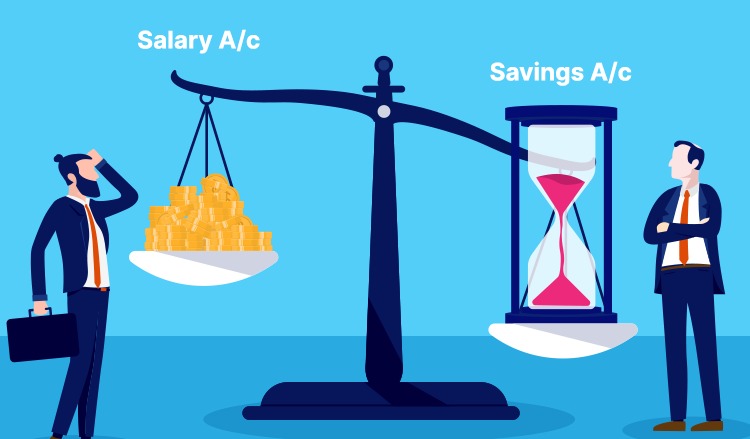
Whether it’s a home loan, personal loan or car loan, your EMIs must be paid on time to protect your credit score and avoid charges. But many borrowers don’t realise that the type of bank account they use for EMI auto-debit can influence repayment success.
Both salary accounts and savings accounts can be used for EMIs, but each has different advantages.
Here’s a clear and practical comparison to help you choose the best option for managing EMIs in 2025.
What Is a Salary Account?
A salary account is opened by your employer to credit your monthly salary.
It typically offers:
Zero balance requirement
Higher transaction limits
Quick salary credit
Easy auto-debit setup
Salary accounts often remain active as long as your employment continues.
What Is a Savings Account?
A savings account is opened by you personally.
It offers:
Freedom to choose your bank
Interest on your balance
Various auto-debit options
Long-term account stability
Savings accounts are ideal for managing finances beyond salary inflows.
Which Is Better for Managing EMIs?
Here’s a breakdown based on key factors:
1. Stability & Continuity
Savings Account — Better
If you switch jobs, your salary account may become inactive after 2–3 months.
This can lead to missed EMIs, penalty charges and score dips.
A savings account stays active regardless of employment changes.
2. EMI Auto-Debit Reliability
Savings Account — More Reliable
Savings accounts maintain a steady balance if you plan it well.
Salary accounts depend on whether your salary credits on time.
If salary is delayed, EMI can bounce.
3. Minimum Balance & Charges
Salary Account — Better
Most salary accounts have zero balance requirements, making EMI management easier when income fluctuates.
Savings accounts require maintaining minimum balance, especially in private banks.
4. Salary Delays & Job Switch Risk
Savings Account — Safer
A job change, salary delay or probation period may disrupt EMI auto-debits from salary accounts.
Savings account avoids this risk.
5. Control Over Money Management
Savings Account — Better
You can:
Maintain a fixed EMI balance
Transfer funds on a schedule
Avoid mixing daily expenses with EMI money
Salary accounts often get drained immediately for expenses.
6. Offers & Loan Linking
Salary Account — Better
Banks often give special:
Pre-approved loan offers
Lower personal-loan rates
Faster processing
because they see your income flow.
Final Verdict: Which One Should You Use for EMIs?
Use a Savings Account for EMI Payments
It is more stable, reliable and independent of your job situation.
Use a Salary Account for Daily Expenses & Salary Credit
But avoid relying on it for long-term EMI auto-debits.
Best Practice for 2025:
Keep one dedicated savings account ONLY for EMIs.
Every month, transfer EMI funds → EMI auto-debits → No bounce → Higher score.
FAQs
Q1. Can EMIs be debited from a salary account?
Yes, but it becomes risky if you change jobs or salary gets delayed.
Q2. What happens if my salary account becomes inactive?
EMIs will bounce, leading to penalties and a credit score drop.
Q3. Which is safer for maintaining credit score?
A savings account dedicated to EMIs.
Q4. Can I switch my EMI auto-debit to another account?
Yes. You can request your lender to change the ECS/NACH mandate.
Q5. Should I maintain a separate account just for EMIs?
Yes. It reduces errors and helps maintain a clean repayment record.
Published on : 15th November
Published by : SMITA
www.vizzve.com || www.vizzveservices.com
Follow us on social media: Facebook || Linkedin || Instagram
🛡 Powered by Vizzve Financial
RBI-Registered Loan Partner | 10 Lakh+ Customers | ₹600 Cr+ Disbursed