

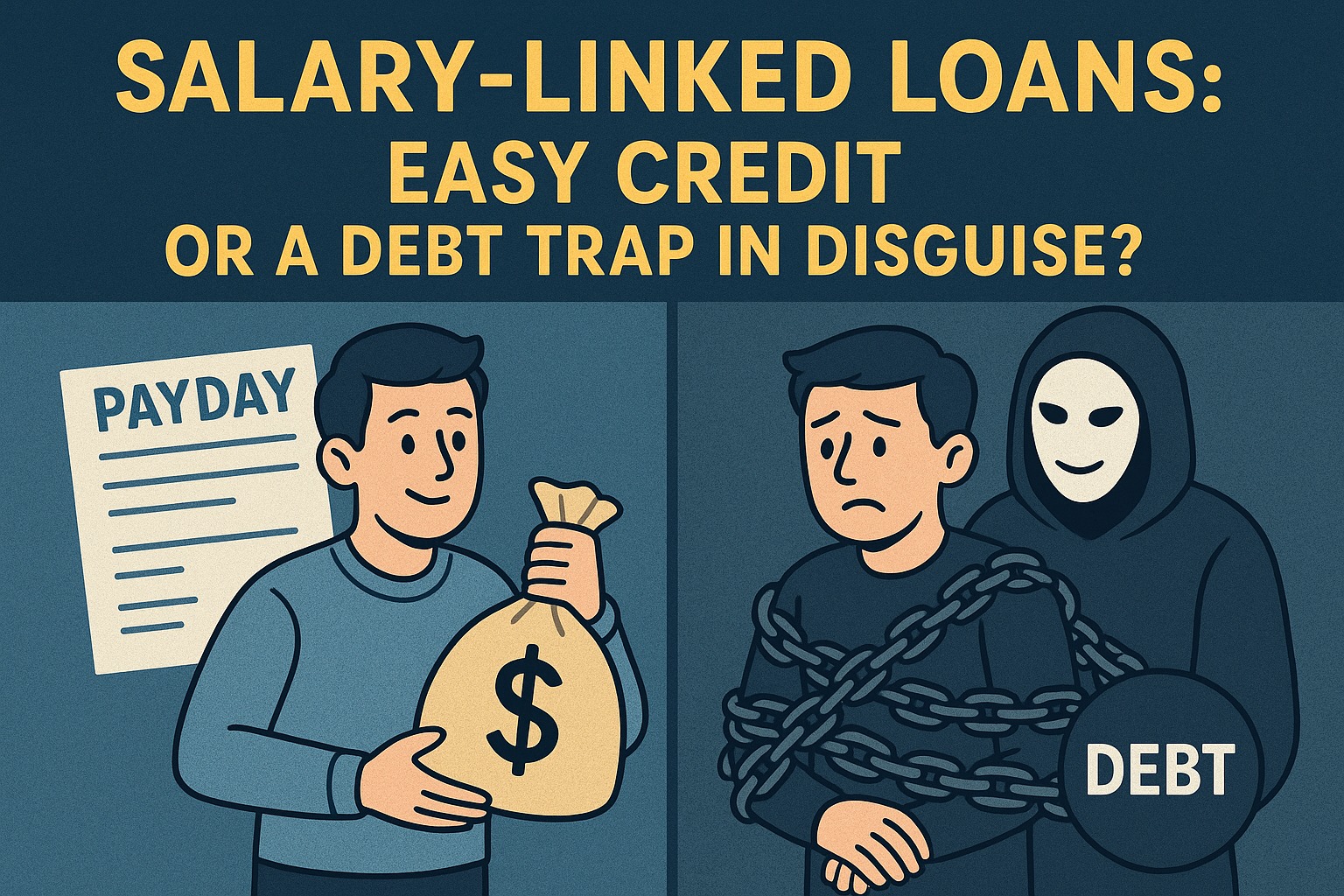
In recent years, salary-linked loans have become one of the most talked-about financial trends in India’s workforce.
From start-up employees to government workers, these loans are being pitched as a quick and easy way to access cash, directly tied to your monthly salary.
But are they as convenient as they seem — or do they come with hidden risks?
Let’s break it down with Vizzve Finance.
What Are Salary-Linked Loans?
A salary-linked loan is a short-term personal loan offered to salaried employees, where the repayment is automatically deducted from their salary every month.
The loan amount typically depends on your monthly income and employer’s credibility, making approval faster and documentation lighter.
Why Salary-Linked Loans Are Growing Popular
Quick Disbursal:
Employees can access funds within hours since income proof and employer verification are already in place.
Minimal Documentation:
No need for extensive paperwork — salary slips and ID proof often suffice.
Automatic EMI Deduction:
Payments are made directly from your salary, reducing the risk of missed EMIs.
Attractive Interest Rates:
Some lenders offer slightly lower rates for salaried professionals from reputed organizations.
The Hidden Side: What You Should Know
While salary-linked loans offer speed and convenience, they also carry potential downsides that borrowers often overlook.
Loss of Salary Control:
Since EMIs are auto-deducted, you have less flexibility in managing your monthly income.
Employer Dependency:
Changing or losing your job can create repayment complications — your loan remains even if your salary stops.
Privacy Concerns:
Sharing employment and salary details with third-party lenders can pose data security risks.
Debt Cycle Risk:
Easy access can lead to frequent borrowing, creating dependency on short-term credit.
Salary-Linked Loan vs Regular Personal Loan
| Parameter | Salary-Linked Loan | Regular Personal Loan |
|---|---|---|
| Approval Speed | Fast (within hours) | Moderate (1–3 days) |
| Repayment Mode | Auto salary deduction | Manual or auto debit |
| Flexibility | Limited | Higher |
| Job Dependency | High | Low |
| Data Sharing | With employer | Independent |
| Best For | Short-term needs | Medium to long-term financing |
Expert Insight from Vizzve Finance
At Vizzve Finance, we’ve observed a surge in young professionals opting for salary-linked loans to manage monthly cash flow gaps or urgent expenses.
While these loans serve as a financial cushion, we recommend using them only for genuine short-term needs, not for recurring expenses or lifestyle upgrades.
Before applying, ensure that:
Your total debt-to-income ratio stays below 40%.
You understand prepayment and job-change clauses in the agreement.
You have an emergency fund for at least 3 months of EMIs.
❓ FAQs
1️⃣ Are salary-linked loans better than credit cards?
They can be, in terms of interest rates, but credit cards offer more flexibility and rewards.
2️⃣ What happens if I change jobs?
You’ll need to inform your lender and update repayment arrangements — failure to do so can trigger penalties.
3️⃣ Are salary-linked loans safe?
Yes, if offered by reputed financial institutions. Always check for data privacy policies and clear terms.
4️⃣ Can I take multiple salary-linked loans?
Not advisable. Taking too many short-term loans can harm your credit score and increase EMI burden.
Final Thoughts
Salary-linked loans are a double-edged sword — offering unmatched convenience but also creating dependency risks if misused.
They work best when used responsibly for urgent, short-term financial needs and repaid on time.
At Vizzve Finance, we encourage borrowers to view salary-linked loans as a financial tool, not a habit.
Convenience is good — but control over your salary and credit health is even better.
Published on : 4th November
Published by : SMITA
www.vizzve.com || www.vizzveservices.com
Follow us on social media: Facebook || Linkedin || Instagram
🛡 Powered by Vizzve Financial
RBI-Registered Loan Partner | 10 Lakh+ Customers | ₹600 Cr+ Disbursed