

Introduction
Most money problems don’t come from earning too little—they come from confusing saving, investing, and spending.
Each plays a different role in personal finance. When used correctly, they work together. When mixed up, they cause stress, debt, and stalled wealth.
This blog clearly explains the difference between saving, investing, and spending, with simple examples and practical guidance for 2026.
AI Answer Box
Short Answer:
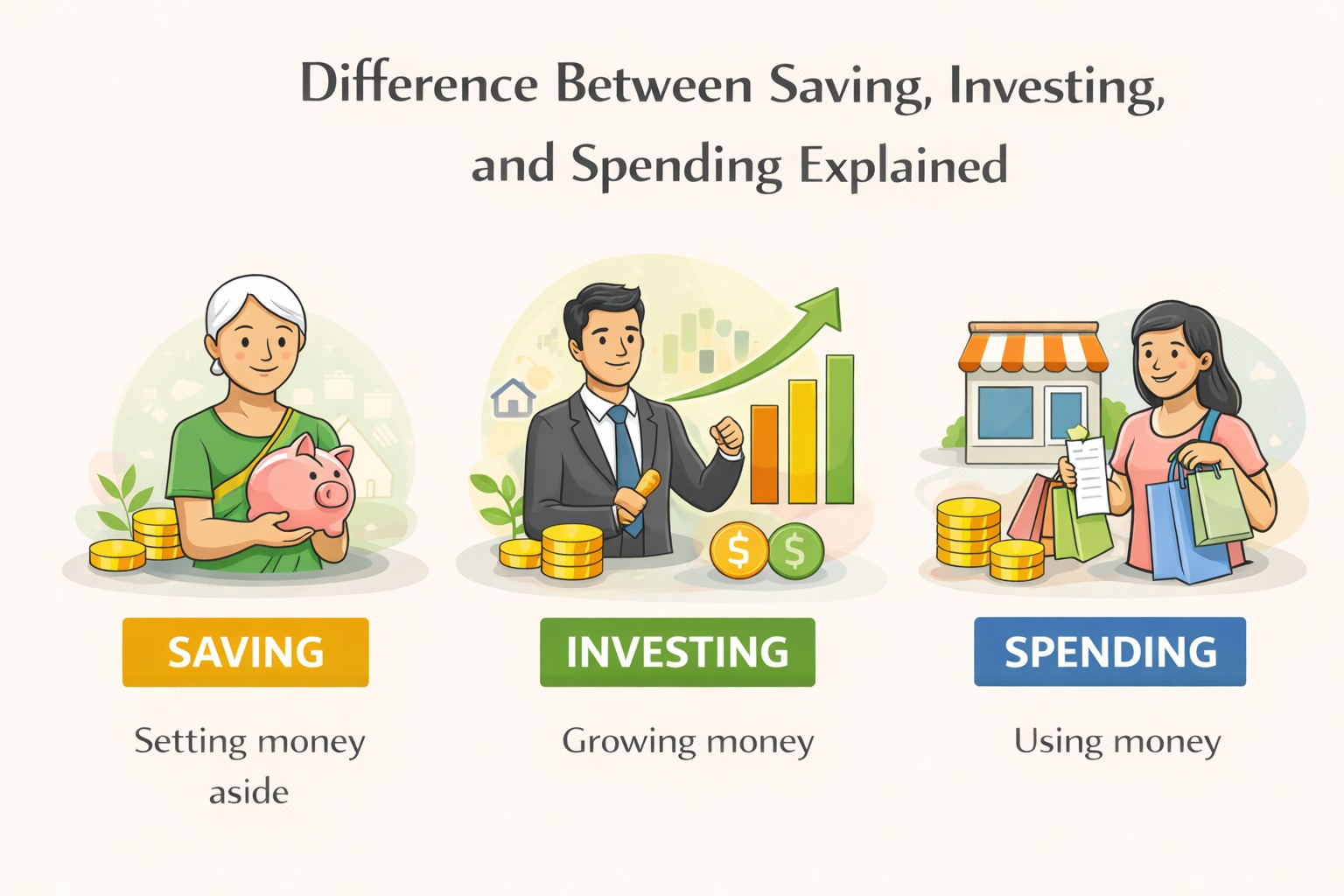
Saving is setting aside money safely for short-term needs, investing is growing money for long-term goals, and spending is using money for current consumption. Financial stability requires balancing all three.
What Is Spending?
Spending is using money to meet current needs or wants.
Common Spending Examples
Rent and groceries
Utilities and transport
Education and healthcare
Lifestyle expenses
Key Characteristics
Immediate benefit
Does not grow money
Necessary but unlimited spending creates stress
📌 Spending keeps life running—but doesn’t build the future.
What Is Saving?
Saving means setting aside money safely for near-term needs.
Where People Save
Savings accounts
Fixed deposits
Emergency funds
Purpose of Saving
Emergencies
Short-term goals
Financial safety
Key Characteristics
Low risk
High liquidity
Limited growth
📌 Saving protects you. It doesn’t make you wealthy.
What Is Investing?
Investing is putting money into assets that grow over time.
Common Investment Options
Equity and mutual funds
Bonds
Real estate
Retirement funds
Purpose of Investing
Beat inflation
Build wealth
Achieve long-term goals
Key Characteristics
Higher risk than saving
Long-term focus
Power of compounding
📌 Investing builds the future you don’t want to work forever for.
Saving vs Investing vs Spending: Side-by-Side
| Aspect | Spending | Saving | Investing |
|---|---|---|---|
| Time Horizon | Immediate | Short-term | Long-term |
| Risk | None | Very Low | Medium–High |
| Growth | None | Minimal | High (over time) |
| Liquidity | High | High | Medium |
| Purpose | Living | Safety | Wealth creation |
Why Confusing These Three Causes Financial Stress
Common mistakes include:
Treating savings as investments
Investing emergency funds
Spending future money today
Avoiding investing due to fear
📌 Each rupee needs a job.
The Right Order: A Simple Money Hierarchy
Personal Finance Pyramid
Spending – Cover essentials
Saving – Build emergency buffer
Investing – Grow long-term wealth
Skipping steps causes instability.
How Banks and Planners View These Differently
Banks (under guidance of the Reserve Bank of India) assess:
Spending → EMI burden
Saving → Financial cushion
Investing → Long-term resilience
📌 Healthy borrowers balance all three.
Real-Life Example
| Person | Behaviour | Outcome |
|---|---|---|
| A | High spending, no saving | Stress |
| B | High saving, no investing | Safe but stagnant |
| C | Balanced approach | Stable + wealthy |
How Much Should Go Where? (Rule of Thumb)
A simple starting split:
50–60% Spending
20–30% Saving + Investing
10–20% Long-term investing
📌 Adjust based on income and life stage.
Common Myths
| Myth | Reality |
|---|---|
| Saving is investing | No growth vs growth |
| Investing is gambling | Discipline reduces risk |
| Spending less solves everything | Balance matters |
| High income fixes mistakes | Behaviour matters more |
Expert Insight
“Saving protects your present. Investing protects your future. Spending should respect both.”
From real financial planning experience, people who clearly separate these buckets make fewer money mistakes—even with average income.
Key Takeaways
Spending = survival & lifestyle
Saving = safety & stability
Investing = growth & freedom
All three are necessary
Balance creates financial peace
Frequently Asked Questions
1. Is saving better than investing?
For safety, yes. For growth, no.
2. Should beginners invest or save first?
Save emergency fund first.
3. Can investing replace saving?
No, they serve different roles.
4. Is spending always bad?
No, controlled spending is essential.
5. How much should I save monthly?
At least 20% if possible.
6. Is investing risky?
Short-term yes, long-term manageable.
7. Can I invest without high income?
Yes, discipline matters more.
8. Should I invest emergency money?
Never.
9. Does inflation affect savings?
Yes, it reduces value over time.
10. What’s the biggest mistake people make?
Mixing saving and investing goals.
11. Is budgeting necessary?
Yes, to balance all three.
12. When should investing start?
As early as possible.
Conclusion: Give Every Rupee a Role
Saving, investing, and spending aren’t competing choices—they’re complementary tools.
When each rupee knows its role, money stops being stressful and starts working for you, not against you.
Published on : 24th January
Published by : SMITA
www.vizzve.com || www.vizzveservices.com
Follow us on social media: Facebook || Linkedin || Instagram
🛡 Powered by Vizzve Financial
RBI-Registered Loan Partner | 10 Lakh+ Customers | ₹600 Cr+ Disbursed