

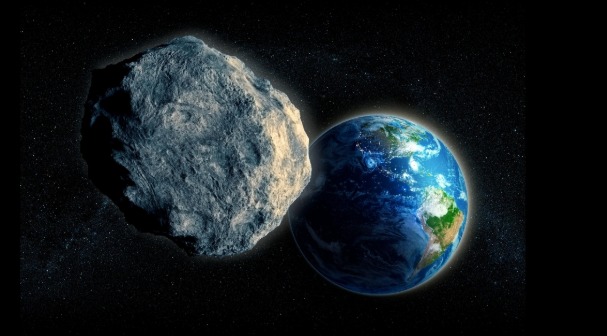
In a groundbreaking development, scientists have identified specific high-risk zones on Earth that are more likely to be impacted by interstellar objects — rare space bodies that originate from outside our solar system.
These findings were published as part of an advanced orbital modelling study that assesses how such objects travel, deflect, and eventually enter Earth’s atmosphere.
The research marks one of the first attempts to systematically predict where extraterrestrial debris could strike if it were to collide with Earth.
What Are Interstellar Objects?
Interstellar objects (ISOs) are space bodies that:
Originate beyond the solar system
Travel at extremely high velocities
Take unpredictable trajectories
Are unaffected by typical planetary gravitational patterns
Famous examples include:
‘Oumuamua (2017)
Comet 2I/Borisov (2019)
While most ISOs pass harmlessly through space, even a small fragment could cause significant atmospheric or surface impact due to its speed.
How Scientists Identified “High-Risk Zones”
The research team used:
Orbital simulations
Atmospheric entry trajectory modelling
Data from previous ISO detections
High-altitude impact records
Gravitational pathway predictions
These models helped calculate where an interstellar object is most likely to approach and enter Earth’s atmosphere.
The High-Risk Zones Identified
According to the study, the highest-probability impact zones fall into three broad regions:
1. The Pacific Ocean Belt
A large portion of ISOs tend to enter Earth’s atmosphere over the Pacific due to:
Earth’s rotation
Atmospheric drag placement
Incoming trajectory angles
This matches historical meteor observations.
2. The Northern Hemisphere Latitude Band
Regions at 30–60°N show higher statistical probability due to tilt, gravitational influences and orbital alignment patterns.
3. Polar Entry Routes
Some objects approach along near-vertical paths, increasing likelihood around polar regions where the magnetic field funnels charged particles — though this remains less frequent compared to mid-latitude entries.
These findings don’t imply guaranteed impacts but highlight statistical likelihood based on hundreds of simulations.
Why Interstellar Objects Pose Unique Risks
Unlike regular meteors or asteroids, ISOs:
Travel faster (50–250 km/s)
Carry higher kinetic energy
Are harder to detect in advance
Follow unusual trajectories
May contain unknown material composition
Even a small ISO could release enormous energy if it exploded in the atmosphere.
🛡 Can Earth Defend Against Such Objects?
Currently, global defence systems are designed for typical Near-Earth Objects (NEOs), not ISOs.
ISOs provide far less warning time because of their speed and unpredictable entry angle.
However, scientists believe:
Early-warning telescopes
Deep-space monitoring missions
AI-powered sky-surveillance systems
can provide better detection capability in the future.
🔬 What the Researchers Say
The team behind the study emphasized that identifying high-risk zones is not meant to alarm the public, but rather to:
Enhance monitoring
Improve atmospheric modelling
Help governments prepare emergency response plans
Support global scientific collaboration
They also noted that actual interstellar impacts are extremely rare, but understanding patterns helps improve planetary defense strategies.
Conclusion
The identification of potential high-risk zones marks a major step forward in space impact research and planetary safety planning.
While the probability of an interstellar object hitting Earth remains low, the study underscores the importance of advanced detection technology and global preparedness.
As scientific tools improve, humanity will be better positioned to understand — and even predict — the behaviour of objects that travel across the stars to reach our planet.
FAQs
Q1. What makes interstellar objects dangerous?
Their extreme speed and unpredictable orbit make them harder to detect and potentially more damaging.
Q2. Are interstellar strikes common?
No. They are extremely rare compared to regular meteoroid entries.
Q3. Which regions are at the highest risk?
Pacific Ocean belt, northern mid-latitude regions, and some polar entry routes.
Q4. Can scientists stop an interstellar object?
Currently, no defence exists specifically for ISOs, but monitoring systems are improving.
Q5. How are interstellar objects detected?
Through telescopes, sky-surveys, infrared tracking, and orbital simulations.
Published on : 13th November
Published by : SMITA
www.vizzve.com || www.vizzveservices.com
Follow us on social media: Facebook || Linkedin || Instagram
🛡 Powered by Vizzve Financial
RBI-Registered Loan Partner | 10 Lakh+ Customers | ₹600 Cr+ Disbursed
Source Credi :tEdited by: Srishti Singh Sisodia — NDTV