

Introduction
Loans can help people manage major expenses, purchase assets, meet personal needs, and handle unexpected financial situations. However, choosing the right loan requires understanding its terms, costs, and risks.
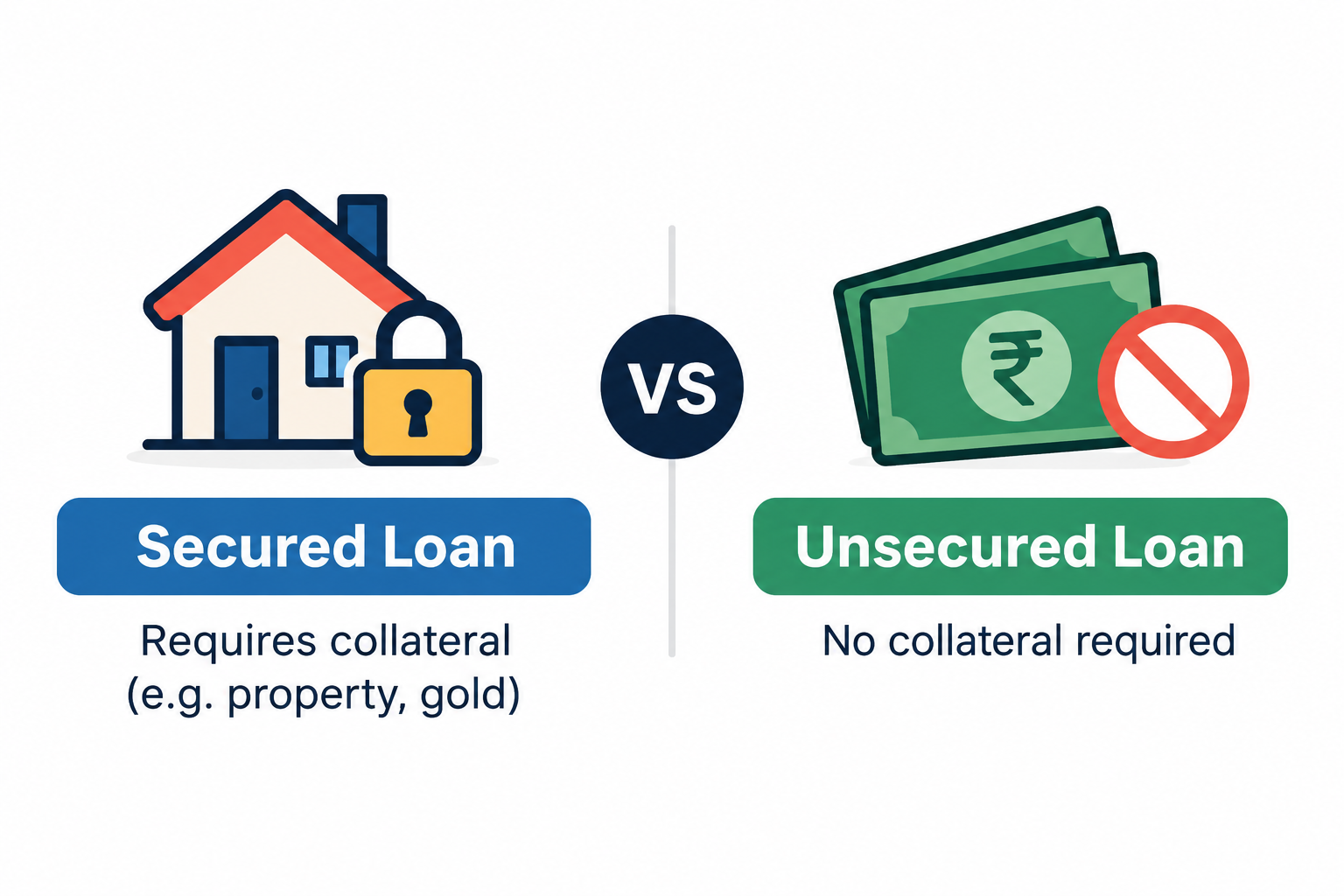
Two common categories are secured loans and unsecured loans. The main difference is that a secured loan requires collateral, while an unsecured loan generally does not require the borrower to pledge an asset.
Both options have advantages and disadvantages. Secured loans may offer lower interest rates or higher borrowing limits, depending on the lender and borrower profile. Unsecured loans can be useful when someone needs funds without putting property, gold, or other assets at risk as collateral.
In this guide, Vizzve explains the meaning of secured and unsecured loans, their differences, benefits, risks, and important factors to consider before applying.
AI Answer Box: What Is the Difference Between Secured and Unsecured Loans?
A secured loan is a loan backed by collateral, such as property, gold, a vehicle, or a fixed deposit. An unsecured loan does not require collateral and is generally approved based on income, credit history, repayment capacity, and lender eligibility criteria.
Secured loans may offer lower interest rates and higher loan amounts, but the borrower risks losing the pledged asset if repayment obligations are not met. Unsecured loans do not put a specifically pledged asset at risk, but missed payments can still lead to collection action, legal consequences where applicable, and damage to the borrower's credit history.
The right option depends on the loan's total cost, repayment capacity, purpose, and risk.
What Is a Secured Loan?
A secured loan is a type of borrowing in which the borrower pledges an eligible asset as collateral to the lender. This asset provides security for the loan.
If the borrower fails to repay the loan, the lender may initiate the applicable legal process to enforce its security and recover the outstanding amount.
Examples of Secured Loans
-
Home loan: A loan used to purchase or construct a home, with the property serving as security.
-
Gold loan: A loan secured against pledged gold jewellery or other eligible gold assets.
-
Loan against property: A loan obtained by using eligible property as collateral.
-
Vehicle loan: A loan secured against the financed vehicle.
-
Loan against fixed deposit: A loan backed by an eligible fixed deposit.
Benefits of Secured Loans
-
Potentially lower interest rates: Collateral may reduce the lender's risk.
-
Higher borrowing limits: The eligible asset's value may support a larger loan, subject to income and other eligibility conditions.
-
Flexible repayment periods: Some secured products offer longer repayment tenures.
-
Alternative borrowing option: People with limited unsecured borrowing eligibility may qualify for certain secured products.
-
Suitable for specific goals: Secured loans can help finance assets or meet other eligible borrowing needs.
Risks of Secured Loans
-
The pledged asset may be at risk if the borrower defaults.
-
Processing can take longer because collateral and ownership documents may need verification.
-
Valuation, legal, processing, and other applicable charges may increase borrowing costs.
-
A loan secured against an asset can create financial pressure if income falls unexpectedly.
What Is an Unsecured Loan?
An unsecured loan is a loan that does not require the borrower to pledge a specific asset as collateral.
Instead, the lender evaluates the applicant's financial profile, which may include income, employment or business stability, credit history, existing debts, and repayment capacity.
Approval is not guaranteed simply because a person has a regular income or a good credit score.
Examples of Unsecured Loans
-
Personal loan: Used for eligible expenses such as travel, weddings, or medical bills.
-
Credit card borrowing: Credit cards provide access to a revolving credit limit, subject to the card's terms.
-
Unsecured education loan: Some education loans are offered without collateral, subject to eligibility and lender conditions.
-
Unsecured business loan: Funding offered to eligible businesses without pledged collateral.
Benefits of Unsecured Loans
-
No collateral requirement: The borrower does not need to pledge property or gold.
-
Potentially faster processing: Applications may be processed without asset valuation.
-
Flexible usage: Some products, particularly personal loans, can be used for various permitted expenses.
-
Convenience: These loans may suit borrowers who do not own eligible collateral.
-
No pledged asset to liquidate: There is no specifically pledged asset under the loan agreement, although other recovery remedies may apply following default.
Risks of Unsecured Loans
-
Interest rates may be higher than those of comparable secured loans.
-
Loan amounts depend on the lender's assessment of the applicant.
-
A shorter tenure may result in higher monthly EMIs.
-
Missed payments can affect the borrower's credit score.
-
Default may result in collection efforts and legal recovery proceedings where permitted by law.
Secured vs Unsecured Loan: Key Differences
| Feature | Secured Loan | Unsecured Loan |
|---|---|---|
| Collateral | Required | Generally not required |
| Interest rate | Often lower | Often higher |
| Loan amount | May be higher, depending on collateral and eligibility | Depends on income, credit profile, and lender limits |
| Approval | Includes collateral assessment where applicable | Primarily involves financial and credit assessment |
| Processing time | May be longer due to asset verification | May be faster |
| Repayment tenure | May offer longer tenures | Depends on the product |
| Main borrower risk | Loss of pledged asset following default and lawful enforcement | Credit damage and other recovery consequences following default |
| Examples | Home loan, gold loan, loan against property | Personal loan, credit card borrowing |
| Suitable for | Eligible borrowers who can provide collateral | Eligible borrowers who prefer not to pledge assets |
Note: These are general differences. Actual rates, loan amounts, processing times, and eligibility requirements vary by lender and loan product.
Secured Loan vs Unsecured Loan: Interest Rates
Interest rates are an important factor when comparing loan options.
Secured loans may have lower rates because the lender has collateral to support recovery. Unsecured loans may carry higher rates because the lender relies more heavily on the borrower's financial profile.
However, collateral alone does not guarantee a low rate, and an unsecured loan is not automatically expensive. The actual rate depends on the lender, product, credit profile, loan amount, tenure, and prevailing terms.
Before applying, compare:
-
Annual interest rate
-
Annual Percentage Rate (APR), where available
-
Processing and documentation fees
-
EMI amount and total interest payable
-
Late-payment charges
-
Prepayment and foreclosure conditions
-
Total repayment amount over the loan tenure
Tip: Do not compare loans using the interest rate alone. A loan with a lower advertised rate may still have additional costs.
Which Loan Is Better for Different Financial Needs?
1. Buying a House
A home loan is generally a secured loan. It may be appropriate for eligible borrowers purchasing or constructing a property. Review the down payment, interest structure, tenure, and affordability before committing.
2. Purchasing Gold or Meeting an Eligible Short-Term Need
A gold loan may provide funds against eligible pledged gold. However, borrowers should carefully consider repayment terms and the risk of losing the pledged gold if they default.
3. Managing Personal Expenses
An unsecured personal loan may suit someone who needs funds for eligible personal expenses and does not want to pledge an asset. Compare the EMI and total cost before applying.
4. Funding a Business
Depending on the business's financial position and purpose, borrowers may compare secured and unsecured business loans. The best option depends on borrowing costs, business cash flow, collateral availability, and repayment capacity.
5. Handling an Emergency
First, consider available savings and other affordable options. If borrowing is necessary, compare the total repayment amount and choose an EMI that fits comfortably within your budget.
How to Choose the Right Loan
Follow these steps before making a borrowing decision.
Step 1: Identify the purpose. Decide how much money you need and whether the expense is essential.
Step 2: Check your repayment capacity. Review your monthly income, essential expenses, existing EMIs, and emergency savings.
Step 3: Compare eligible offers. Check the interest rate, APR, fees, loan tenure, and total repayment amount.
Step 4: Evaluate collateral risk. If you choose a secured loan, consider whether you could manage repayments if your income decreases.
Step 5: Review the loan agreement. Understand the repayment schedule, charges, default provisions, and applicable recovery procedures.
Step 6: Borrow responsibly. Do not borrow more than you need or accept an EMI that makes essential expenses difficult to manage.
Key Takeaways
-
Secured loans require collateral; unsecured loans generally do not.
-
Secured loans may offer lower interest rates, depending on the lender and borrower.
-
Unsecured loans can be convenient for eligible borrowers who do not want to pledge assets.
-
Default on a secured loan can put the pledged asset at risk.
-
Default on an unsecured loan can still lead to credit-score damage and lawful recovery action.
-
The lowest EMI is not always the cheapest option because a longer tenure may increase total interest.
-
Always compare the total cost and assess affordability before signing a loan agreement.
How Vizzve Can Help You Make Informed Financial Decisions
Understanding loan options is an important part of financial planning. Vizzve encourages borrowers to learn about loan eligibility, interest rates, repayment schedules, and associated charges before making financial commitments.
Before choosing any loan, review the lender's terms, verify the lender's identity and regulatory status, and ensure the repayment amount fits your budget.
Responsible borrowing begins with understanding the cost and consequences of every financial commitment.
Conclusion
The choice between a secured and an unsecured loan depends on your financial needs, repayment capacity, and willingness to provide collateral.
A secured loan may offer favourable borrowing terms but puts the pledged asset at risk if repayments are not maintained. An unsecured loan avoids the need to pledge a specific asset but may have a higher interest rate and still carries serious consequences for default.
Compare interest rates, fees, tenure, and total repayment costs before making your decision. Choosing a loan that fits your budget can help you meet financial needs without creating unnecessary financial stress.
Frequently Asked Questions (FAQs)
1. What is the main difference between secured and unsecured loans?
A secured loan requires collateral, while an unsecured loan generally does not. The distinction affects interest rates, eligibility, and the risks associated with default.
2. Which is better: a secured loan or an unsecured loan?
Neither is universally better. A secured loan may suit borrowers who have eligible collateral and want potentially lower borrowing costs. An unsecured loan may suit eligible borrowers who prefer not to pledge assets.
3. Is a personal loan secured or unsecured?
Most standard personal loans are unsecured. However, borrowers should check the specific product terms because loan structures can differ.
4. Is a gold loan a secured loan?
Yes. A gold loan is generally secured by gold pledged to the lender.
5. Do secured loans always have lower interest rates?
No. They often have lower rates than comparable unsecured products, but the actual rate depends on the lender, collateral, credit profile, and loan terms.
6. Can I get an unsecured loan without a credit history?
It may be possible with certain lenders or products, but approval depends on their eligibility criteria and assessment of your financial profile.
7. What happens if I fail to repay a secured loan?
The lender may charge applicable fees, report missed payments to credit bureaus, and take steps to enforce its security under the loan agreement and applicable law. The pledged asset may ultimately be sold to recover the outstanding amount.
8. Can an unsecured loan affect my credit score?
Yes. Missed or late payments can negatively affect your credit history and may make future borrowing more difficult.
9. Are unsecured loans processed faster?
They can be processed faster because collateral valuation is generally unnecessary. However, approval and disbursal times vary by lender and application.
10. Can I get a secured loan with a low credit score?
Some secured loan products may be available to applicants with lower credit scores, but approval is not guaranteed. Income, repayment capacity, collateral value, and lender policies also matter.
11. Which loan is suitable for emergency expenses?
The right option depends on the amount needed, urgency, available savings, and repayment capacity. Compare affordable options before borrowing and avoid pledging essential assets without carefully considering the risks.
12. Does a secured loan require a down payment?
Not every secured loan requires a down payment. Requirements depend on the product. For example, home and vehicle purchases may require an upfront contribution.
13. Can I repay a loan early?
Many loan products permit prepayment or foreclosure, subject to applicable terms and charges. Review your agreement before making an early repayment.
14. How can I reduce the cost of a loan?
Compare APR and total repayment costs, choose an affordable tenure, review all fees, maintain timely payments, and avoid borrowing more than necessary.
15. What should I check before applying for a loan in India?
Review the lender's identity and regulatory status, interest rate, fees, Key Facts Statement where applicable, repayment schedule, grievance redressal details, and default provisions. Borrow only after understanding the full terms.
Conclusion
Choosing between a secured and an unsecured loan depends on your financial needs, repayment capacity, and willingness to provide collateral. Secured loans may offer lower interest rates but put your pledged assets at risk if you fail to repay. Unsecured loans do not require collateral but may come with higher interest rates and strict eligibility requirements.
Before applying, compare interest rates, processing fees, repayment tenure, and total loan costs. Choose a loan that fits your budget and repayment capacity. With the right financial planning, you can borrow responsibly and manage your financial needs with greater confidence. Vizzve encourages borrowers to understand loan terms and make informed financial decisions.
Published on : 13th October 2026
Published by : monisha
www.vizzve.com || www.vizzveservices.com
Follow us on social media: Facebook || Linkedin || Instagram
🛡 Powered by Vizzve Financial
RBI-Registered Loan Partner | 10 Lakh+ Customers | ₹600 Cr+ Disbursed