

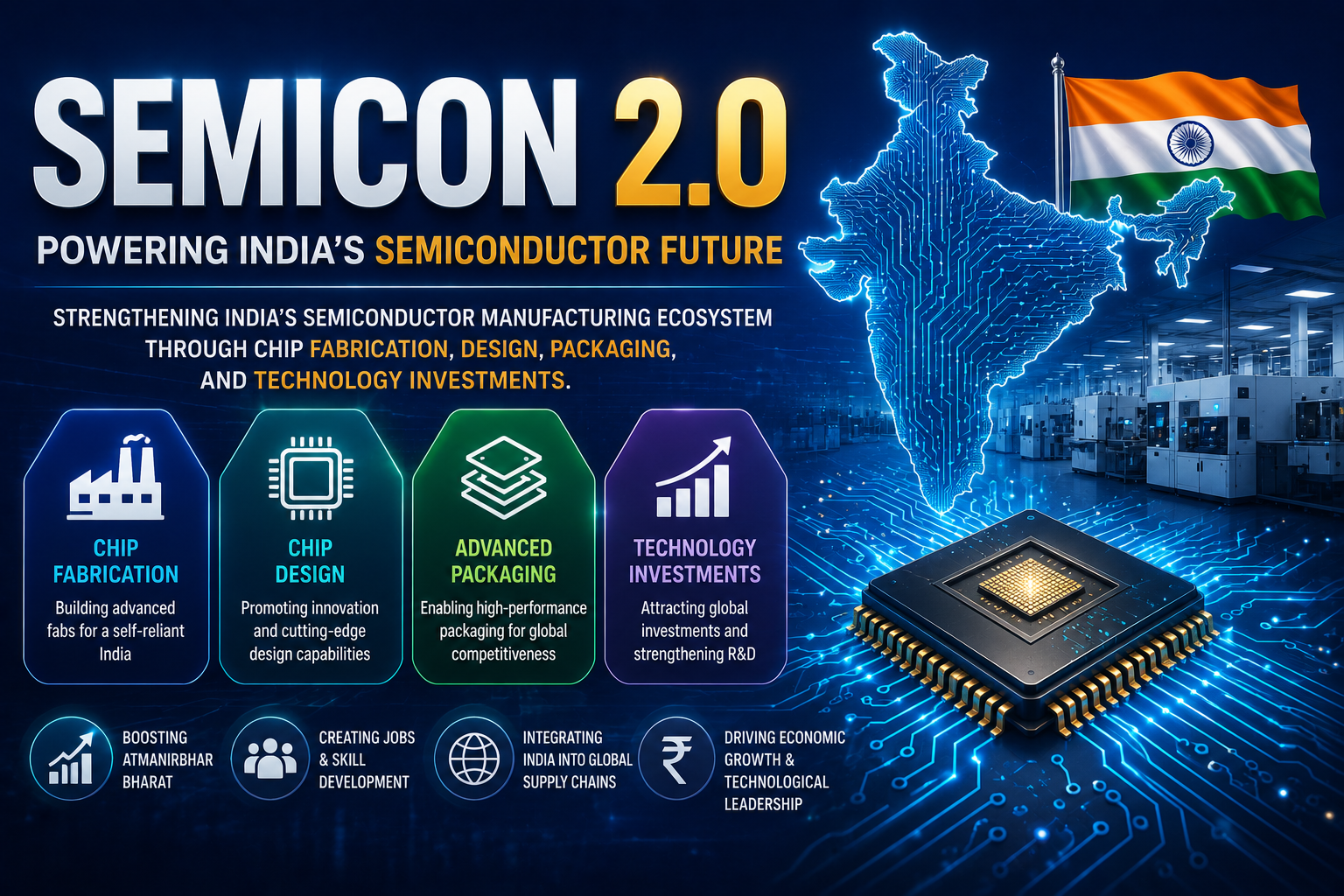
Semicon 2.0 is India's next phase of semiconductor development aimed at expanding domestic chip manufacturing, semiconductor design, packaging, testing, and supply chain capabilities. Building on the Semiconductor Mission, the initiative seeks to attract global investment, reduce import dependence, create high-skilled jobs, and position India as a major player in the global semiconductor value chain.
AI Answer Box
What is Semicon 2.0?
Semicon 2.0 is the proposed next phase of India's semiconductor strategy focused on strengthening chip manufacturing, advanced packaging, semiconductor design, research, and supply chain development. The initiative aims to encourage domestic production, attract international semiconductor companies, improve technological capabilities, and support India's long-term manufacturing ambitions.
What Is Semicon 2.0?
Semiconductors power nearly every modern electronic device—from smartphones and laptops to electric vehicles, medical equipment, industrial automation, telecommunications, and artificial intelligence systems.
Recognizing the strategic importance of chips, India is preparing the next phase of its semiconductor journey through Semicon 2.0, an initiative expected to deepen the country's manufacturing ecosystem beyond initial fabrication projects.
The initiative aligns with India's long-term vision of becoming a global electronics manufacturing hub while strengthening supply chain resilience and reducing dependence on imported semiconductors.
Why Semiconductors Matter
Semiconductors are often called the "building blocks of the digital economy."
They are essential for:
- Smartphones
- Laptops
- Data centres
- Artificial Intelligence
- Electric Vehicles (EVs)
- Consumer electronics
- Defence equipment
- Medical devices
- Telecommunications
- Industrial automation
As digital technologies continue expanding worldwide, demand for advanced semiconductor chips is expected to grow significantly over the coming decade.
What Could Semicon 2.0 Focus On?
The next phase of India's semiconductor strategy is expected to strengthen multiple parts of the value chain.
Key Focus Areas
- Semiconductor fabrication
- Chip packaging
- Assembly and testing
- Semiconductor design
- Research & Development
- Equipment manufacturing
- Supply chain development
- Skilled workforce creation
Rather than focusing on only one segment, the initiative aims to develop a comprehensive semiconductor ecosystem.
Why India Needs a Strong Semiconductor Industry
India currently imports a significant share of the semiconductor components used across industries.
Expanding domestic manufacturing could help:
- Reduce import dependence
- Improve supply chain resilience
- Increase exports
- Create high-value employment
- Strengthen technological capabilities
- Support national security
A stronger semiconductor ecosystem would also benefit India's rapidly growing electronics manufacturing sector.
Key Growth Drivers
1. Rising Electronics Demand
India is among the world's fastest-growing electronics markets.
Demand continues rising for:
- Smartphones
- Consumer electronics
- Electric vehicles
- Smart appliances
- Industrial equipment
This creates long-term opportunities for domestic semiconductor manufacturing.
2. Global Supply Chain Diversification
Many global technology companies are seeking to diversify manufacturing beyond traditional production hubs.
India is emerging as an attractive destination because of:
- Large domestic market
- Skilled engineering talent
- Government incentives
- Improving infrastructure
- Growing manufacturing ecosystem
3. Government Support
The government continues promoting semiconductor manufacturing through:
- Financial incentives
- Infrastructure development
- Policy support
- Investment promotion
- International partnerships
These initiatives aim to attract both domestic and global semiconductor companies.
4. Digital Transformation
Rapid adoption of technologies such as:
- Artificial Intelligence (AI)
- 5G
- Cloud computing
- Internet of Things (IoT)
- Electric mobility
is increasing long-term semiconductor demand across industries.
Industries That Could Benefit
A successful semiconductor ecosystem could support multiple sectors.
Potential Beneficiaries
- Consumer Electronics
- Automotive
- Electric Vehicles
- Telecom
- Defence Manufacturing
- Healthcare
- Aerospace
- Industrial Automation
- Renewable Energy
- Artificial Intelligence
Challenges Ahead
Despite strong opportunities, building a semiconductor industry requires long-term investment.
Key challenges include:
- High capital requirements
- Technology complexity
- Skilled workforce shortages
- Infrastructure development
- Water and energy requirements
- Global competition
Addressing these challenges will be critical for long-term success.
Expert Commentary (EEAT)
Semiconductor manufacturing is one of the world's most capital-intensive and technologically advanced industries. India's strategy extends beyond manufacturing chips to building an integrated ecosystem that includes design, packaging, testing, research, talent development, and supply chain capabilities. Success will depend on sustained policy support, private-sector investment, global technology partnerships, and the ability to develop a skilled workforce. If executed effectively, Semicon 2.0 could strengthen India's position in global manufacturing and support long-term economic growth.
Key Takeaways
- Semicon 2.0 aims to strengthen India's semiconductor ecosystem.
- The initiative focuses on manufacturing, design, packaging, and R&D.
- Growing electronics demand supports long-term semiconductor opportunities.
- Global supply chain diversification creates new investment potential.
- Government incentives continue encouraging semiconductor investment.
- Multiple industries stand to benefit from domestic chip manufacturing.
- Building a competitive semiconductor ecosystem will require sustained investment and policy support.
Pros & Cons of Semicon 2.0
Pros
- Reduces India's dependence on imported semiconductor chips.
- Strengthens the Make in India manufacturing initiative.
- Attracts global technology companies and foreign investment.
- Creates high-skilled employment opportunities.
- Supports the growth of electronics, EVs, AI, telecom, and defense industries.
- Improves supply chain resilience against global disruptions.
- Boosts exports and enhances India's technological capabilities.
- Encourages innovation, research, and semiconductor design.
Cons
- Semiconductor fabrication requires very high capital investment.
- Projects have long gestation periods before becoming profitable.
- Advanced chip manufacturing demands highly skilled talent.
- High water and electricity consumption may require significant infrastructure upgrades.
- Global competition from established semiconductor hubs remains intense.
- Technology evolves rapidly, requiring continuous investment and upgrades.
Impact on India's Economy, Businesses & Investors
For the Indian Economy
Semicon 2.0 has the potential to become a major pillar of India's manufacturing growth strategy.
Expected Benefits
- Higher manufacturing output
- Increased exports
- Reduced import dependence
- More employment opportunities
- Greater foreign direct investment (FDI)
- Improved technological self-reliance
- Stronger contribution to GDP
The initiative could also strengthen India's position in global technology supply chains.
For Businesses
A stronger domestic semiconductor ecosystem can benefit companies across multiple industries.
Key Beneficiary Sectors
- Consumer Electronics
- Smartphones
- Electric Vehicles (EVs)
- Automobile Manufacturing
- Telecom Equipment
- Data Centres
- Industrial Automation
- Healthcare Technology
- Aerospace
- Defense Manufacturing
Local chip production may reduce procurement risks and improve supply chain efficiency over time.
For Investors
Semicon 2.0 could create long-term investment opportunities across manufacturing and technology.
Investors should monitor:
- Semiconductor manufacturing companies
- Electronics manufacturing firms
- Equipment suppliers
- Chip design companies
- EV ecosystem businesses
- Industrial automation companies
- Government policy announcements
- Capital expenditure trends
Long-term investment decisions should focus on companies with strong execution capabilities, financial strength, and exposure to India's semiconductor value chain.
Frequently Asked Questions (FAQs)
1. What is Semicon 2.0?
Semicon 2.0 is the proposed next phase of India's semiconductor strategy aimed at strengthening chip manufacturing, design, packaging, testing, research, and the overall semiconductor ecosystem.
2. Why is the semiconductor industry important?
Semiconductors power smartphones, computers, automobiles, AI systems, telecom equipment, medical devices, industrial machinery, and countless other electronic products.
3. Why is India investing in semiconductor manufacturing?
India aims to reduce import dependence, strengthen supply chains, create high-skilled jobs, attract global investment, and become a major electronics manufacturing hub.
4. Which industries will benefit?
Consumer electronics, automotive, electric vehicles, telecom, defense, healthcare, aerospace, industrial automation, renewable energy, and artificial intelligence are expected to benefit.
5. What challenges does semiconductor manufacturing face?
High capital costs, technology complexity, infrastructure needs, skilled workforce requirements, and global competition remain major challenges.
6. Will Semicon 2.0 create jobs?
Yes. The initiative is expected to generate employment in manufacturing, engineering, research, design, testing, logistics, and supporting industries.
7. Why are semiconductor chips called the "brains" of electronic devices?
They process, store, and manage data, enabling electronic devices to perform computing and communication functions.
8. How does Semicon 2.0 support the Make in India initiative?
By encouraging domestic semiconductor production, the initiative strengthens India's manufacturing ecosystem and reduces dependence on imports.
9. Why is global demand for semiconductors increasing?
Growing adoption of AI, electric vehicles, 5G, cloud computing, IoT, consumer electronics, and industrial automation continues driving demand.
10. How can investors benefit?
Investors may find long-term opportunities in semiconductor manufacturing, electronics production, equipment suppliers, and companies supporting the semiconductor supply chain.
11. Can India become a global semiconductor hub?
India has strong potential due to its engineering talent, large domestic market, supportive government policies, and expanding manufacturing ecosystem, though achieving this will require sustained investment and execution.
12. How long does it take to build semiconductor manufacturing facilities?
Semiconductor fabrication plants typically require several years to construct, commission, and begin large-scale commercial production.
13. What role does research play?
Research and development drive innovation in chip design, manufacturing processes, and advanced semiconductor technologies.
14. Will Semicon 2.0 attract foreign investment?
Government incentives and policy support are expected to encourage both domestic and international semiconductor companies to invest in India.
15. What is the long-term outlook?
The long-term outlook is positive as demand for semiconductors continues growing globally, supported by digital transformation and expanding electronics manufacturing.
Conclusion
Semicon 2.0 represents a significant step in India's ambition to become a global semiconductor and advanced manufacturing powerhouse. By focusing on chip fabrication, design, packaging, research, and supply chain development, the initiative has the potential to strengthen India's technological capabilities and reduce dependence on imported semiconductors.
Although the industry requires substantial investment, advanced technology, and long-term policy support, successful implementation could create high-value jobs, attract global investment, and accelerate India's transformation into a leading manufacturing destination. For businesses and investors, Semicon 2.0 offers promising long-term opportunities aligned with India's digital and industrial growth story.
Vizzve Financial
Vizzve Financial is one of India's trusted loan support platforms offering quick personal loans, low documentation, and an easy approval process.
Whether you need funds for business expansion, technology investments, education, home improvement, or personal financial needs, Vizzve Financial provides a fast, secure, and hassle-free borrowing experience.
Apply today at: www.vizzve.com
Published on : 16th July
Published by : SMITA
www.vizzve.com || www.vizzveservices.com
Follow us on social media: Facebook || Linkedin || Instagram
🛡 Powered by Vizzve Financial
RBI-Registered Loan Partner | 10 Lakh+ Customers | ₹600 Cr+ Disbursed