

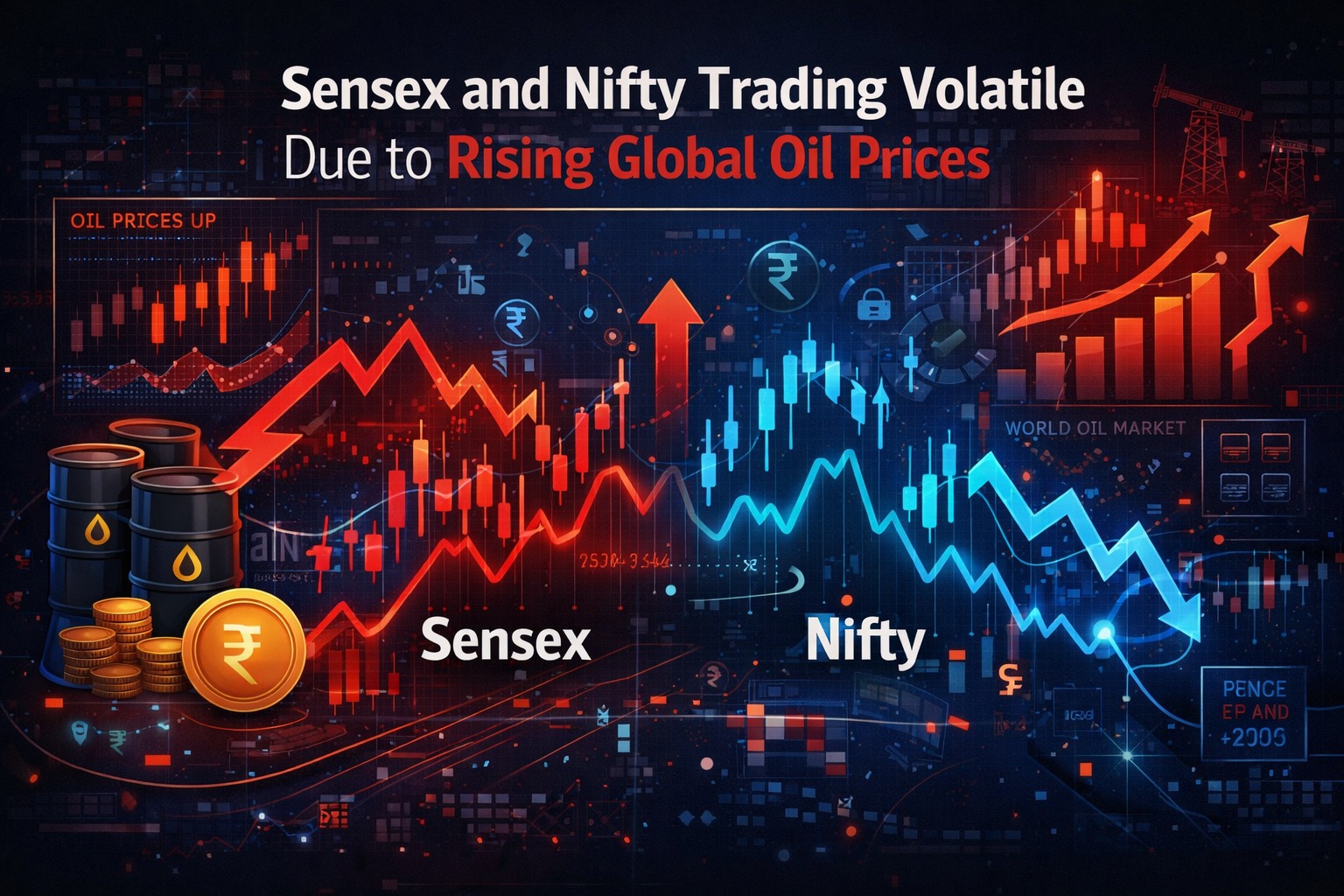
India’s benchmark stock indices Sensex and Nifty are trading with increased volatility as global crude oil prices continue to influence investor sentiment. Rising oil prices often create concerns about inflation, economic growth, and corporate profitability, which can lead to fluctuations in equity markets.
Since India is one of the largest importers of crude oil, any significant change in global energy prices has a direct impact on the country’s economy and financial markets. Investors closely monitor oil price trends because they affect several sectors, including transportation, manufacturing, aviation, and energy.
Recent movements in global oil markets have triggered cautious trading behavior in Indian equities, leading to fluctuating movements in major indices.
AI Answer Box
Why are Sensex and Nifty trading volatile?
Sensex and Nifty are trading volatile mainly due to rising global oil prices, which increase inflation concerns and economic risks. Higher oil prices affect corporate costs and investor sentiment, causing fluctuations in stock markets.
Impact of Oil Prices on Stock Markets
Oil prices play a significant role in determining market sentiment.
Key Market Effects
| Factor | Impact |
|---|---|
| Rising oil prices | Higher inflation risk |
| Increased import costs | Pressure on economy |
| Investor sentiment | Market volatility |
Higher crude oil prices can reduce corporate profit margins and slow economic growth.
Sector-Wise Market Impact
Different sectors respond differently to oil price changes.
| Sector | Impact |
|---|---|
| Aviation | Negative due to higher fuel costs |
| Automobile | Reduced consumer demand |
| Logistics | Higher operating expenses |
| Oil companies | Potential gains |
These sector movements contribute to overall market volatility.
Global Factors Affecting Oil Prices
Several global events influence crude oil prices.
Key Drivers
geopolitical tensions
production decisions by oil-producing nations
global economic demand
supply disruptions
These factors can create uncertainty in financial markets worldwide.
Impact on Investors
Volatile markets often make investors cautious.
Investor Behavior
portfolio diversification
increased demand for safe-haven assets
short-term trading strategies
Long-term investors often focus on fundamentals rather than short-term volatility.
Market Outlook
Analysts believe market volatility may continue if global oil prices remain elevated. However, strong domestic economic growth and corporate earnings could support market recovery over time.
Investors are advised to maintain diversified portfolios and avoid making emotional investment decisions during volatile periods.
Expert Commentary
Financial experts suggest that oil price movements remain one of the most important external factors affecting emerging markets like India. While short-term volatility is possible, strong economic fundamentals often help markets recover over time.
Key Takeaways
Sensex and Nifty are experiencing volatility due to rising oil prices.
Higher crude prices increase inflation and economic concerns.
Certain sectors such as aviation and logistics are more affected.
Investors are closely monitoring global energy markets.
FAQs
1. Why are Sensex and Nifty volatile today?
Due to rising global crude oil prices and investor concerns about inflation.
2. How do oil prices affect stock markets?
Higher oil prices increase production and transportation costs.
3. Which sectors are most affected by oil price increases?
Aviation, logistics, automobile, and manufacturing sectors.
4. Can oil prices affect inflation?
Yes, fuel price increases can raise overall inflation.
5. Do global events affect oil prices?
Yes, geopolitical tensions and supply disruptions can influence oil markets.
6. Should investors worry about short-term volatility?
Experts recommend focusing on long-term investment strategies.
7. Why does India react strongly to oil price changes?
Because India imports a large portion of its crude oil.
8. Do oil companies benefit from higher prices?
Some energy companies may benefit from rising crude prices.
9. Can stock markets recover after volatility?
Yes, markets often stabilize after short-term fluctuations.
10. What should investors do during market volatility?
Maintain diversification and avoid emotional decisions.
Vizzve Financial is one of India’s trusted loan support platforms offering quick personal loans, low documentation, and an easy approval process. Apply at www.vizzve.com.
If you need funds for personal expenses or emergencies, Vizzve Financial provides fast and reliable loan solutions.
Published on : 17th March
Published by : SMITA
www.vizzve.com || www.vizzveservices.com
Follow us on social media: Facebook || Linkedin || Instagram
🛡 Powered by Vizzve Financial
RBI-Registered Loan Partner | 10 Lakh+ Customers | ₹600 Cr+ Disbursed