

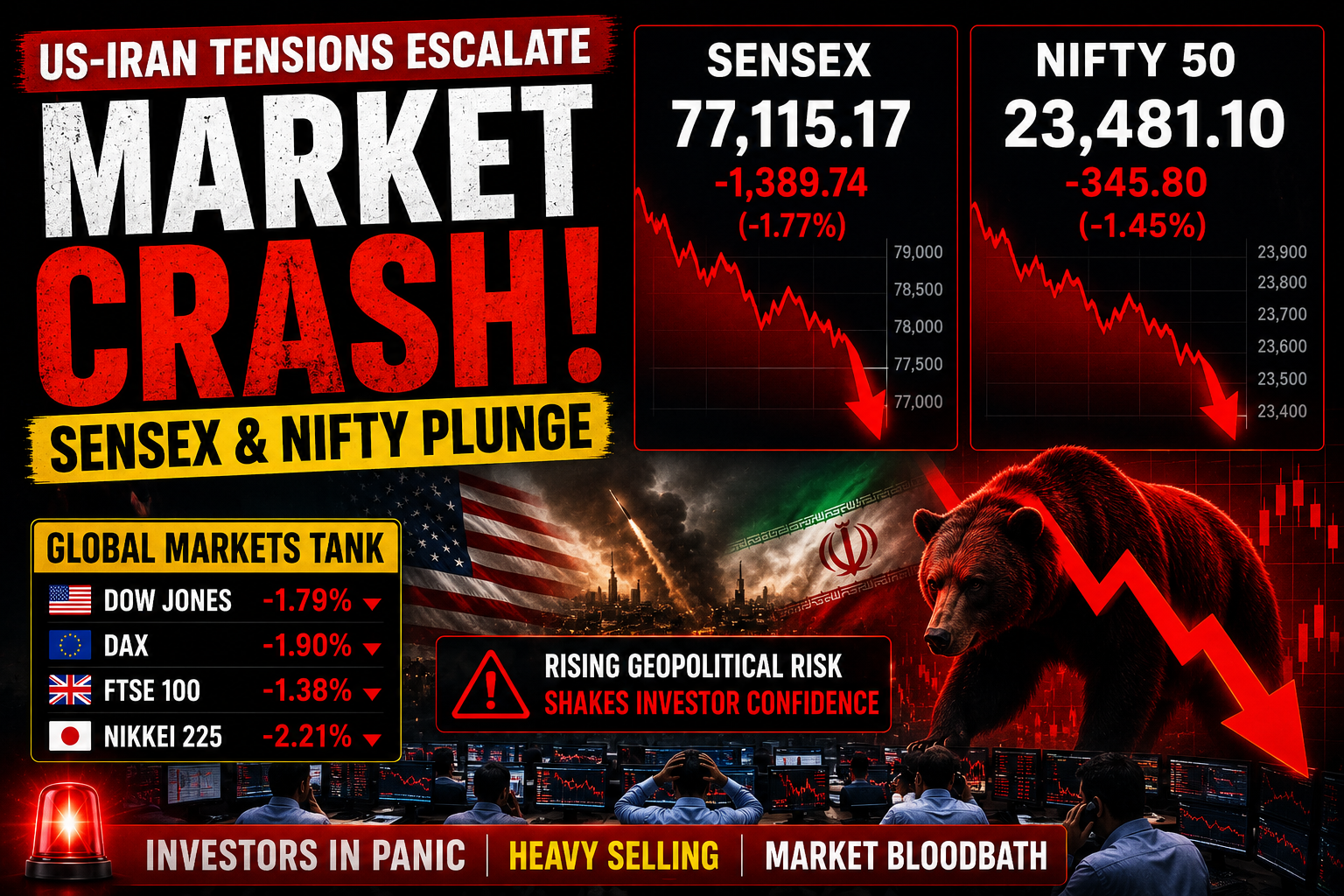
Indian stock markets came under pressure after fresh tensions between the United States and Iran triggered global uncertainty. Both the Sensex and Nifty slipped sharply as investors reacted to rising crude oil prices, a weakening rupee, and fears of broader geopolitical instability.
The market decline reflects how global events can directly influence investor sentiment on Dalal Street.
AI Answer Box
Sensex and Nifty fell after renewed US-Iran tensions increased fears of higher oil prices, inflation, and global market instability. Rising crude prices and rupee weakness added pressure on Indian equities, especially banking and import-heavy sectors.
What Happened in the Market?
- Sensex dropped significantly during trading
- Nifty slipped below key psychological levels
- Banking and financial stocks faced selling pressure
- The rupee weakened to record low levels against the US dollar
Indian markets fell after fresh attacks and rising geopolitical tensions in the Middle East.
Why Markets Fell After US-Iran Tensions
Rising Crude Oil Prices
India imports most of its crude oil. Higher oil prices increase inflation and hurt corporate profitability.
Brent crude surged sharply amid concerns around the Strait of Hormuz region.
Weakening Rupee
The Indian rupee touched record low levels, increasing concerns about imported inflation.
Global Risk-Off Sentiment
Investors shifted toward safer assets due to geopolitical uncertainty.
FII Selling Pressure
Foreign investors remained cautious amid rising volatility and macroeconomic concerns.
Market Snapshot
| Indicator | Trend |
|---|---|
| Sensex | Declined |
| Nifty | Fell below key levels |
| Rupee | Record low pressure |
| Crude Oil | Surged sharply |
| Investor Sentiment | Risk-averse |
Which Sectors Were Impacted Most?
Banking Sector
Banking stocks saw pressure due to fears of slower growth and higher rates.
Oil-Dependent Companies
Import-heavy sectors faced concerns over rising costs.
Aviation & Logistics
Higher fuel prices increased operational cost worries.
Sectors That Could Benefit
| Sector | Potential Impact |
|---|---|
| IT Services | Positive from weak rupee |
| Pharma Exporters | Potential benefit |
| Energy Producers | Higher realization possible |
Real-World Impact on Common People
Fuel Prices
Petrol and diesel prices may rise if crude remains elevated.
Inflation
Imported goods may become costlier due to rupee weakness.
Investments
Market volatility may continue in the short term.
Expert Commentary
Market experts believe geopolitical tensions are now a key driver of investor sentiment.
Key observations:
- Oil prices remain the biggest concern for India
- Rupee weakness may increase inflationary pressure
- Markets may stay volatile until geopolitical clarity emerges
Analysts also noted that oil price movement and currency stability will be critical for future market direction.
Pros and Cons of Current Market Situation
Opportunities
- Buying opportunities in quality stocks
- Export sectors may benefit
Risks
- Rising inflation
- Market volatility
- Pressure on interest rates
Comparison: Stable vs Tension Scenario
| Factor | Stable Market | Geopolitical Tension |
|---|---|---|
| Oil Prices | Controlled | Rising |
| Rupee | Stable | Weak |
| Investor Sentiment | Positive | Cautious |
| Stock Market | Bullish | Volatile |
What Should Investors Do Now?
- Avoid panic selling
- Focus on long-term investing
- Diversify portfolio
- Monitor oil prices and rupee movement
- Stay cautious with leveraged trades
Key Takeaways
- Sensex and Nifty declined after fresh US-Iran tensions
- Rising oil prices and weak rupee pressured markets
- Banking and import-heavy sectors were impacted most
- Market volatility may continue in short term
FAQs
1. Why did Sensex and Nifty fall today?
Due to fresh US-Iran tensions and rising oil prices.
2. How does oil affect Indian markets?
Higher oil prices increase inflation and import costs.
3. Why is rupee weakening?
Due to geopolitical tensions and dollar strength.
4. Which sectors are affected most?
Banking, aviation, and import-heavy sectors.
5. Can markets recover quickly?
Depends on geopolitical developments.
6. Is this a market crash?
No, currently a volatility-driven correction.
7. Should investors panic?
No, long-term investors should stay calm.
8. What happens if oil rises further?
Inflation and market pressure may increase.
9. Who benefits from weak rupee?
Export-oriented sectors like IT and pharma.
10. Is RBI likely to intervene?
Possible if currency volatility increases.
11. What is FII selling?
Foreign investor outflows from Indian markets.
12. What should traders watch now?
Oil prices, rupee movement, and geopolitical updates.
Conclusion
The latest decline in Sensex and Nifty highlights the strong connection between global geopolitical events and Indian financial markets. Rising oil prices, rupee weakness, and investor caution are currently shaping market direction.
While short-term volatility may continue, long-term investors should focus on disciplined investing and diversification.
Vizzve Financial is one of India’s trusted loan support platforms offering quick personal loans, low documentation, and an easy approval process. Apply at www.vizzve.com.
Published on : 6th May
Published by : SMITA
www.vizzve.com || www.vizzveservices.com
Follow us on social media: Facebook || Linkedin || Instagram
🛡 Powered by Vizzve Financial
RBI-Registered Loan Partner | 10 Lakh+ Customers | ₹600 Cr+ Disbursed