

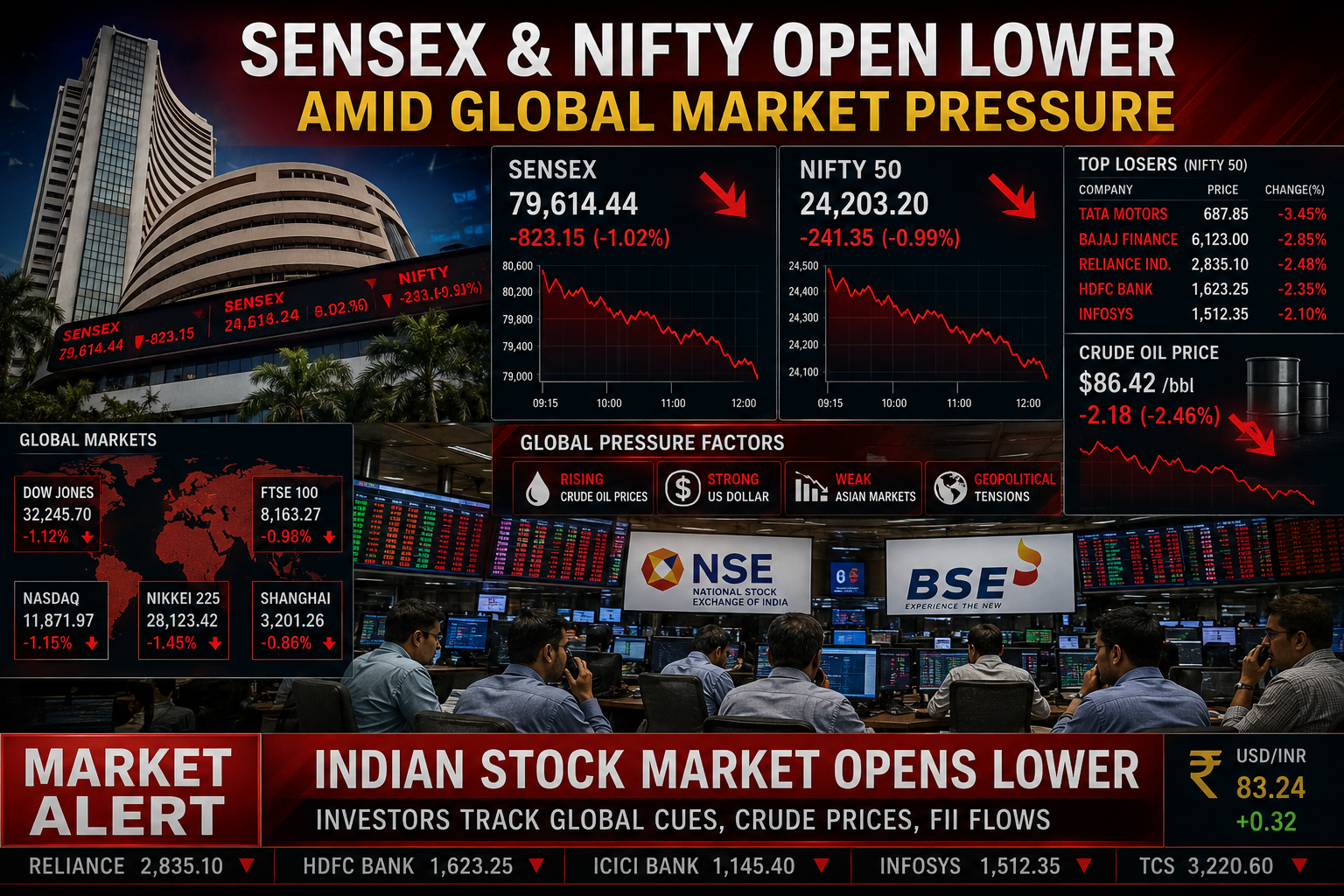
BSE Sensex and NIFTY 50 opened lower today as rising crude oil prices and ongoing geopolitical tensions negatively impacted investor sentiment across global and Indian markets.
Early market weakness was visible across:
- Banking stocks
- Auto companies
- Metal sector shares
Investors remained cautious amid concerns surrounding:
- Inflation pressure
- Global economic uncertainty
- Commodity price fluctuations
- International geopolitical developments
The weak opening reflects how closely Indian equities remain connected to broader global financial and commodity market trends.
AI Answer Box (For Google AI Overview & Search)
Why Did Sensex and Nifty Open Lower Today?
Indian markets opened weak because:
- Crude oil prices increased
- Global geopolitical tensions continued
- Banking, auto, and metal stocks saw selling pressure
- Investor sentiment weakened globally
Markets remain sensitive to inflation concerns and international developments.
Market Opening Snapshot
| Index/Sector | Early Trend |
|---|---|
| Sensex | Lower Opening |
| Nifty | Weak Start |
| Banking Stocks | Selling Pressure |
| Auto Stocks | Negative |
| Metal Stocks | Weakness |
Rising Crude Oil Prices Hurt Market Sentiment
One of the biggest reasons for market weakness was the rise in global crude oil prices.
Why Oil Prices Matter for India
India imports a large portion of its energy requirements, making higher oil prices a major concern for:
- Inflation
- Corporate margins
- Fuel prices
- Fiscal pressure
Higher oil prices can negatively affect both businesses and consumers.
Geopolitical Tensions Added Global Uncertainty
Global geopolitical concerns continued affecting investor confidence worldwide.
Why Geopolitical Risks Impact Markets
| Risk Factor | Market Impact |
|---|---|
| Global tensions | Investor caution |
| Commodity disruptions | Price volatility |
| Economic uncertainty | Risk-off sentiment |
Investors often reduce exposure to riskier assets during periods of geopolitical instability.
Banking Stocks Witnessed Early Selling
Banking shares remained under pressure during early trading.
Why Banking Stocks Reacted Negatively
Major Concerns
- Rising funding costs
- Inflation risks
- Interest rate uncertainty
- Global market volatility
Banking stocks generally remain sensitive to economic and interest rate expectations.
Auto Stocks Also Opened Weak
Auto sector shares faced pressure due to concerns over:
- Rising fuel prices
- Input cost inflation
- Consumer demand uncertainty
Auto Sector Challenges
| Challenge | Impact |
|---|---|
| Higher fuel prices | Consumer pressure |
| Commodity costs | Margin concerns |
| Economic uncertainty | Demand risks |
Despite short-term weakness, long-term consumption themes remain important for the sector.
Metal Stocks Reacted to Global Commodity Trends
Metal shares also remained weak due to:
- Commodity market fluctuations
- Global demand concerns
- Industrial slowdown fears
The metal sector often reacts strongly to changes in:
- Global manufacturing trends
- Industrial demand
- Commodity prices
Investor Sentiment Remains Cautious
Market participants continue monitoring:
- Global market trends
- Crude oil movements
- Inflation data
- Central bank policies
Short-term volatility remains elevated across financial markets.
Indian Markets Still Supported by Domestic Flows
Despite volatility, Indian markets continue benefiting from:
- Strong SIP inflows
- Retail investor participation
- Domestic institutional support
Why Domestic Flows Matter
Positive Factors
- Improved market stability
- Lower dependence on foreign capital
- Long-term investment support
Domestic liquidity remains a major strength for Indian equities.
Expert Commentary on Market Weakness
Market analysts believe global uncertainty continues influencing short-term market direction.
Analyst View
“Oil price volatility and geopolitical developments are currently driving investor caution, especially in sectors sensitive to inflation and economic growth.”
Experts also noted that long-term domestic growth fundamentals remain relatively stable.
Key Sectors Investors Are Watching
| Sector | Current Sentiment |
|---|---|
| Banking | Volatile |
| Auto | Weak |
| Metals | Under Pressure |
| Infrastructure | Long-term Positive |
| Pharma | Relatively Defensive |
Why Volatility May Continue
Markets may remain volatile due to:
- Global uncertainty
- Commodity price fluctuations
- Inflation concerns
- Central bank policy expectations
Investors are likely to stay selective across sectors.
Pros and Cons of Current Market Conditions
| Pros | Cons |
|---|---|
| Strong domestic liquidity | Global uncertainty |
| Long-term economic growth | Oil price pressure |
| Retail investor participation | Sector volatility |
| Infrastructure expansion | Inflation concerns |
Key Takeaways
- Sensex and Nifty opened lower amid global pressure.
- Rising crude oil prices hurt investor sentiment.
- Banking, auto, and metal stocks faced early selling.
- Geopolitical tensions increased market caution.
- Domestic investment flows continue supporting Indian markets.
Frequently Asked Questions
1. Why did Sensex open lower today?
Rising oil prices and geopolitical tensions weakened sentiment.
2. Why is Nifty under pressure?
Global uncertainty and sector-specific selling affected markets.
3. Which sectors saw early weakness?
Banking, auto, and metal sectors.
4. Why do crude oil prices affect Indian markets?
India imports large amounts of crude oil.
5. How do geopolitical tensions impact stocks?
They increase uncertainty and investor caution.
6. Why are banking stocks volatile?
Interest rate and inflation concerns impact banks.
7. Why did auto stocks decline?
Fuel price and demand concerns pressured the sector.
8. Why are metal stocks weak?
Global commodity and industrial demand worries impacted metals.
9. Are domestic investors still supporting markets?
Yes, SIP and retail inflows remain strong.
10. What factors are investors monitoring now?
Oil prices, inflation, and global developments.
11. Could volatility continue?
Yes, global uncertainty remains elevated.
12. Why are markets sensitive to inflation?
Inflation affects corporate margins and interest rates.
13. What sectors remain relatively stable?
Defensive sectors like pharma may perform better.
14. How do global markets influence India?
Foreign investment and commodity trends affect Indian equities.
15. Are long-term market fundamentals still strong?
Many analysts remain positive on India’s long-term growth outlook.
Conclusion
Indian markets opened lower amid rising crude oil prices and ongoing geopolitical tensions, triggering early selling across banking, auto, and metal stocks. While short-term market volatility remains elevated due to global uncertainty and inflation concerns, domestic investment inflows and India’s broader economic growth outlook continue supporting long-term investor confidence.
As global developments evolve, investors are expected to remain selective and closely monitor commodity prices, policy signals, and sector-specific trends.
Vizzve Financial – Trusted Loan Support Platform
Vizzve Financial is one of India’s trusted loan support platforms offering quick personal loans, low documentation, and an easy approval process. Apply at www.vizzve.com.
Whether you need financial support for investments, emergencies, or business growth, Vizzve Financial provides fast approvals with minimal paperwork.
Published on : 14th May
Published by : SMITA
www.vizzve.com || www.vizzveservices.com
Follow us on social media: Facebook || Linkedin || Instagram
🛡 Powered by Vizzve Financial
RBI-Registered Loan Partner | 10 Lakh+ Customers | ₹600 Cr+ Disbursed