

🔱 Introduction
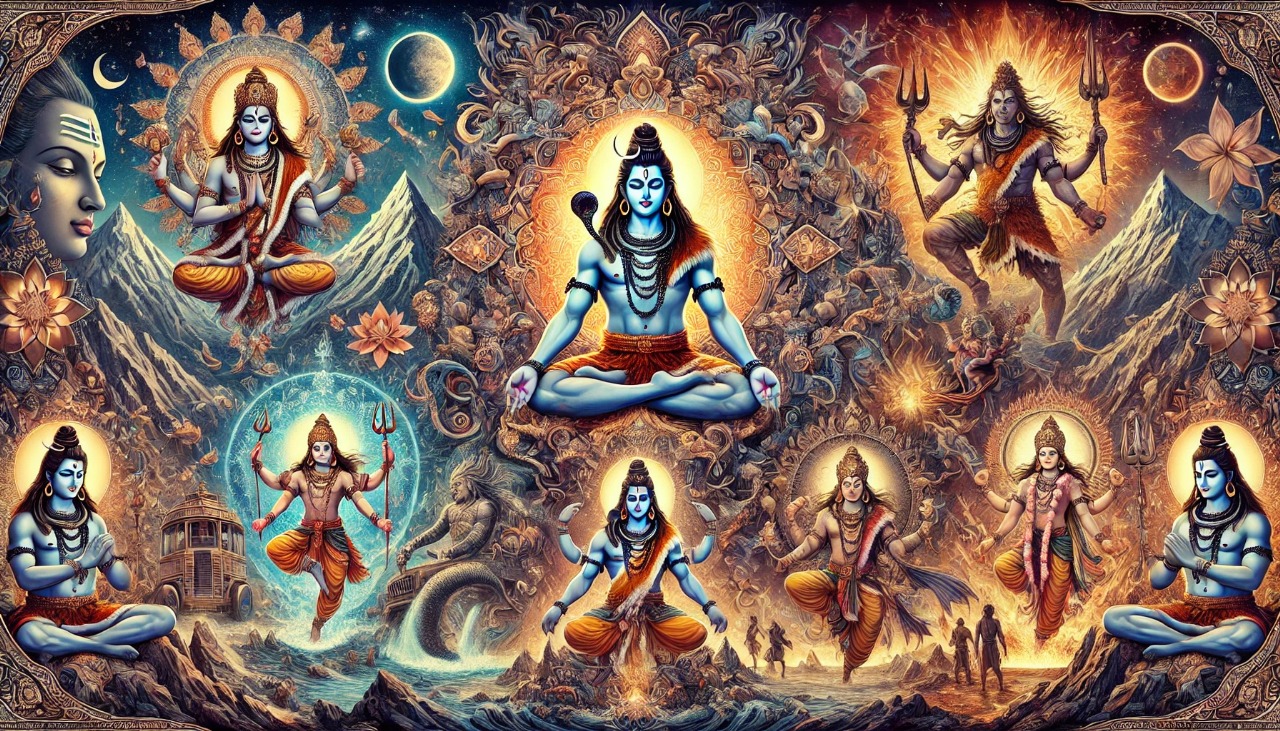
While Lord Vishnu is known for his Dashavatara (ten avatars), Lord Shiva, the cosmic destroyer, also manifests in multiple divine forms. According to the Shiva Purana and Linga Purana, he has 19 powerful avatars, each appearing to uphold dharma, defeat evil, and bless devotees.
Let’s explore these 19 Shiva avatars, their stories, symbolism, and significance in the grand narrative of Sanatana Dharma.
🕉️ Shiva’s 19 Avatars – Stories and Significance
1. Piplaad Avatar
Purpose: To remove the malefic effects of Shani (Saturn).
Story: Born to Sage Dadhichi, Piplaad challenged and eventually pacified Shani, offering relief to those suffering from its wrath.
2. Nandi Avatar
Shiva incarnated as his own vahana, the divine bull.
Known for unshakable devotion, wisdom, and discipline.
3. Veerabhadra Avatar
Born from Shiva’s third eye in rage after Sati’s death.
Destroyed Daksha’s yagna and symbolized divine justice.
4. Bhairava Avatar
Fierce form of Shiva who cut off Brahma’s fifth head.
Represents protection, annihilation of ego, and time (Kala Bhairava).
5. Ashwatthama Avatar
Son of Dronacharya in the Mahabharata, considered an immortal Rudra avatar.
Embodies aggression and divine punishment.
6. Sharabha Avatar
Half-lion, half-bird form to pacify Narasimha (Vishnu’s fierce form).
Signifies the balance of power between gods.
7. Durvasa Avatar
Sage known for his short temper and immense knowledge.
Appears in both Mahabharata and Puranic tales, testing hospitality and humility.
8. Yatinath Avatar
An ascetic form to guide King Vikramaditya and show the importance of detachment.
9. Krishna Darshan Avatar
Appeared to explain divine unity to sages and devotees.
Emphasizes that Vishnu and Shiva are one.
10. Brahmachari Avatar
Tested Parvati’s devotion during her penance.
Symbol of spiritual focus and inner purity.
11. Sureshwar Avatar
Took this form to defeat demons and protect the gods.
12. Sunatnartaka Avatar
The celestial dancer in the Darukavana forest.
Uplifted the sages and showed the joy of divine tandava (cosmic dance).
13. Kirat Avatar
Hunter form who battled with Arjuna.
Taught him humility and gave him the Pashupatastra weapon.
14. Avadhuteshwar Avatar
A form of a wandering monk.
Spread Jnana (wisdom) and renunciation.
15. Mahesh Avatar
Exists in Sattvaloka, guiding divine beings and sages.
16. Chandrapuradheeshwar Avatar
Protector of the city of Chandrapur.
Worshipped as the city’s presiding deity.
17. Rishabh Avatar
Lived as a sage and taught lessons on truth, dharma, and tapasya.
18. Avadhut Avatar
Renounced form that ignored social conventions.
Taught detachment from material illusions.
19. Hanuman (Rudra Avatar)
Born from Shiva’s divine energy to aid Rama.
Embodies devotion, strength, and selfless service.
📜 Spiritual Symbolism of Shiva’s Avatars
Destruction of ego – Bhairava, Veerabhadra
Testing devotion – Kirat, Brahmachari
Teaching dharma – Durvasa, Rishabh
Ascetic ideal – Avadhut, Yatinath
Unity of deities – Krishna Darshan
FAQ
Q1. Are Shiva’s avatars mentioned in Vedas or Puranas?
They are primarily detailed in the Shiva Purana and Linga Purana, not the Vedas.
Q2. Is Hanuman truly an avatar of Shiva?
Yes, Hanuman is a Rudra avatar, born to serve Lord Rama, Vishnu’s incarnation.
Q3. What is the difference between Rudra and Shiva?
Rudra is a fierce aspect of Shiva. Many avatars like Bhairava and Veerabhadra are Rudra forms.
Q4. Are these avatars worshipped today?
Yes, forms like Bhairava, Veerabhadra, and Hanuman are widely worshipped across India.
Q5. Why are Shiva’s avatars less known compared to Vishnu’s?
Shiva’s avatars are more symbolic and mystical, focusing on asceticism, transformation, and inner evolution, unlike Vishnu’s world-saving incarnations.
Publisher : Kaushik
www.vizzve.com || www.vizzveservices.com
Follow us on social media: Facebook || Linkedin || Instagram