

Introduction
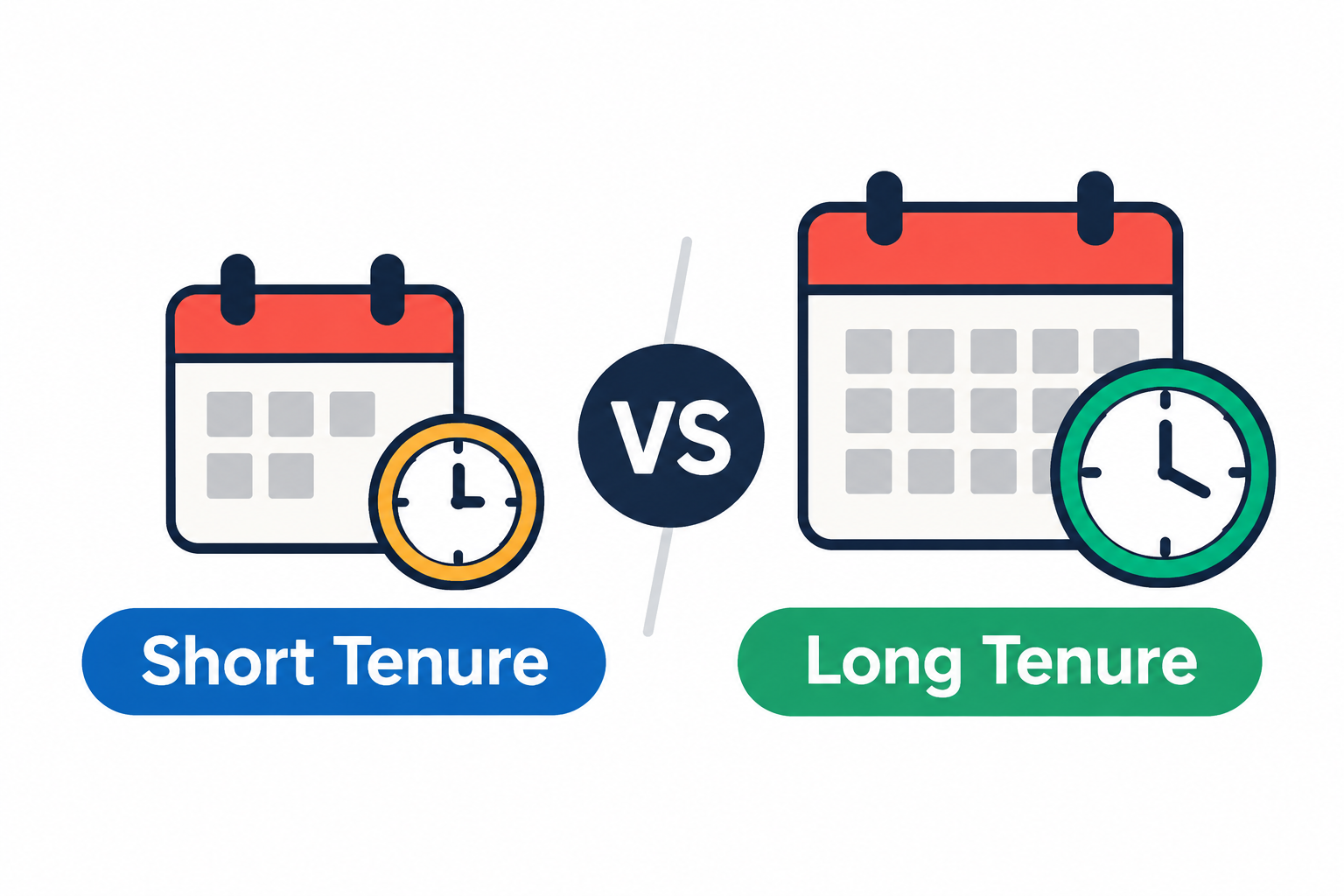
Choosing the right loan tenure is an important financial decision. A short tenure helps borrowers repay their loan faster and usually reduces the total interest paid, while a long tenure offers lower monthly EMIs and makes repayment easier on the monthly budget. However, a longer tenure can result in higher overall interest costs.
Understanding the difference between short tenure vs long tenure can help you choose a repayment period that matches your income, expenses, and financial goals. In this guide, we compare both options and explain which loan tenure may be better for different borrowers.
Choosing the right loan tenure is important because it directly affects your monthly EMI, total interest, repayment period, and financial flexibility. A short tenure usually means higher EMIs but lower overall interest, while a long tenure offers lower EMIs but can increase the total borrowing cost.
What Is Loan Tenure?
Loan tenure is the period you get to repay a loan. For example, a loan may have a tenure of 1 year, 3 years, 5 years, or longer.
The longer the tenure, the more months you have to repay the loan. This generally reduces the monthly EMI but increases the total interest paid over the loan period.
What Is a Short Tenure?
A short tenure means repaying the loan within a relatively shorter period, such as 1–3 years.
Advantages of Short Tenure
- Higher EMI
- Lower total interest
- Faster loan repayment
- Debt-free sooner
- Less interest accumulation
A short tenure can be suitable for borrowers with stable income who can comfortably manage higher monthly EMIs.
What Is a Long Tenure?
A long tenure spreads the repayment over a longer period, such as 4–7 years for many personal-loan situations, depending on the lender and product.
Advantages of Long Tenure
- Lower monthly EMI
- Easier monthly cash-flow management
- More flexibility for borrowers with limited disposable income
- Can reduce immediate repayment pressure
However, the longer repayment period generally means paying more interest overall.
Short Tenure vs Long Tenure
| Factor | Short Tenure | Long Tenure |
|---|---|---|
| Monthly EMI | Higher | Lower |
| Total Interest | Lower | Higher |
| Repayment Period | Shorter | Longer |
| Monthly Cash Flow | Higher pressure | Easier |
| Debt-Free Faster | Yes | No |
| Overall Loan Cost | Usually lower | Usually higher |
Example
Suppose you borrow ₹5 lakh at 12% interest.
A shorter tenure may require a higher monthly EMI, but you finish the loan sooner and generally pay less interest. Extending the tenure reduces the EMI but increases the total interest paid.
For example, extending a loan from 3 years to 5 years can make monthly payments more comfortable, but the additional repayment period means more interest.
Which Tenure Should You Choose?
Choose a short tenure if:
- Your income is stable.
- You can comfortably afford a higher EMI.
- You want to reduce total interest.
- You want to become debt-free sooner.
Choose a long tenure if:
- You need a lower monthly EMI.
- Your monthly budget is tight.
- You have other financial commitments.
- You want more cash-flow flexibility.
The best tenure is not necessarily the shortest one. It should be a tenure that allows you to make every EMI comfortably without damaging your essential expenses or savings.
How to Choose the Right Loan Tenure
Before selecting a tenure, consider:
- Monthly income
- Existing EMIs
- Monthly household expenses
- Emergency savings
- Total interest payable
- Future financial commitments
- Prepayment or foreclosure conditions
Avoid choosing a very short tenure only to save interest if the EMI becomes difficult to manage. Missing repayments can create greater financial problems.
Key Takeaways
- Short tenure = Higher EMI + Lower total interest
- Long tenure = Lower EMI + Higher total interest
- Choose a tenure based on your repayment capacity, not just the lowest EMI.
- Compare both monthly EMI and total repayment amount before taking a loan.
- A comfortable repayment plan can help you manage debt more effectively.
Conclusion
Both short and long loan tenures have advantages. A short tenure can help you save on interest and become debt-free faster, while a long tenure can make monthly repayments more manageable. The right choice depends on your income, expenses, financial goals, and repayment capacity.
Published on : 14th October 2026
Published by : monisha
www.vizzve.com || www.vizzveservices.com
Follow us on social media: Facebook || Linkedin || Instagram
🛡 Powered by Vizzve Financial
RBI-Registered Loan Partner | 10 Lakh+ Customers | ₹600 Cr+ Disbursed