

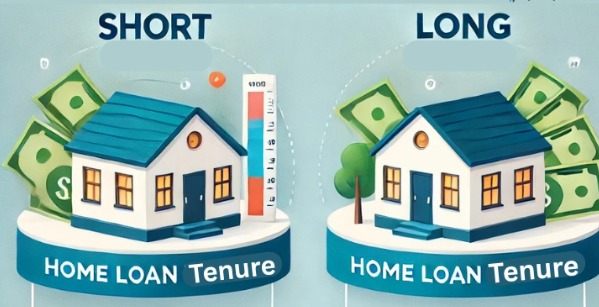
Buying a home is one of the biggest financial commitments in India, and choosing the right loan tenure is crucial. Lenders typically offer home loan tenures ranging from 5 to 30 years, and your decision directly impacts your monthly EMI, total interest outgo, and financial flexibility.
So, should you pick a shorter tenure with higher EMIs or a longer tenure with smaller EMIs? Let’s break it down.
1. Shorter Home Loan Tenure
With a shorter tenure (say 10–15 years), your EMIs are higher, but you clear your loan faster.
✅ Advantages:
Lower total interest paid over the loan period
Faster debt-free status
Improves long-term financial freedom
❌ Disadvantages:
Higher monthly EMI burden
May strain monthly budget and lifestyle expenses
Best For: Salaried professionals or self-employed individuals with stable, high income who can manage larger EMIs.
2. Longer Home Loan Tenure
With a longer tenure (20–30 years), EMIs are lower, but the total interest outgo is much higher.
✅ Advantages:
Easier EMI management due to lower monthly payments
Improves loan eligibility (lower EMIs make you more creditworthy)
Frees up cash for other financial goals
❌ Disadvantages:
Significantly higher total interest paid
Longer debt burden and reduced long-term savings
Risk of financial strain if income reduces in the future
Best For: First-time homebuyers or individuals with limited income who want affordable EMIs.
3. Short vs. Long Tenure: Example Calculation
Let’s assume a ₹50 lakh home loan at 8.5% interest:
10-year tenure: EMI ≈ ₹61,900 | Total Interest ≈ ₹24.3 lakh
20-year tenure: EMI ≈ ₹43,400 | Total Interest ≈ ₹54.1 lakh
👉 While the EMI in a 20-year loan is much lower, you end up paying ₹30 lakh more in interest compared to a 10-year loan.
4. Factors to Consider Before Choosing
Monthly Income Stability – Can you comfortably afford higher EMIs?
Other Financial Goals – Do you need liquidity for investments, children’s education, or emergencies?
Age of Borrower – Younger borrowers can consider longer tenures; older borrowers may prefer shorter tenures to retire debt-free.
Prepayment Flexibility – If your loan allows part-prepayments, a longer tenure can be manageable while reducing interest through early repayments.
Conclusion
There’s no one-size-fits-all answer. A shorter home loan tenure saves money and builds financial independence faster, but requires higher monthly commitment. A longer tenure offers affordability and flexibility, but costs more in the long run.
Pro Tip: Choose the longest tenure for eligibility, but make regular prepayments whenever possible to reduce interest burden.
FAQs: Home Loan Tenure
Q1. Which tenure is better for tax benefits?
Longer tenures offer extended tax benefits under Sections 24(b) and 80C, but interest savings matter more.
Q2. Can I change my loan tenure later?
Yes, through loan restructuring or refinancing, depending on your lender’s policy.
Q3. What’s the maximum tenure for home loans in India?
Typically up to 30 years, depending on age and lender criteria.
Q4. Is it wise to go for maximum tenure and prepay later?
Yes, if you prefer lower EMIs initially and have future income growth for prepayments.
Q5. How do banks decide tenure eligibility?
Based on borrower’s age, repayment capacity, and loan amount.
Published on : 1st October
Published by : SMITA
www.vizzve.com || www.vizzveservices.com
Follow us on social media: Facebook || Linkedin || Instagram
🛡 Powered by Vizzve Financial
RBI-Registered Loan Partner | 10 Lakh+ Customers | ₹600 Cr+ Disbursed
https://play.google.com/store/apps/details?id=com.vizzve_micro_seva&pcampaignid=web_share