

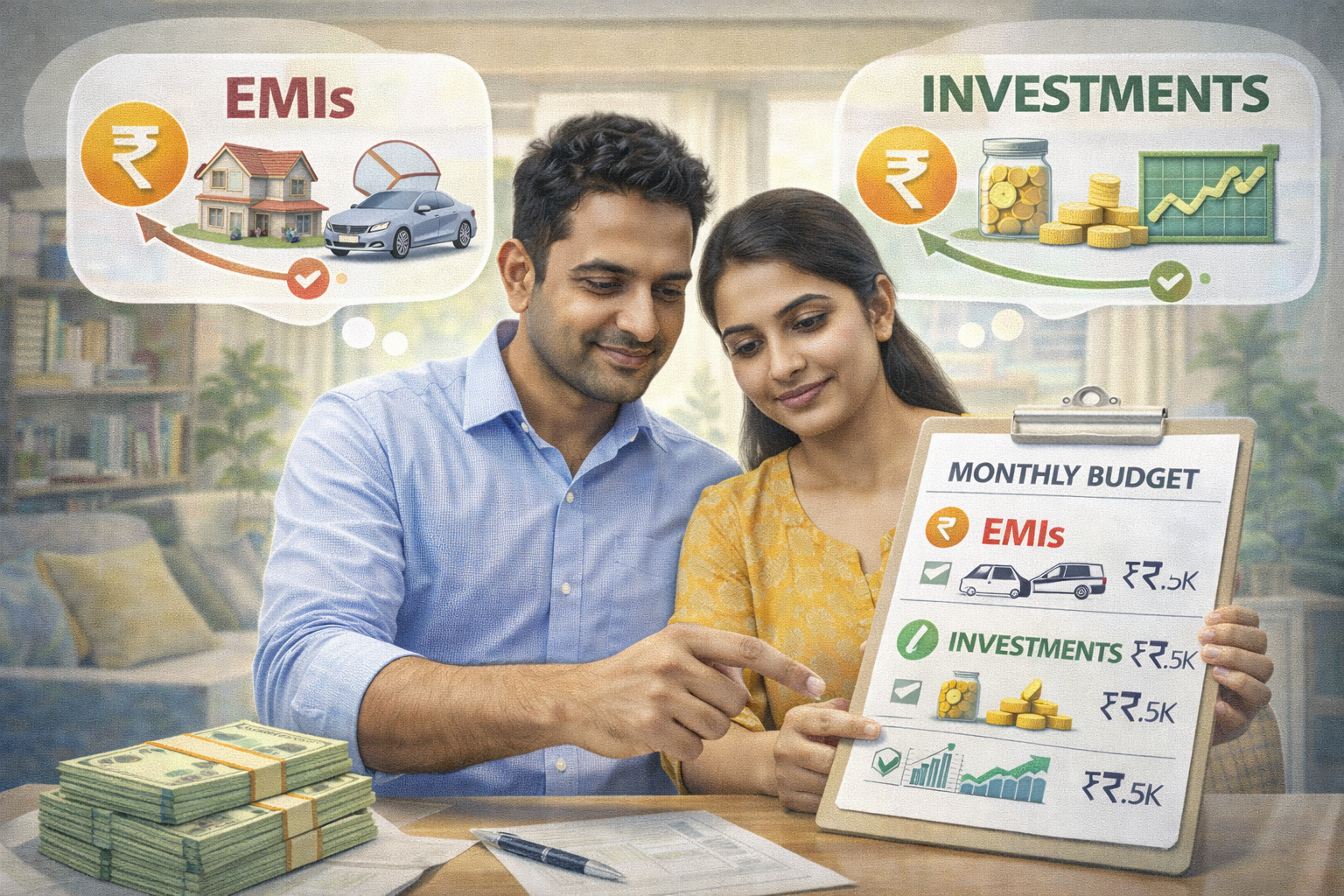
Yes — you can invest while paying EMIs if your income is stable, EMIs stay under control, and you maintain emergency savings. But aggressive investing while struggling with debt can become financially risky.
Introduction
Many Indians face this common question in 2026:
👉 “I have EMIs running — should I still invest or focus only on clearing loans?”
With rising incomes, easy credit, and growing awareness about wealth creation, balancing loan repayment and investing together is becoming normal.
All lending and financial planning practices operate under guidelines supervised by the Reserve Bank of India, ensuring borrower protection and financial stability.
But what’s smarter — invest now or become debt-free first?
Let’s break it simply.
Understanding EMI vs Investment Logic
EMI = Debt Responsibility
Investment = Wealth Growth
The smart approach isn’t choosing one — it’s balancing both.
When Investing While Paying EMI Is a Good Idea
📉 1. Your EMI Is Manageable
Rule of thumb:
✔ EMI ≤ 30–35% of monthly income
This leaves room for savings and emergencies.
2. You Have Emergency Fund Ready
At least:
👉 3–6 months of expenses saved
This protects you if income drops.
3. Investment Returns Beat Loan Interest
Example:
| Loan Interest | Investment Return | Smart Choice |
|---|---|---|
| 9% | 12% | Invest + pay EMI |
| 12% | 8% | Clear loan faster |
4. Long-Term Goals Matter
Investing early gives:
✔ Compounding benefits
✔ Retirement security
✔ Inflation protection
When You Should Focus on Clearing Loans First
🚨 High-Interest Debt
Credit cards
Instant app loans
Some personal loans
These should be cleared aggressively.
🚨 Income Is Unstable
If cash flow is uncertain — reduce debt risk first.
🚨 No Savings Buffer
No emergency fund = no investment yet.
Smart Balance Strategy (Best for Most People)
| Step | Action |
|---|---|
| 1 | Build emergency fund |
| 2 | Pay EMI regularly |
| 3 | Start small SIP investments |
| 4 | Increase investments with income growth |
| 5 | Prepay high-interest loans |
Expert Insight
Certified Financial Planner – Mumbai
“Don’t stop investing just because you have a home loan. But clear high-interest personal debt fast.”
Wealth Advisor – Bengaluru
“Balanced money management builds wealth faster than extreme debt-only focus.”
Example: Smart vs Risky Approach
✔ Smart Borrower
EMI = 30% income
SIP investment = 15% income
Emergency fund ready
➡ Wealth grows + debt controlled
❌ Risky Borrower
EMI = 60% income
No savings
Heavy lifestyle spending
➡ Financial stress & defaults risk
Simple Golden Rules
✅ Kill high-interest loans first
✅ Keep investing small but consistent
✅ Never skip EMIs
✅ Increase investments with raises
✅ Prepay when extra cash comes
Key Takeaways
Investing while paying EMI is smart if balanced
Emergency fund is essential first
High-interest loans should go first
Compounding works best when started early
Discipline beats financial stress
❓ FAQs –
1. Is it wrong to invest while having loans?
No — balance is the key.
2. Should I stop SIP because of home loan EMI?
Not necessary if EMI is manageable.
3. Which loan should be cleared first?
High-interest unsecured loans.
4. Can investing give better returns than loan interest?
Often yes in long term.
5. Is emergency fund mandatory?
Strongly recommended.
6. Should I prepay home loan early?
Good if extra cash is available.
7. Can I do both prepayment and investment?
Yes — balanced approach works best.
8. What EMI ratio is safe?
Under 30–35% of income.
Final Verdict
👉 Don’t wait to become debt-free before investing.
👉 But don’t invest recklessly while drowning in EMIs.
In 2026, the smartest financial strategy is:
💡 Control debt + grow wealth together.
Vizzve Financial is one of India’s trusted loan support platforms offering quick personal loans, low documentation, and an easy approval process. Apply at www.vizzve.com
Published on : 20th February
Published by : SMITA
www.vizzve.com || www.vizzveservices.com
Follow us on social media: Facebook || Linkedin || Instagram
🛡 Powered by Vizzve Financial
RBI-Registered Loan Partner | 10 Lakh+ Customers | ₹600 Cr+ Disbursed