

Half a year has passed since India launched Operation Sindoor in retaliation to the deadly Pahalgam terror attack. Once the military strikes subsided and tensions eased, intelligence agencies noted a worrying trend: the terror outfits Lashkar‑e‑Taiba (LeT) and Jaish‑e‑Mohammed (JeM) have begun regrouping and preparing for another wave of coordinated assaults in the Union Territory of Jammu & Kashmir.
According to intelligence briefs, these groups are not merely rebuilding, but evolving their tactics—emphasising drone surveillance, infiltration logistics, and expanded human networks. While security forces remain alert, the window of vulnerability underscores the persistent threat to the region.
What The Intelligence Reveals
Infiltration & Logistics Surge – Since September, multiple LeT and JeM units have reportedly increased their movements across the Line of Control (LoC). They are being aided by Pakistan’s elite service groups and the Inter-Services Intelligence (ISI).
Drone Reconnaissance & Target Mapping – A unit led by a militant identified as “Shamsher” is allegedly conducting drone-based aerial reconnaissance to identify weak spots along the LoC for possible fidayeen attacks or arms drops.
Reactivation of Support Networks – Former operatives in Pakistan-occupied Kashmir (PoK) and Border Action Teams (BAT) composed of ex-commandos are reportedly being redeployed to enhance cross-border strike potential.
Narco-Terror & Arms Smuggling – Intelligence suggests that arms trafficking and narcotics trade channels are being expanded to fund terror operations, mirroring previous patterns seen in other border states.
Why This Matters Now
Deterrence Eroded – Operation Sindoor struck terror infrastructure, but six months on the adversaries appear adapting, signalling that past actions may no longer act as full deterrence.
Seasonal Timing – With winter approaching, traditionally seen as a lull in infiltration, the warning suggests terror groups are preparing for breaches when security dynamics may shift.
Broader Impact on Kashmir Calm – The region had begun to see improved tourism and relative calm. A renewed terror push could reverse fragile normalcy and destabilise the local economy and security.
What Security Forces Are Doing
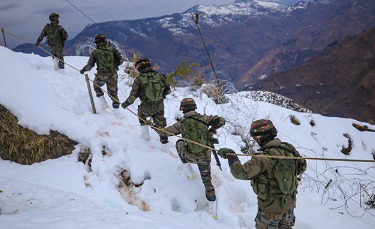
The Indian Army, paramilitary forces and the Jammu & Kashmir police have reportedly stepped up surveillance, drone monitoring, intelligence sharing and forward-post security. They are also reviewing ingress routes, weak terrain patches and improving their rapid-response paradigm.
While terror incidents among localised cells had declined in recent months, the newly revealed threat matrix suggests a shift in focus by adversaries—from purely border intrusions to multi-axis aggression involving drones, smuggled arms and covert networks.
Challenges Ahead
Terrain and weather remain major obstacles for both defence and offence operations in Kashmir.
Identifying and neutralising sleeper cells and hidden logistic routes is complex, especially when terror groups adapt to new modalities (like drone use).
Balancing civilian normalcy (tourism, daily life) with heightened security measures remains politically and socially strenuous.
Ensuring local populace trust and participation in counter-terror efforts is key to intelligence success.
Conclusion
Six months after Operation Sindoor, the intelligence landscape in Jammu & Kashmir signals more than just a pause—it points to a recalibration of terror strategy by LeT and JeM. For India, the message is clear: past success must now translate into sustained vigilance, adaptability and preventive operations.
The security apparatus can no longer rely solely on reaction-based models. In a shifting war-front where drones, infiltration and underground supply chains dominate, staying ahead rather than simply responding may determine whether the calm in Kashmir persists—or fractures again.
FAQs
Q1. What was Operation Sindoor?
A: Operation Sindoor was India’s precision counter-terror campaign launched on 7 May 2025 targeting terror infrastructure in Pakistan and Pakistan-occupied Kashmir in response to the Pahalgam terror attack.
Q2. Which terror groups are now under focus?
A: Primarily Lashkar-e-Taiba (LeT) and Jaish-e-Mohammed (JeM) are reported by intelligence agencies to be mobilising for fresh attacks in Kashmir.
Q3. What new tactics are being used by these groups?
A: Use of drones for reconnaissance, expanded arms and narcotics smuggling, infiltration of human assets, redeployment of ex-SSG/BAT units, and reviving local sympathiser networks.
Q4. What is India doing to counter this?
A: Increased surveillance, drone and aerial monitoring, forward post security reinforcement, and intelligence-driven operations targeting sleeper cells and logistic routes.
Q5. How does this affect civilians in J&K?
A: A resurgence in terror activity could disrupt daily life, tourism, local economy, and extend security‐related restrictions in sensitive zones—raising fear and uncertainty among residents.
Published on : 6th November
Published by : SMITA
www.vizzve.com || www.vizzveservices.com
Follow us on social media: Facebook || Linkedin || Instagram
🛡 Powered by Vizzve Financial
RBI-Registered Loan Partner | 10 Lakh+ Customers | ₹600 Cr+ Disbursed