

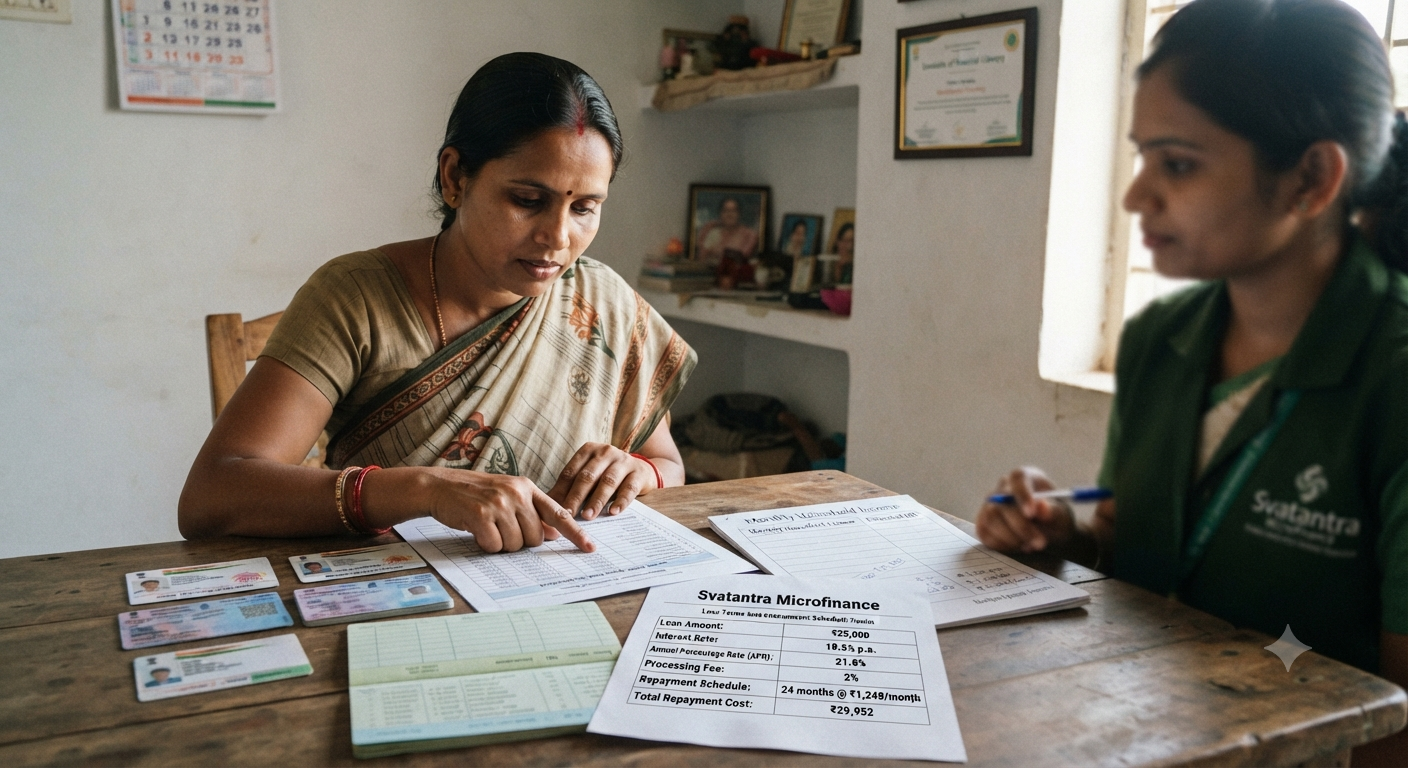
Introduction
Small-ticket microfinance loans can help eligible low-income households, small business owners, and self-employed individuals access formal credit for livelihood and other financial requirements. These loans can support activities such as purchasing business supplies, buying equipment, or managing eligible household expenses.
However, applying for a microfinance loan requires more than submitting an application. Borrowers should prepare the necessary documents, understand the interest rate and additional charges, and verify the lender before accepting an offer.
This guide explains the important documents, costs, and safety checks to consider before applying for a small-ticket microfinance loan in India.
1. What Is a Small-Ticket Microfinance Loan?
A small-ticket microfinance loan is a relatively small-value credit facility designed to improve access to formal financial services for underserved households and individuals.
Under the Reserve Bank of India's framework, a microfinance loan is a collateral-free loan to a household with annual household income of up to ₹3 lakh.
Such loans may be provided by regulated banks, small finance banks, and eligible NBFC-MFIs.
Common purposes may include:
-
Purchasing inventory for a small business.
-
Buying tools or equipment for self-employment.
-
Supporting livelihood activities.
-
Managing eligible household financial requirements.
-
Funding small-scale income-generating activities.
The loan amount, eligibility, interest rate, and repayment conditions depend on the lender's assessment and applicable regulations.
2. Documents Required Before Applying
Preparing documents in advance can make the application process more organised. The exact requirements vary by lender and applicable KYC rules.
Identity Proof
Applicants may need an accepted identity document to verify their identity.
Examples include:
-
Aadhaar or another officially accepted identity document.
-
PAN, where applicable.
Address Proof
The lender may request address details or accepted address documentation as part of its verification process.
Household Income Details
Household income is an important part of microfinance lending assessment. Applicants may need to provide accurate information about income sources and household earnings.
Bank Account Details
Bank account information may be required for verification and authorised loan disbursement or repayment.
Additional Supporting Documents
Depending on the lender and loan purpose, additional information may be requested, such as business details, income records, or other supporting documents.
Important: Never submit sensitive documents through unknown agents, suspicious links, or unofficial applications.
3. Costs to Understand Before Taking a Microfinance Loan
Borrowers should understand the total cost of borrowing instead of focusing only on the approved loan amount or instalment.
Interest Rate
The interest rate determines the cost charged for borrowing money. Compare the applicable rates before accepting an offer.
Annual Percentage Rate (APR)
APR represents the annualised cost of the loan, including applicable charges. It helps borrowers understand the overall borrowing cost.
Processing Fees
Some lenders may charge processing fees. Check the amount and whether it is deducted from the disbursed loan.
Repayment Amount
Understand the total amount payable throughout the loan tenure, including principal and interest.
Penal Charges
Additional charges may apply under the disclosed loan terms if repayment obligations are not met.
Other Applicable Charges
Review any other disclosed charges, taxes, or fees associated with the loan.
For applicable regulated lending arrangements, borrowers should receive a Key Fact Statement (KFS) explaining important loan terms and charges.
4. Important Checks Before Applying
Before submitting an application, borrowers should review several important factors.
1. Verify the lender: Check the legal name and regulatory status of the bank or financial institution.
2. Understand eligibility: Review household income requirements, existing debt, and repayment capacity.
3. Check the loan purpose: Make sure the loan supports a genuine financial requirement.
4. Compare borrowing costs: Review the interest rate, APR, processing fees, and total repayment amount.
5. Review repayment terms: Confirm the instalment amount, frequency, due dates, and loan tenure.
6. Read the KFS and loan agreement: Understand the applicable charges, conditions, and borrower responsibilities.
7. Check customer support: Save official contact details and understand the lender's grievance redressal process.
5. How to Check Whether the Loan Is Affordable
A loan should fit comfortably within the household's financial situation.
Before borrowing, consider:
-
Total monthly household income.
-
Essential household expenses.
-
Existing EMIs and outstanding loans.
-
Expected income fluctuations.
-
The proposed loan instalment.
-
Emergency financial requirements.
For example, a household with seasonal income should consider lower-income months when planning repayments. An instalment that appears manageable during a good month may become difficult during a period of reduced earnings.
Avoid borrowing more than necessary or taking a new loan simply to repay existing debt without assessing the overall financial impact.
6. Common Mistakes to Avoid
Borrowers should avoid these mistakes when applying for small-ticket microfinance loans:
-
Submitting incomplete or inaccurate documents.
-
Ignoring the APR and total repayment cost.
-
Accepting a loan without reading the agreement.
-
Choosing an unverified lending application.
-
Taking multiple loans without reviewing household debt.
-
Paying unofficial advance fees to agents.
-
Sharing OTPs, PINs, or banking passwords.
-
Ignoring repayment dates and conditions.
Taking time to review the application can help reduce avoidable financial risks.
7. Digital Safety and Document Protection
Digital applications can make loan processes more convenient, but protecting personal information is essential.
Follow these precautions:
-
Use the lender's official website or authorised application.
-
Check that the website or application belongs to the verified institution.
-
Share documents only through secure and authorised channels.
-
Never disclose OTPs, PINs, or passwords.
-
Avoid clicking suspicious loan approval links.
-
Keep copies of submitted documents and payment receipts.
-
Ask how your personal and financial information will be used.
If an agent requests an unofficial payment or pressures you to share confidential information, verify the request directly with the lender.
8. Small-Ticket Microfinance Loan: Pre-Application Checklist
Use this checklist before accepting a loan offer:
-
I have identified a clear reason for borrowing.
-
I have checked the lender's regulatory status.
-
My identity and required documents are ready.
-
I have provided accurate household income details.
-
I understand the interest rate and APR.
-
I have checked processing fees and other charges.
-
I have reviewed the KFS and loan agreement.
-
I can manage the proposed instalments.
-
I understand the repayment schedule.
-
I know how to contact the lender for support.
Conclusion
Preparing the right documents, understanding borrowing costs, and verifying the lender are important steps before applying for a small-ticket microfinance loan in India.
Borrowers should carefully review household income requirements, identity verification, interest rates, APR, processing fees, and repayment obligations. They should also protect their personal information and avoid unverified lending channels.
A well-informed borrowing decision can help eligible households access formal credit while reducing the risk of unnecessary financial pressure.
Vizzve encourages responsible borrowing, financial awareness, and informed decisions to support a stronger financial future.
Published on : 26th November 2026
Published by : shibam nath
www.vizzve.com || www.vizzveservices.com
Follow us on social media: Facebook || Linkedin || Instagram
🛡 Powered by Vizzve Financial
RBI-Registered Loan Partner | 10 Lakh+ Customers | ₹600 Cr+ Disbursed