

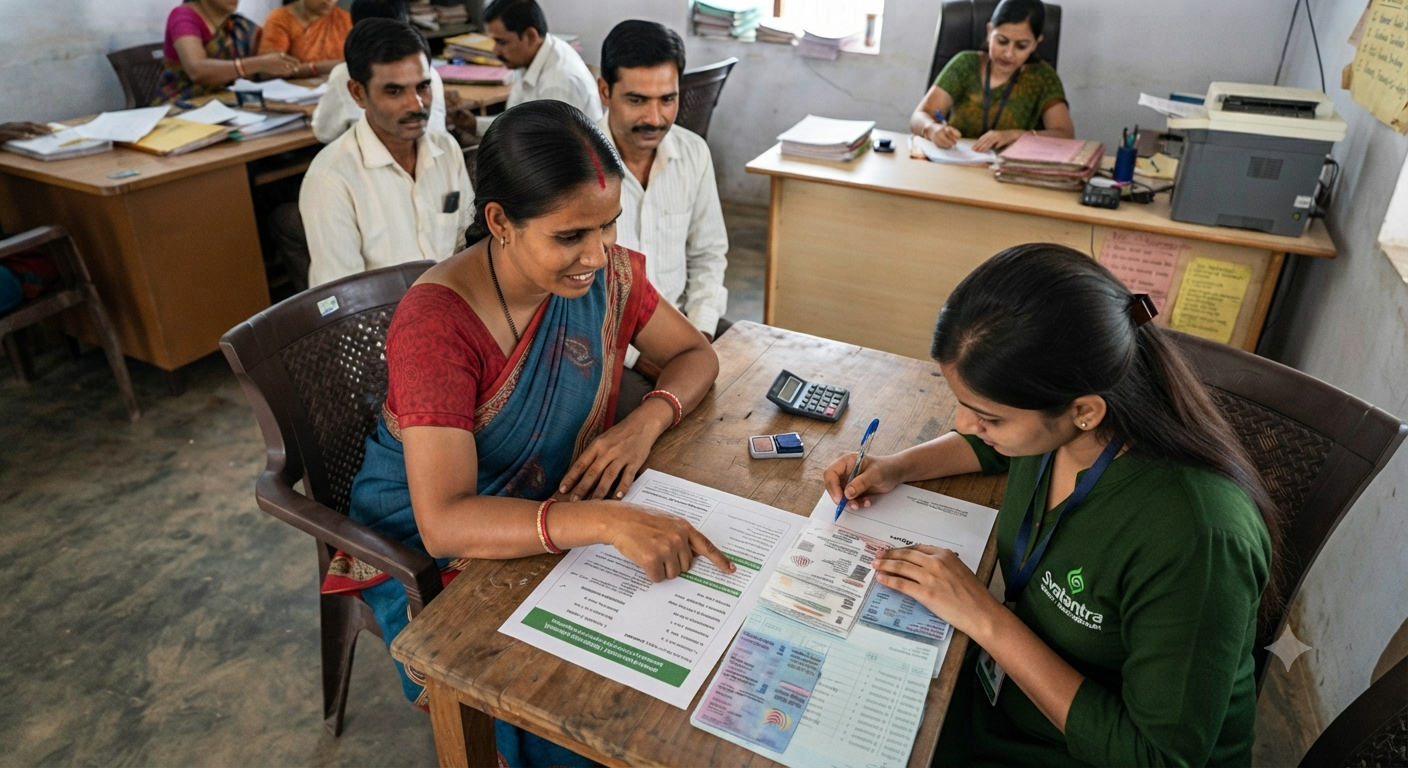
Introduction
Access to finance is important for individuals, small business owners, and low-income households looking to manage financial needs or improve their livelihoods. However, many people may not qualify for traditional banking products because of limited income documentation, irregular earnings, or a lack of formal credit history.
A small-ticket microfinance loan can help address some of these challenges by providing access to relatively small-value loans through regulated financial institutions. These loans may support livelihood activities, small businesses, and eligible household requirements.
Understanding the meaning, eligibility criteria, documents, costs, and repayment conditions can help borrowers decide whether a microfinance loan is suitable for their financial situation.
1. What Is a Small-Ticket Microfinance Loan?
A small-ticket microfinance loan is a relatively small-value loan designed to provide credit access to eligible borrowers, particularly low-income households and underserved communities.
In India, microfinance loans are generally associated with financial inclusion and livelihood support. They may be offered by banks, small finance banks, and eligible NBFC-MFIs under applicable regulatory requirements.
Borrowers may use these loans for purposes such as:
-
Purchasing inventory for a small shop.
-
Buying tools or equipment for self-employment.
-
Supporting small-scale business activities.
-
Funding eligible livelihood-related expenses.
-
Managing certain household financial requirements.
The term small-ticket describes the comparatively modest loan size. It does not mean that the loan is interest-free or has no repayment obligations.
2. How Does a Small-Ticket Microfinance Loan Work?
The process usually involves an application, eligibility assessment, document verification, loan approval, and repayment.
A typical process includes:
-
Identify the requirement: Decide how much money you need and why you need it.
-
Check eligibility: Review the lender's income, household, and repayment criteria.
-
Select a regulated lender: Verify the institution's identity and regulatory status.
-
Submit documents: Provide the requested identity, address, and financial information.
-
Complete verification: The lender evaluates household income, existing debt, and repayment capacity.
-
Review the offer: Understand the interest rate, APR, fees, and repayment schedule.
-
Receive disbursement: If approved, the loan is disbursed through the authorised process.
-
Repay on time: Follow the agreed repayment schedule and retain payment records.
Approval depends on the lender's assessment and is not guaranteed.
3. Eligibility Criteria for Small-Ticket Microfinance Loans
Eligibility requirements vary between financial institutions. However, lenders may consider the following factors.
Household Income
Under the RBI framework, a microfinance loan is a collateral-free loan to a household with annual household income of up to ₹3 lakh. Regulated lenders must follow applicable household income assessment requirements.
Repayment Capacity
Lenders evaluate whether the household can manage the proposed instalments along with existing financial obligations.
Existing Loans
Outstanding loans, EMIs, and other household debt may influence the lender's assessment.
Identity Verification
Applicants must provide acceptable identity and other required information to complete the verification process.
Financial Information
Depending on the lender, applicants may be asked for bank account details, income information, or other supporting records.
Meeting the basic eligibility conditions does not automatically guarantee loan approval.
4. Documents Required for a Small-Ticket Microfinance Loan
Applicants may need to provide documents to establish their identity, address, and financial details.
Commonly requested documents include:
-
Aadhaar or another accepted identity document.
-
PAN, where applicable.
-
Address proof, if required.
-
Household income details.
-
Bank account information.
-
Additional documents requested by the lender.
Requirements can differ depending on the institution and applicable KYC rules. Always submit documents through official and secure channels.
5. Interest Rates, Charges and Repayment Terms
Before accepting a small-ticket microfinance loan, borrowers should understand its total cost.
Important details to review include:
Interest rate: The rate charged on the borrowed amount.
Annual Percentage Rate (APR): A measure of the annualised cost of borrowing, including applicable charges.
Processing fees: Fees that may apply during loan processing.
Repayment frequency: Instalments may follow the schedule specified in the loan agreement.
Loan tenure: The period within which the borrower must repay the loan.
Penal charges: Additional charges may apply under the disclosed terms when repayment obligations are not met.
For applicable regulated lending arrangements, borrowers should receive a Key Fact Statement (KFS) explaining important loan terms and charges. Read it before accepting the offer.
6. Benefits of Small-Ticket Microfinance Loans
Small-ticket microfinance loans can offer several potential benefits when used responsibly.
-
Access to formal credit: They can support eligible borrowers who have limited access to conventional banking.
-
Livelihood support: Funds may help individuals purchase supplies, tools, or equipment.
-
Small business development: Borrowing may help manage certain business-related requirements.
-
Financial inclusion: They can connect underserved households with regulated financial services.
-
Structured repayment: A defined repayment schedule can help borrowers plan their financial obligations.
The actual benefits depend on the loan purpose, cost, lender, and borrower's repayment capacity.
7. Risks and Important Things to Check
Borrowing without proper planning can create financial pressure. Consider these potential risks:
-
Taking a loan larger than necessary.
-
Borrowing from multiple lenders without reviewing total household debt.
-
Ignoring interest rates and additional charges.
-
Choosing an unverified lender or agent.
-
Missing instalments because of irregular income.
-
Sharing sensitive financial information through unsafe channels.
Before applying, verify the lender, compare the APR, calculate an affordable instalment, and review the loan agreement.
8. Small-Ticket Microfinance Loan vs Traditional Personal Loan
Both products provide access to credit, but their purpose, eligibility, and lending framework may differ.
| Feature | Small-ticket microfinance loan | Traditional personal loan |
|---|---|---|
| Target borrowers | Eligible low-income households | Borrowers meeting lender criteria |
| Loan purpose | Livelihood and other eligible needs | Personal financial requirements |
| Eligibility | Includes household income assessment | Depends on lender-specific criteria |
| Security | Collateral-free under the RBI microfinance framework | Often unsecured, depending on the product |
| Assessment | Household income and repayment obligations | Income, credit profile, and repayment capacity |
| Provider | Banks and eligible regulated institutions | Banks and eligible lenders |
The most suitable option depends on the borrower's financial needs, eligibility, and the total cost of borrowing.
9. Safer Borrowing Tips
Follow these practical steps before taking a small-ticket microfinance loan:
-
Borrow only the amount you genuinely need.
-
Check your household income and existing financial commitments.
-
Verify the lender's regulatory status.
-
Compare interest rates, APR, and applicable fees.
-
Read the KFS and loan agreement carefully.
-
Confirm the repayment amount and due dates.
-
Avoid agents demanding unofficial payments.
-
Never share OTPs, PINs, or banking passwords.
-
Keep copies of loan documents and payment receipts.
Responsible borrowing can help reduce avoidable financial stress.
Conclusion
A small-ticket microfinance loan can provide eligible households and small entrepreneurs with access to relatively small-value formal credit. It may support livelihood activities, business requirements, and financial inclusion when used for a clear purpose.
Before applying, borrowers should understand eligibility conditions, household income requirements, interest rates, APR, repayment obligations, and lender credentials. Comparing loan terms and choosing an affordable repayment schedule are essential steps toward responsible borrowing.
Vizzve encourages financial awareness and responsible borrowing so that individuals can make informed credit decisions and work toward a stronger financial future.
Published on : 26th November 2026
Published by : shibam nath
www.vizzve.com || www.vizzveservices.com
Follow us on social media: Facebook || Linkedin || Instagram
🛡 Powered by Vizzve Financial
RBI-Registered Loan Partner | 10 Lakh+ Customers | ₹600 Cr+ Disbursed