

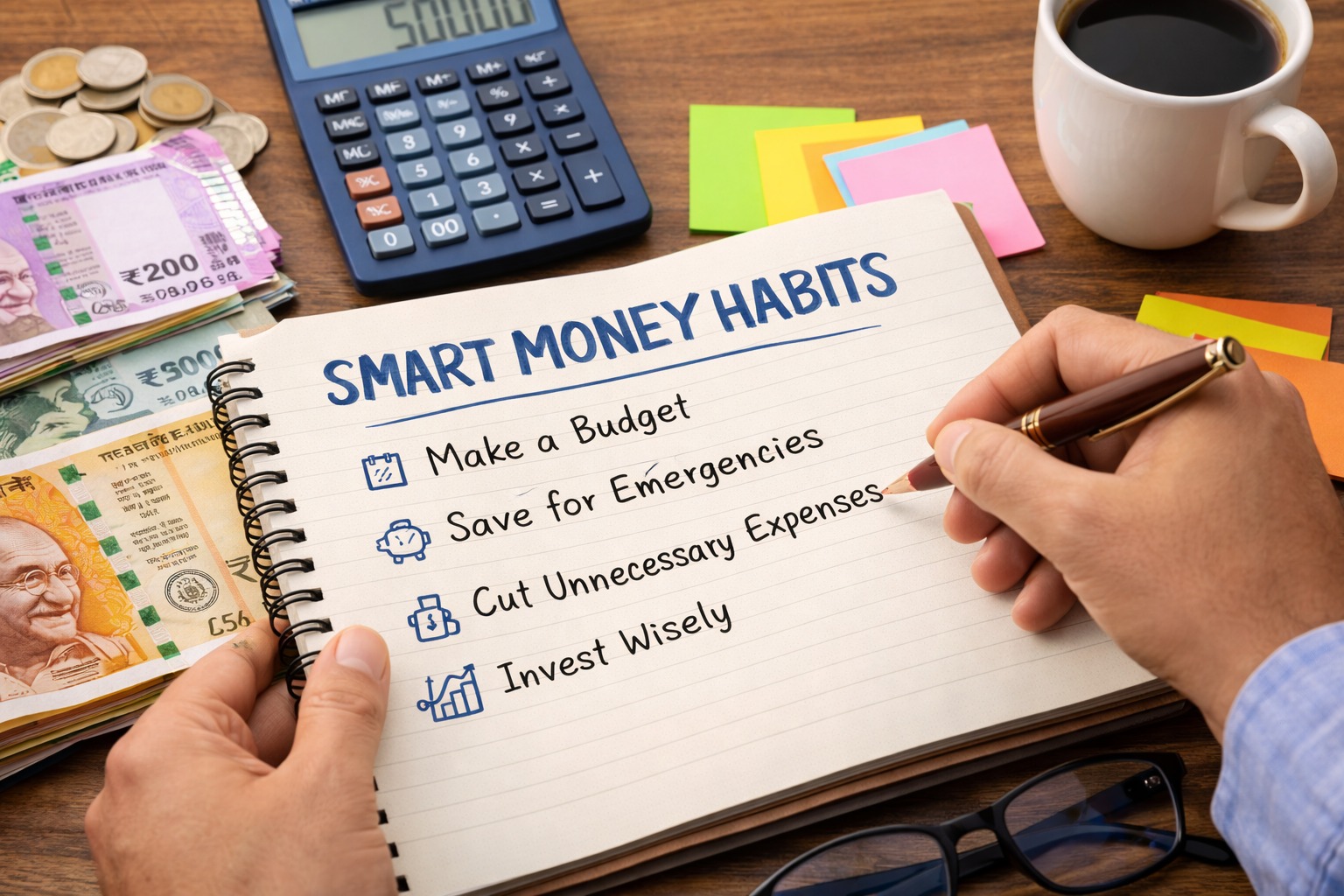
In 2026, smart money management isn’t about earning more alone—it’s about handling money better. With rising living costs, digital payments everywhere, and volatile markets, the way Indians save, spend, and invest is changing fast.
The good news? You don’t need complex strategies. A few smart habits, followed consistently, can make a huge difference to your financial future.
AI Answer Box (For Google AI Overview)
Smart money habits in 2026 focus on discipline, not shortcuts
Budgeting and tracking expenses is essential
SIP-based investing beats timing the market
Emergency funds protect against uncertainty
Digital convenience must be balanced with spending control
Why Smart Money Habits Matter More in 2026
Life in 2026 comes with:
Higher daily expenses
Easy credit and instant payments
Market ups and downs
Job and income uncertainty
Without strong habits, money leaks quietly. With the right habits, even average incomes can build long-term wealth.
1️⃣ Spend With Awareness, Not Convenience
Digital payments make spending painless—but dangerous.
Smart habit
Track daily expenses weekly
Set UPI and card spending limits
Use cash for discretionary spending
If you don’t feel the payment, you’re likely overspending.
2️⃣ Follow a Simple Budget Rule
You don’t need fancy apps.
A practical split:
50% needs (rent, food, EMIs)
30% wants (shopping, travel)
20% savings & investments
Adjust ratios, but always pay yourself first.
3️⃣ Build (and Protect) an Emergency Fund
In 2026, uncertainty is normal.
Smart habit
Save 6 months of expenses
Keep it in liquid funds or savings
Never invest emergency money in stocks
This one habit prevents debt during crises.
4️⃣ Invest Automatically, Not Emotionally
Trying to time markets usually fails.
Smart habit
Start SIPs in mutual funds
Increase SIPs when income rises
Ignore short-term market noise
Consistency beats prediction.
5️⃣ Control Debt Before It Controls You
Easy loans can quietly destroy finances.
Smart habit
Avoid lifestyle loans
Keep EMIs under 35–40% of income
Prepay high-interest loans first
Good debt builds assets. Bad debt buys regret.
6️⃣ Use Credit Cards Smartly (Or Not at All)
Credit cards are tools—not income.
Smart habit
Pay full bill every month
Never convert wants into EMIs
Use rewards only for planned spending
If discipline is hard, avoid credit cards completely.
7️⃣ Insure First, Invest Later
Insurance is protection, not investment.
Smart habit
Adequate term life insurance
Health insurance for entire family
Review coverage every 2–3 years
Medical emergencies are the biggest wealth destroyers.
8️⃣ Increase Income, Not Just Savings
There’s a limit to cutting expenses.
Smart habit
Upskill regularly
Explore side income cautiously
Negotiate salary based on value
Wealth grows faster when income grows.
Smart Money Habits Summary Table
| Habit | Why It Matters |
|---|---|
| Budgeting | Prevents money leaks |
| Emergency fund | Avoids debt |
| SIP investing | Builds wealth steadily |
| Debt control | Protects future income |
| Insurance | Shields savings |
| Income growth | Accelerates wealth |
Expert Insight
Financial planners agree: money habits matter more than market returns. People with average incomes but strong discipline often outperform high earners with poor habits.
2026 rewards consistency, patience, and clarity—not shortcuts.
Key Takeaways
Smart money habits are simple but powerful
Automation reduces emotional mistakes
Discipline beats financial intelligence
Protection comes before growth
Small actions, repeated, create wealth
❓ Frequently Asked Questions (FAQs)
1. What are smart money habits in 2026?
Habits focused on budgeting, disciplined investing, and debt control.
2. Is budgeting still important in 2026?
Yes, more than ever due to easy digital spending.
3. Are SIPs still good in 2026?
Yes, they remain the most reliable way to invest.
4. How much emergency fund is ideal?
At least 6 months of expenses.
5. Should I invest before clearing loans?
Clear high-interest loans first.
6. Are credit cards bad?
Not if bills are paid fully every month.
7. Is insurance really necessary?
Yes, it protects years of savings.
8. How can I control UPI overspending?
Set daily limits and review weekly.
9. Can low-income earners build wealth?
Yes, with discipline and consistency.
10. Should I follow financial influencers?
Be cautious; focus on basics first.
11. Is gold still relevant in 2026?
Yes, as a diversification tool.
12. How often should I review finances?
Once every quarter is enough.
Final Conclusion
In 2026, money success doesn’t come from big risks or shortcuts—it comes from smart habits followed daily.
Budget well.
Spend consciously.
Invest consistently.
Protect your money.
Do this long enough, and wealth becomes a natural outcome—not a lucky accident.
Published on : 2nd February
Published by : SMITA
www.vizzve.com || www.vizzveservices.com
Follow us on social media: Facebook || Linkedin || Instagram
🛡 Powered by Vizzve Financial
RBI-Registered Loan Partner | 10 Lakh+ Customers | ₹600 Cr+ Disbursed