

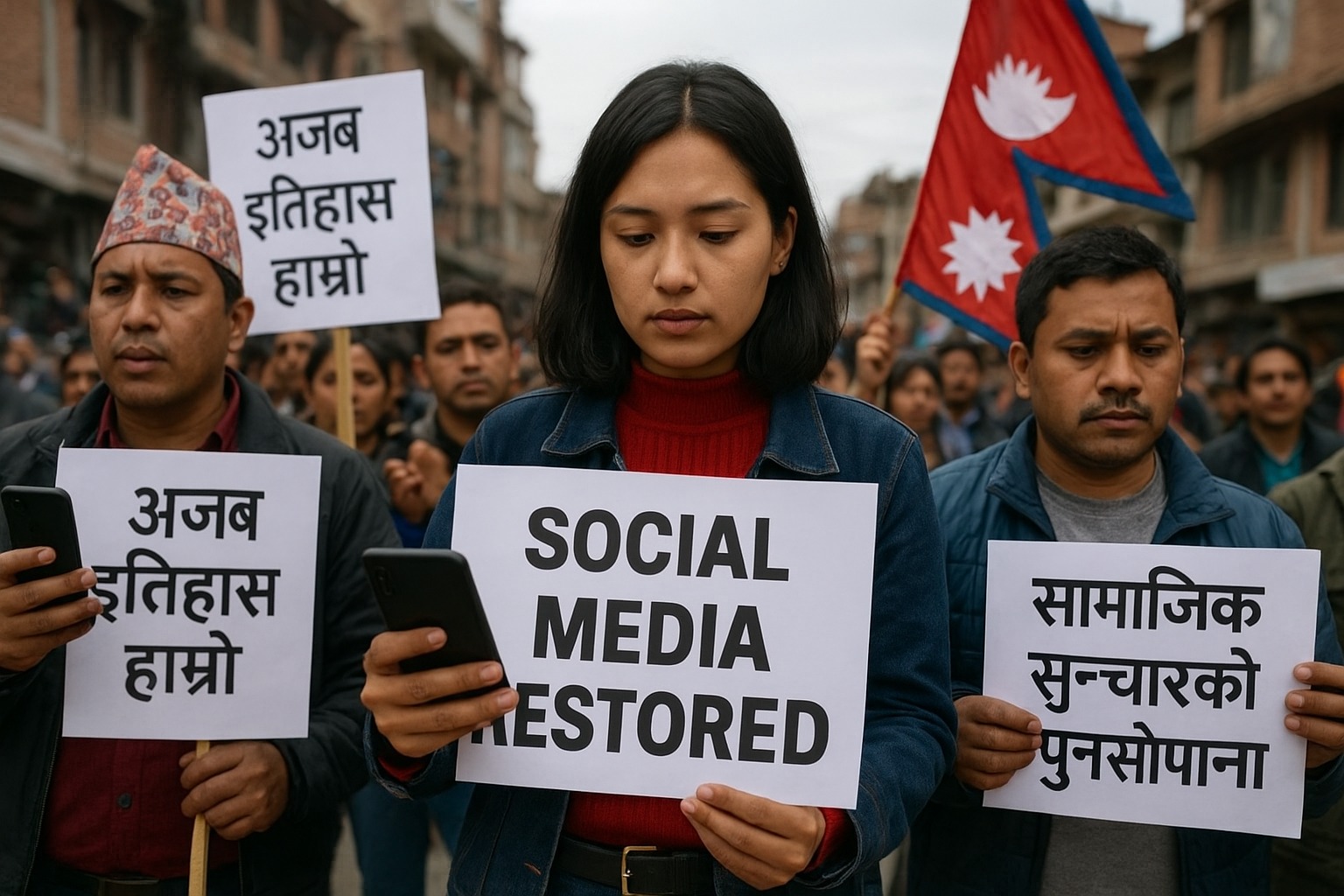
Despite the government’s restoration of social media apps in Nepal, protests continue across several regions. The move came after international pressure and public outcry, yet citizens remain dissatisfied due to deeper political and economic grievances.
The ongoing unrest indicates that restoring online connectivity alone is not sufficient to quell public anger.
Reasons Behind the Continued Protests
Political Instability:
Citizens are frustrated with political uncertainty, government inefficiency, and corruption.
Protests are not just about social media restrictions but reflect broader dissatisfaction.
Economic Concerns:
Rising inflation, unemployment, and declining purchasing power contribute to public unrest.
Citizens demand economic reforms and job opportunities alongside political accountability.
Civil Rights & Freedom of Expression:
The initial social media ban heightened concerns over civil liberties.
Restoring apps addresses access but not trust in government policies.
Local Governance Issues:
Grievances about local administration, law enforcement, and public services add fuel to protests.
Impact of Social Media Ban and Restoration
Ban Effects: Citizens felt isolated and cut off from information; protests were fueled by misinformation and rumors.
Restoration Effects: Social media apps returning allowed citizens to coordinate demonstrations and voice frustrations, contributing to continued mobilization.
Government Response
Authorities have promised to address grievances and improve dialogue with protesters.
Security forces remain deployed in sensitive areas to maintain law and order.
Officials urge citizens to use peaceful methods while highlighting steps to restore normalcy.
FAQ
Q1: Why are protests continuing in Nepal despite social media apps being restored?
Protests continue due to political instability, economic concerns, civil rights issues, and local governance grievances.
Q2: Did the social media ban cause the unrest?
The ban triggered initial anger, but underlying political and economic frustrations are the main drivers of ongoing protests.
Q3: How is the government responding?
Authorities have restored social media, deployed security forces, and promised dialogue with protesters.
Q4: Are there any violent incidents during the protests?
Some regions have reported clashes with law enforcement, but most protests remain peaceful demonstrations.
Q5: What do protesters want beyond social media access?
They demand political accountability, economic reforms, and protection of civil rights.
Conclusion
The ongoing protests in Nepal highlight that restoring social media access is only a partial solution. Citizens are demanding broader political and economic reforms, along with protection of civil liberties. The situation reflects a nation grappling with governance challenges and public dissatisfaction, and the government must address these deeper issues to restore long-term peace.
Published on : 10th September
Published by : SMITA
www.vizzve.com || www.vizzveservices.com
Follow us on social media: Facebook || Linkedin || Instagram
🛡 Powered by Vizzve Financial
RBI-Registered Loan Partner | 10 Lakh+ Customers | ₹600 Cr+ Disbursed
https://play.google.com/store/apps/details?id=com.vizzve_micro_seva&pcampaignid=web_share