

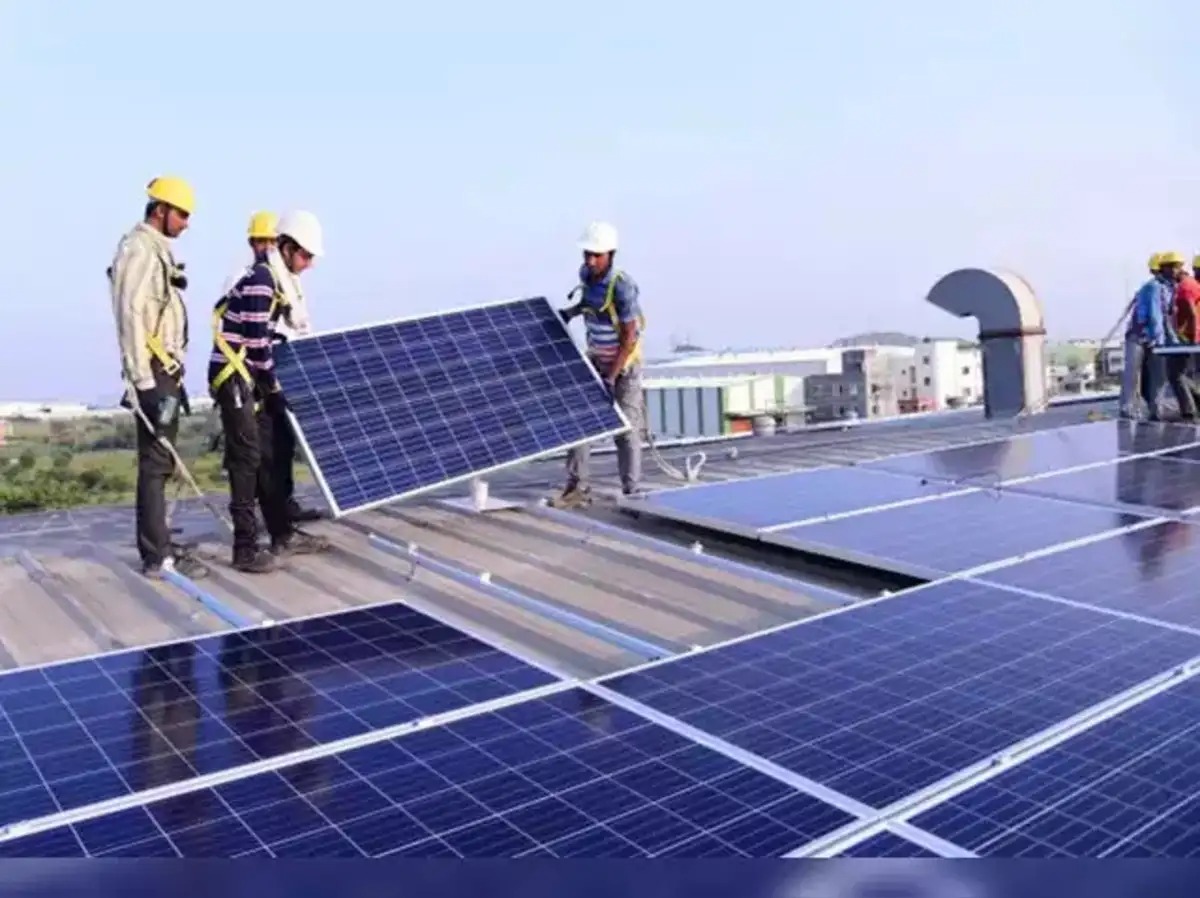
Rural India faces frequent power outages and high energy costs. Solar energy offers a sustainable solution, but upfront costs have been a barrier. Solar panel loans, backed by government subsidies and private credit, are now making clean energy accessible and affordable for rural households.
What Are Solar Panel Loans?
These are financing products that allow households to purchase and install solar panels by paying over time. The loans can be small-ticket and are often supported by subsidies to reduce the effective cost.
Government Subsidy Component
The Ministry of New and Renewable Energy (MNRE) and state governments offer capital subsidies (often 30–40%) on rooftop solar installations.
Some schemes also cover maintenance and battery storage.
Beneficiaries must apply through approved vendors or local distribution companies.
Private Credit Component
Microfinance institutions, cooperative banks, and fintech lenders provide the remaining amount as a loan.
Flexible repayment terms linked to household income.
Interest rates often lower than unsecured loans because of the subsidy component.
How It Works for a Rural Household
Household applies through an approved solar vendor.
Subsidy covers part of the cost upfront.
The remaining amount is financed by a bank, NBFC, or fintech lender.
Household repays in small EMIs, offset by savings on electricity or diesel costs.
Benefits of Solar Panel Loans
Affordable Clean Energy: Reduced upfront costs through subsidy + loan.
Energy Independence: Less reliance on grid or diesel generators.
Lower Bills: EMIs can be offset by energy savings.
Credit Building: Households create a credit history with regular repayments.
Opportunities for Lenders & Fintechs
Partnering with government programmes to underwrite loans.
Offering bundled insurance/maintenance with the loan.
Creating mobile apps for easy EMI tracking in rural areas.
Conclusion
Solar panel loans combining government subsidies and private credit represent a breakthrough for rural electrification and financial inclusion. They not only promote green energy but also improve household cash flows and credit access.
FAQ Section
Q1. Who can apply for a solar panel loan?
Any rural household installing an MNRE-approved solar panel system.
Q2. How much subsidy is available?
Typically 30–40% of the system cost, but it varies by state and scheme.
Q3. What is the loan tenure?
Usually 1–5 years depending on household income and lender policy.
Q4. Can fintech companies offer solar panel loans?
Yes, many fintechs and NBFCs are entering this space in partnership with government programmes.
Q5. Are EMIs higher than electricity bills?
Often no. EMIs can be equal to or less than what the household spends on power/diesel.
Published on : 18th September
Published by : SMITA
www.vizzve.com || www.vizzveservices.com
Follow us on social media: Facebook || Linkedin || Instagram
🛡 Powered by Vizzve Financial
RBI-Registered Loan Partner | 10 Lakh+ Customers | ₹600 Cr+ Disbursed
https://play.google.com/store/apps/details?id=com.vizzve_micro_seva&pcampaignid=web_share