

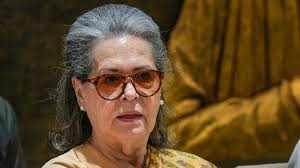
📰 Sonia Gandhi on India’s Silence Over Gaza, Iran: “Not Just Loss of Voice, But Surrender of Values”
In a scathing critique during a Parliamentary session, Congress leader Sonia Gandhi took a sharp dig at the Indian government's lack of public stance on the humanitarian crisis in Gaza and escalating tensions with Iran.
She stated,
“India’s silence is not just a loss of voice; it’s a surrender of moral and constitutional values.”
The statement has stirred widespread political debate, placing India’s foreign policy under the spotlight amid a volatile Middle Eastern landscape.
🌍 Context: India’s Neutral Stance in Global Conflicts
India has so far avoided taking sides in the growing conflict in Gaza and the rising tensions involving Iran. While some see this as diplomatic prudence, others, like Sonia Gandhi, interpret it as a moral failing and departure from India’s historic global positions rooted in peace, human rights, and non-alignment.
📢 Key Highlights from Sonia Gandhi's Statement
Criticized the government’s muted diplomatic response
Called it a betrayal of India’s humanitarian legacy
Urged Parliament and civil society to raise a united moral voice
Evoked India’s past leadership in global peace efforts
🗳️ Political Reactions
Congress Party: Backed Sonia Gandhi’s statement, accusing the Modi government of compromising India’s global moral authority.
BJP Leaders: Retorted by stating that foreign policy should be “pragmatic, not performative,” and India continues to prioritize national interest.
Civil Society Groups: Applauded Gandhi’s boldness in raising human rights concerns.
🤝 India's Past Stance vs Present Silence
Historically, India has spoken out strongly on global crises such as:
Apartheid in South Africa
Palestine and the Non-Aligned Movement
Nuclear disarmament and peace dialogues
Sonia Gandhi’s remarks suggest a decline in moral diplomacy, which has been India’s cornerstone in global politics for decades.
❓ FAQs
Q1: What did Sonia Gandhi say about India’s position on Gaza and Iran?
She criticized the silence as a "surrender of values" and urged for a moral response aligned with India’s democratic ideals.
Q2: Has the government responded?
While there has been no official rebuttal, BJP leaders informally defended the government’s silence as a strategic diplomatic move.
Q3: Why is India silent on the Gaza conflict?
Analysts suggest India is maintaining neutrality due to its strategic relationships with both the US-Israel bloc and the Arab world.
Q4: How is this impacting India’s global image?
Some believe India is losing its moral leadership, while others argue it is being diplomatically pragmatic in a multipolar world.
Q5: Is there public support for Gandhi’s views?
Civil society, human rights activists, and opposition parties have expressed support, urging the government to take a clearer humanitarian stance.
🧭 Conclusion
Sonia Gandhi’s fierce critique brings attention to India’s evolving foreign policy and its moral positioning on global issues. Whether her remarks initiate a course correction or remain a political statement is yet to be seen — but it has undeniably reopened debate over India’s global conscience.
www.vizzve.com || www.vizzveservices.com
Follow us on social media: Facebook || Linkedin || Instagram
Reported by Benny on June 21, 2025.