

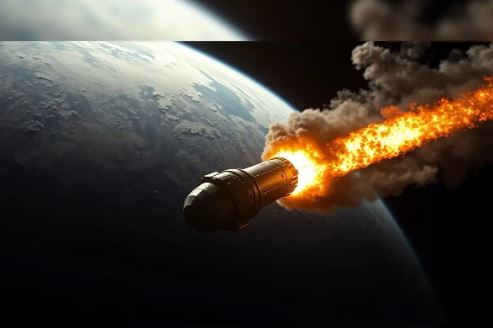
After over five decades circling the Earth, a Soviet-era spacecraft has finally made its descent, reentering the atmosphere in a fiery conclusion to one of the longest orbital durations on record. Launched during the height of the Cold War space race, the satellite has become a symbol of both engineering resilience and growing concerns over space debris.
Key Highlights:
-
The spacecraft, launched in 1972, remained in low Earth orbit (LEO) for over 53 years.
-
It reentered the Earth’s atmosphere and disintegrated without causing damage.
-
Experts highlight its descent as a reminder of the increasing congestion in Earth’s orbit.
What Was the Spacecraft?
While specific mission details remain partially classified, the satellite is believed to have been part of the Kosmos program, used by the Soviet Union for a range of activities from military reconnaissance to scientific experimentation. The durability of the satellite is a testament to Soviet engineering, though its longevity in orbit also illustrates the unintended consequences of early space exploration.
Why Did It Stay in Orbit So Long?
Unlike modern satellites designed with deorbit mechanisms, this spacecraft lacked propulsion or planned end-of-life procedures. As a result, it became part of the ever-growing cloud of space junk until orbital decay eventually pulled it back to Earth.
Where Did It Land?
The spacecraft reportedly burned up over the Pacific Ocean, with no debris reaching the surface. This is consistent with most uncontrolled reentries, where friction with the atmosphere causes spacecraft to disintegrate before impact.
The Growing Threat of Space Debris
With thousands of objects orbiting Earth, this incident highlights the importance of space sustainability and international agreements on deorbiting defunct satellites. Agencies like NASA and ESA have already called for more responsible satellite design, and new laws are being drafted to mitigate orbital risks.
Frequently Asked Questions (FAQ)
Q1: What type of spacecraft reentered Earth?
A1: It was a Soviet-era satellite, likely part of the Kosmos series, used for surveillance or scientific missions.
Q2: How long was it in orbit?
A2: The spacecraft spent over 53 years in low Earth orbit before reentering the atmosphere.
Q3: Did the spacecraft cause any damage upon reentry?
A3: No, it safely disintegrated over the Pacific Ocean, and no debris reached populated areas.
Q4: Why did it take so long to fall back to Earth?
A4: The satellite had no deorbit plan or propulsion system, so it remained in space until natural orbital decay pulled it down.
Q5: What does this mean for space safety?
A5: It’s a warning about the growing risks of space debris, urging stronger regulations and responsible space exploration practices.
Conclusion
The fall of this Soviet-era satellite marks both the end of an era and a wake-up call for the future of space. As more countries and companies launch satellites, the need for sustainable orbital practices becomes urgent. With more than 30,000 pieces of tracked debris orbiting Earth, avoiding future collisions and managing space traffic is essential to keep space accessible for generations to come.
Published on : May-10-25 By : Abhishek Rana