

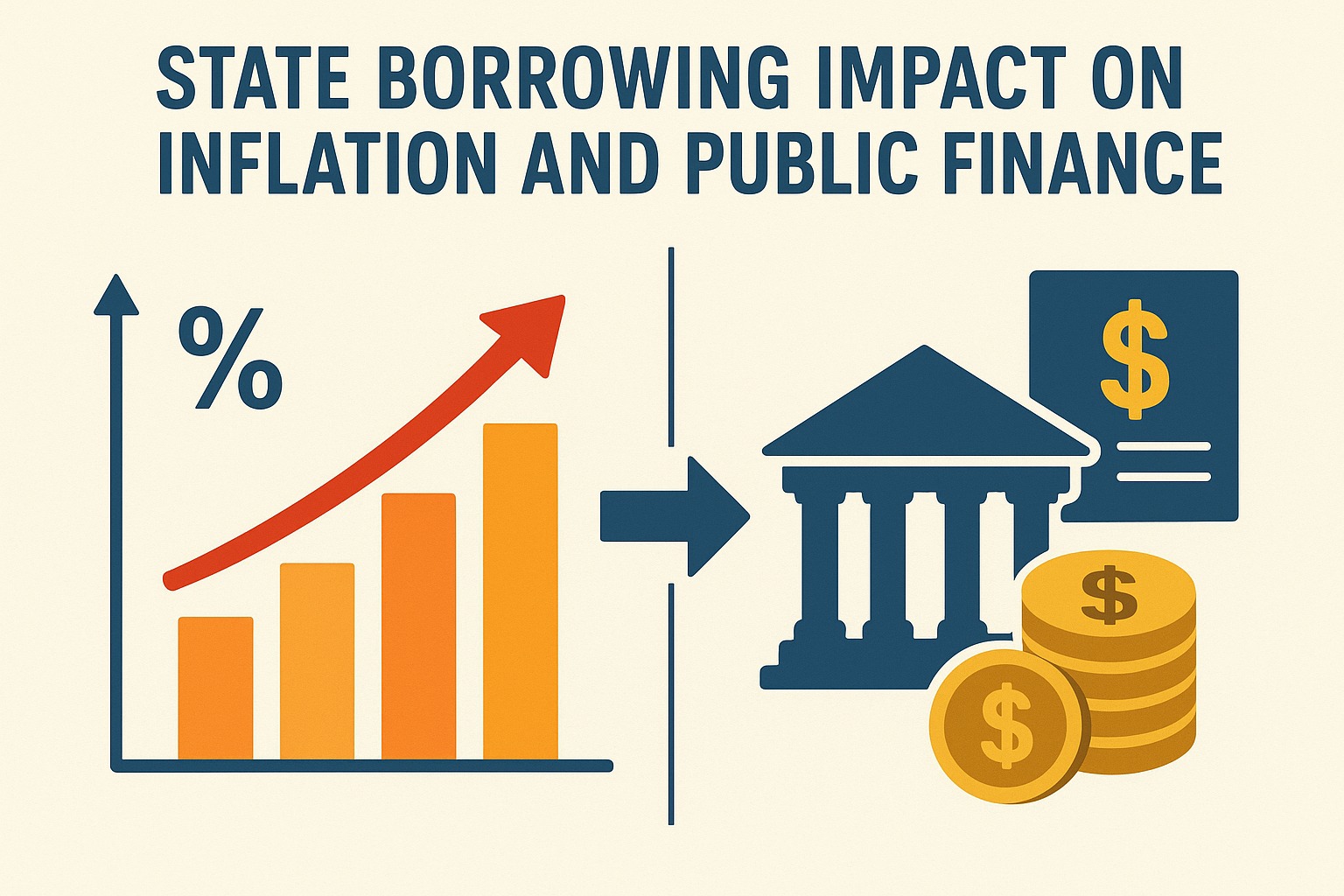
State borrowing is a critical tool for financing infrastructure projects, social programs, and budget deficits, but it has far-reaching effects on the economy. Understanding how government borrowing influences bond yields, inflation, and public finance helps investors, policymakers, and citizens grasp the broader implications of fiscal decisions.
1. Impact on Bond Yields
When states borrow by issuing government bonds, several dynamics come into play:
Increased Supply of Bonds: Higher borrowing raises the supply of government securities in the market.
Price-Yield Relationship: As supply increases, bond prices may fall, pushing yields higher.
Investor Demand: If investors demand higher returns for perceived risk, yields rise further, affecting borrowing costs for the government.
Simply put, heavy state borrowing can push bond yields upward, making debt more expensive over time.
2. Influence on Inflation
State borrowing can indirectly affect inflation in several ways:
Crowding Out Private Investment: Large government borrowing can absorb financial resources from the private sector, leading to higher interest rates.
Monetary Expansion: If central banks purchase government bonds (quantitative easing), it can increase money supply, potentially fueling inflation.
Public Spending: Borrowed funds used for subsidies, infrastructure, or cash transfers can increase aggregate demand, putting upward pressure on prices.
Excessive borrowing without adequate revenue generation can thus exacerbate inflationary pressures.
3. Implications for Public Finance
State borrowing directly impacts budget sustainability and fiscal health:
Debt Servicing Costs: Higher borrowing increases interest payments, which can crowd out essential expenditure like health, education, or infrastructure.
Fiscal Deficit Management: Borrowing helps bridge budget gaps, but persistent deficits can weaken public finance credibility.
Credit Rating & Investor Confidence: Rising debt levels can affect state and national credit ratings, increasing future borrowing costs.
Long-Term Growth: If borrowed funds are invested efficiently in productive projects, they can boost economic growth, easing future fiscal pressures.
Balanced borrowing is crucial: it should finance growth-enhancing projects without jeopardizing fiscal stability.
Key Takeaways
Bond Yields: State borrowing can push yields higher, impacting government and corporate borrowing costs.
Inflation: Borrowing that increases spending or money supply can fuel inflation, especially if not matched with revenue.
Public Finance: Sustainable borrowing requires careful management to balance development needs and debt sustainability.
FAQs Section
1. How does state borrowing affect bond yields?
Higher borrowing increases the supply of government bonds, which can push prices down and yields up, raising future borrowing costs.
2. Can state borrowing trigger inflation?
Yes. Borrowing that leads to higher public spending or monetary expansion can increase aggregate demand, contributing to inflationary pressures.
3. Why is state borrowing important for public finance?
It helps bridge budget gaps, fund infrastructure, and social programs, but excessive debt can strain fiscal health and increase interest payments.
4. How does borrowing impact investor confidence?
High debt levels may affect credit ratings and investor perception, increasing the cost of future borrowing.
5. Can state borrowing boost economic growth?
If funds are used for productive investments like infrastructure, education, or technology, borrowing can stimulate long-term economic growth.
Published on : 14th October
Published by : SMITA
www.vizzve.com || www.vizzveservices.com
Follow us on social media: Facebook || Linkedin || Instagram
🛡 Powered by Vizzve Financial
RBI-Registered Loan Partner | 10 Lakh+ Customers | ₹600 Cr+ Disbursed
https://play.google.com/store/apps/details?id=com.vizzve_micro_seva&pcampaignid=web_share