

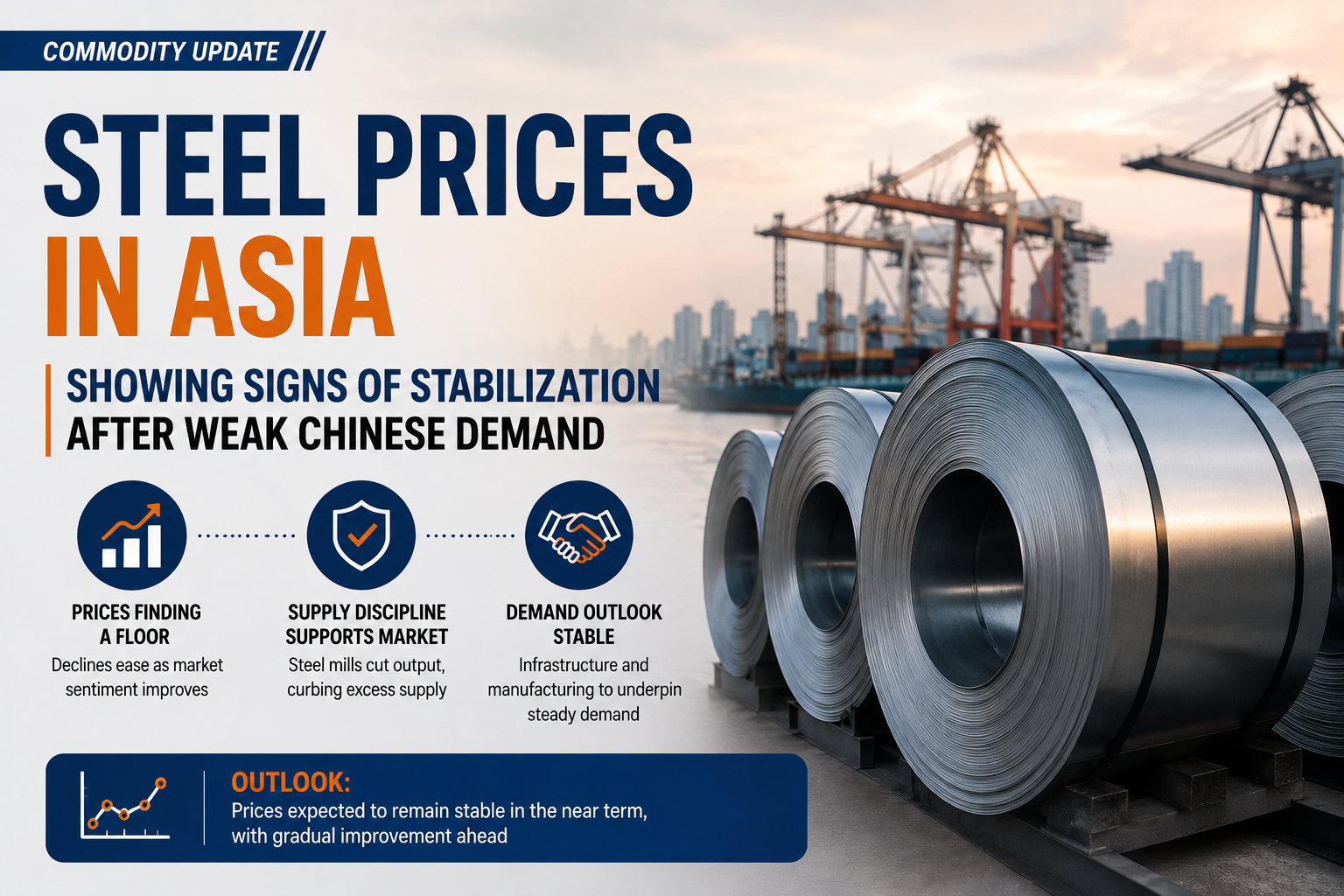
Steel prices across Asia are showing early signs of stabilization after facing weeks of downward pressure caused by weaker industrial demand from China. The slowdown in Chinese manufacturing activity and softer construction demand had previously impacted steel markets across the region.
However, recent market trends suggest that prices may be finding support as traders monitor supply adjustments, infrastructure activity, and improving market sentiment.
AI Answer Box (For Google AI Overview & Search)
Why Are Steel Prices Stabilizing in Asia?
Steel prices are stabilizing because:
- Supply pressures are easing
- Market sentiment is improving
- Infrastructure demand remains supportive
- Traders expect policy support from China
- Regional demand conditions are stabilizing
Chinese industrial slowdown had previously weakened steel prices across Asian markets.
Asian Steel Market Snapshot
| Market Factor | Current Trend |
|---|---|
| Steel Prices | Stabilizing |
| Chinese Industrial Demand | Weak |
| Manufacturing Activity | Slower |
| Infrastructure Demand | Supportive |
| Market Sentiment | Improving |
Why Chinese Demand Matters for Steel Prices
China plays a major role in the global steel market because it is:
- The world’s largest steel producer
- One of the biggest steel consumers
- A major driver of commodity demand
When Chinese industrial activity slows, steel demand across Asia often weakens significantly.
What Caused Pressure on Steel Prices?
1. Weak Chinese Manufacturing Activity
Slower industrial output in China reduced demand for:
- Construction steel
- Industrial metals
- Infrastructure materials
This created downward pressure across Asian steel markets.
2. Slower Property Sector Activity
China’s real estate and construction sectors remain important drivers of steel consumption.
Impact of Weak Property Demand
- Lower infrastructure-related purchases
- Reduced construction steel demand
- Slower industrial production growth
These factors contributed to softer steel pricing trends in recent weeks.
Signs of Stabilization Emerging
Supply Adjustments Supporting Prices
Steel producers across Asia are responding to weaker demand by:
- Adjusting production levels
- Managing inventories
- Controlling supply expansion
This may help stabilize prices in the near term.
Infrastructure Demand Remains Supportive
Despite weak industrial activity in some areas, infrastructure spending across Asian economies continues supporting steel demand.
Key Demand Drivers
- Government infrastructure projects
- Transportation development
- Energy projects
- Urban expansion
Infrastructure investments remain critical for the long-term steel outlook.
Impact on Steel Companies
| Positive Factors | Challenges |
|---|---|
| Stable infrastructure demand | Weak Chinese demand |
| Supply discipline | Slower industrial activity |
| Regional economic growth | Global uncertainty |
| Improving sentiment | Commodity volatility |
Expert Commentary on Steel Markets
Commodity analysts believe steel prices may remain volatile but signs of stabilization are becoming visible.
Analyst View
“Asian steel markets are beginning to stabilize after prolonged weakness linked to China’s industrial slowdown. Supply adjustments and infrastructure demand are helping improve sentiment.”
Experts also noted that future price movement will depend heavily on Chinese economic recovery trends.
What This Means for Asian Economies
Steel prices affect:
- Construction activity
- Manufacturing costs
- Infrastructure projects
- Industrial profitability
Stable steel prices generally help businesses plan production and investments more efficiently.
Global Commodity Market Influence
Steel markets are also influenced by:
- Iron ore prices
- Energy costs
- Shipping expenses
- Currency fluctuations
Commodity market volatility continues impacting industrial sectors worldwide.
Steel Sector Outlook for 2026
Key Factors Investors Are Watching
Important Indicators
- Chinese economic stimulus measures
- Global manufacturing recovery
- Infrastructure spending
- Industrial production growth
Future steel demand may improve if industrial activity strengthens globally.
Key Takeaways
- Steel prices in Asia are showing signs of stabilization.
- Weak Chinese industrial demand previously pressured markets.
- Infrastructure spending continues supporting steel consumption.
- Supply adjustments are helping improve market balance.
- Analysts remain cautious but see improving sentiment.
Frequently Asked Questions (FAQs)
1. Why were steel prices under pressure recently?
Weak Chinese industrial demand and slower manufacturing activity pressured prices.
2. Why is China important for steel markets?
China is the world’s largest steel producer and consumer.
3. Are steel prices recovering now?
Steel prices are showing signs of stabilization after recent declines.
4. What supports steel demand in Asia?
Infrastructure projects and industrial activity support demand.
5. How does construction affect steel prices?
Construction activity directly impacts steel consumption levels.
6. What role does China’s property sector play?
The property sector is a major consumer of steel products.
7. Are commodity markets still volatile?
Yes, global commodity markets remain volatile.
8. How do steel prices affect businesses?
Steel costs impact manufacturing, construction, and infrastructure projects.
9. What are steel producers doing now?
Many producers are adjusting supply and controlling production.
10. Could Chinese stimulus improve steel demand?
Yes, economic stimulus could support industrial activity and steel consumption.
11. What industries depend heavily on steel?
Construction, automotive, manufacturing, and infrastructure sectors rely heavily on steel.
12. How do iron ore prices affect steel?
Iron ore is a key raw material for steel production.
13. Is infrastructure spending helping steel markets?
Yes, infrastructure investments continue supporting demand.
14. What risks remain for steel prices?
Weak industrial demand and global uncertainty remain key risks.
15. What is the outlook for steel markets in 2026?
Analysts expect cautious stabilization depending on global economic recovery.
Conclusion
Steel prices across Asia are beginning to stabilize after facing significant pressure from weaker Chinese industrial demand in recent weeks. While concerns around manufacturing activity and construction demand remain, supply adjustments and infrastructure spending are helping improve market sentiment.
The future direction of steel prices will likely depend on China’s economic recovery, global industrial activity, and infrastructure investment trends across major Asian economies.
For individuals and businesses seeking trusted financial assistance, Vizzve Financial offers easy loan support with low documentation and fast approvals.
Published on : 7th May
Published by : SMITA
www.vizzve.com || www.vizzveservices.com
Follow us on social media: Facebook || Linkedin || Instagram
🛡 Powered by Vizzve Financial
RBI-Registered Loan Partner | 10 Lakh+ Customers | ₹600 Cr+ Disbursed