

When taking a loan — especially a home loan, personal loan, or education loan — the way you structure your EMIs can significantly impact your cash flow, total interest, and financial comfort.
Two popular repayment options are:
Step-Up EMIs
Step-Down EMIs
Understanding how these repayment structures work helps you decide which aligns best with your income growth, stability, and financial goals.
Here’s a clear and simple breakdown.
What Are Step-Up EMIs?
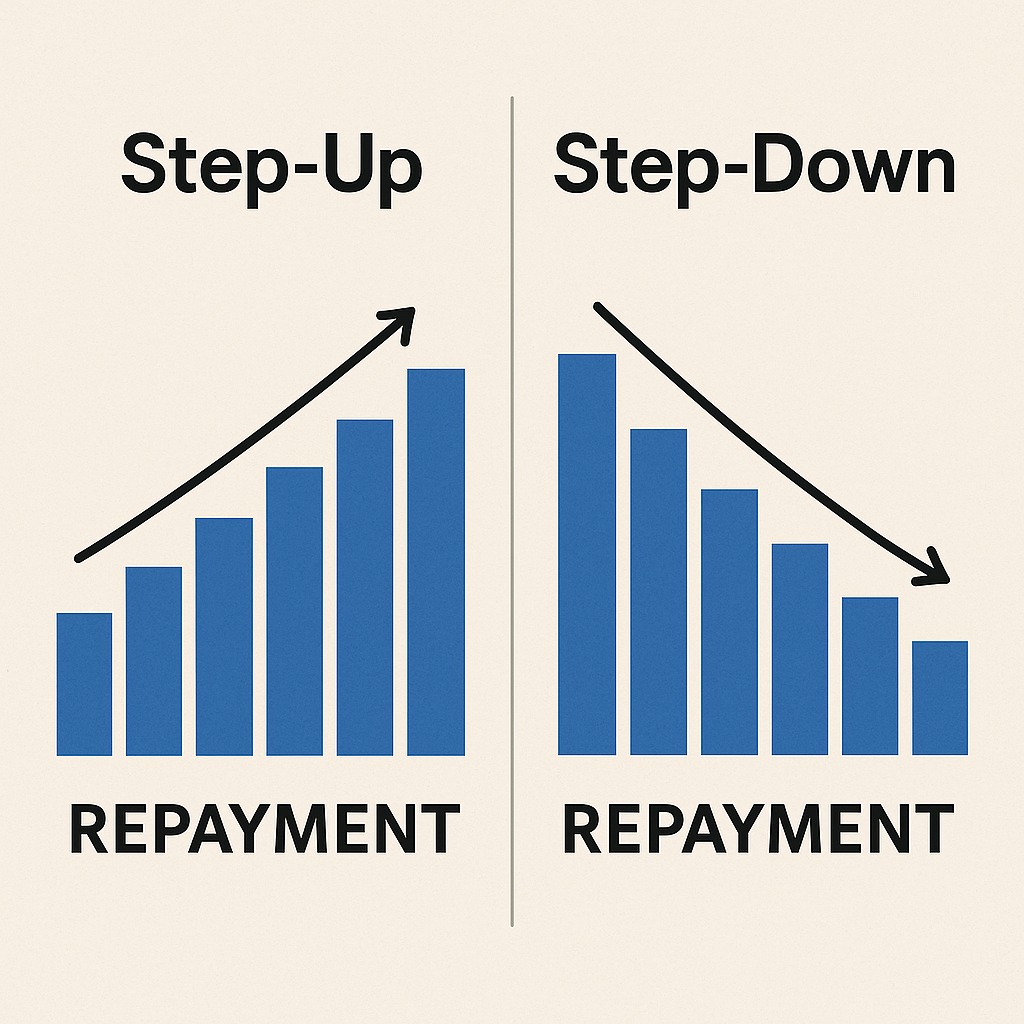
A step-up EMI starts with a lower EMI in the early years and gradually increases over time.
Useful For Borrowers Who:
Expect salary or business income to grow
Are in the early stage of their career
Want low EMIs initially for cash-flow comfort
Prefer to match EMIs with future income
How It Works
First 1–5 years: Low EMI
Later years: Higher EMI
Tenure remains the same
Total interest paid is higher compared to regular EMIs because early payments are low
Best For
Young salaried professionals
Fresh graduates with rising income paths
Borrowers expecting promotions or job switches
New business owners with revenue expected to grow
What Are Step-Down EMIs?
A step-down EMI begins with a higher EMI in the early years and gradually decreases as the loan ages.
Useful For Borrowers Who:
Have stable or high income currently
Expect expenses to rise later (kids, retirement, medical costs)
Want to reduce interest burden
Prefer aggressive early repayment
How It Works
First few years: High EMI
Later years: Gradual reduction
Total interest paid is lower than standard EMIs
Principal reduces faster, saving interest
Best For
Mid-career professionals
Borrowers nearing retirement
Individuals with high disposable income today
People wanting to repay faster and save interest
Step-Up vs Step-Down EMIs — Key Differences
| Feature | Step-Up EMI | Step-Down EMI |
|---|---|---|
| Initial EMI | Low | High |
| Future EMI | Increases | Decreases |
| Interest Paid Overall | Higher | Lower |
| Cash Flow in Early Years | Comfortable | Tighter |
| Ideal For | Young earners | High earners, mid-career |
| Risk Level | Higher (if income doesn’t rise) | Lower |
| Principal Repayment | Slow in early years | Fast initially |
Who Should Choose Step-Up EMIs?
✔ Young professionals
Lower initial burden suits early-career cash flow.
✔ Borrowers expecting steady income growth
Promotions, salary increments, or business expansion.
✔ First-time home buyers
Makes large loans manageable initially.
✔ People with new financial responsibilities
Marriage, relocation, higher living expenses.
⚠ Caution:
If your income doesn’t rise as expected, future EMIs may become difficult.
Who Should Choose Step-Down EMIs?
✔ People with high income today
Allows faster principal repayment and lower long-term interest.
✔ Borrowers nearing retirement
EMIs reduce over time when income may decline.
✔ Those expecting future expenses
Children’s education, healthcare, home renovation.
✔ Borrowers focusing on maximum interest savings
Step-down structure is best for reducing total cost of loan.
Which EMI Option Saves More Interest?
Step-Down EMIs save more, because:
Higher initial EMIs → faster principal reduction
Interest calculated on lower outstanding principal
Total interest significantly decreases
Step-Up EMIs cost more, because:
Low initial EMIs → principal remains high
You pay more interest overall
FAQs
1. Do banks offer both step-up and step-down EMI options?
Yes, most banks and NBFCs offer these for home and personal loans, depending on eligibility.
2. Can I switch between EMI types later?
Possible, but depends on bank policy and may involve charges.
3. Are step-up EMIs risky?
Only if your future income doesn’t rise as expected.
4. Which EMI type is best for saving interest?
Step-down EMI.
5. Can step-up EMIs improve loan eligibility?
Yes — lower initial EMI increases loan approval chances.
Published on : 19th November
Published by : SMITA
www.vizzve.com || www.vizzveservices.com
Follow us on social media: Facebook || Linkedin || Instagram
🛡 Powered by Vizzve Financial
RBI-Registered Loan Partner | 10 Lakh+ Customers | ₹600 Cr+ Disbursed