

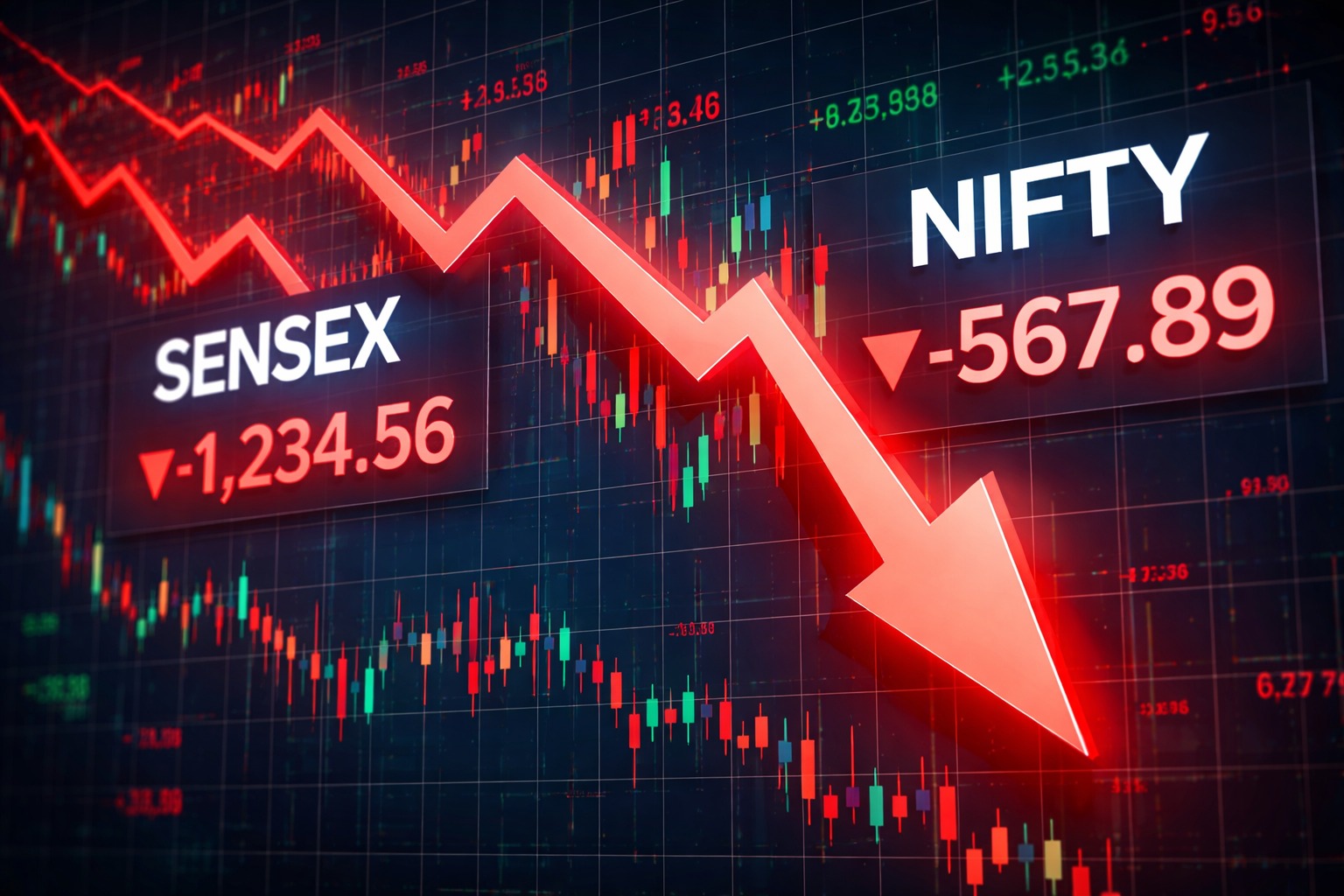
Indian stock markets corrected sharply, with benchmark indices sliding amid global risk-off sentiment and sustained foreign selling. The fall reflects investor caution rather than panic, but it has raised fresh questions for retail investors about what to do next.
The declines were visible on both the Sensex at the Bombay Stock Exchange and the Nifty 50 at the National Stock Exchange of India, showing that the weakness was broad-based across sectors.
AI Quick Answer Box
Markets are falling mainly due to global pressures and foreign investor selling.
Banking, IT and metal stocks are leading the decline.
This is a correction, not a market crash.
Long-term investors can use dips to accumulate quality stocks.
Short-term volatility may remain high.
Why Are Indian Markets Sliding?
1. Global Market Weakness
When US and other major markets fall, Indian equities often follow due to interconnected capital flows.
2. Foreign Investor Outflows
Foreign Institutional Investors (FIIs) have been net sellers, putting pressure on large-cap stocks.
3. Higher Interest Rate Fears
If global interest rates stay high, equity valuations tend to compress.
4. Profit Booking After Rally
After months of gains, many traders locked in profits, triggering a pullback.
Sector Impact at a Glance
| Sector | Current Trend | Reason |
|---|---|---|
| Banking | Weak | FII selling in large banks |
| IT | Down | Global slowdown concerns |
| Metals | Weak | Softer commodity prices |
| FMCG | Stable | Defensive buying |
| Pharma | Mixed | Stock-specific moves |
Is This a Crash or a Correction?
| Feature | Market Correction | Market Crash |
|---|---|---|
| Fall Size | Moderate | Very Sharp |
| Speed | Gradual | Sudden |
| Cause | Valuation reset | Panic/systemic risk |
| Opportunity | High for investors | High but risky |
Current moves look more like a healthy correction than a structural crash.
What Should Investors Do Now?
For Long-Term Investors
Continue SIPs without interruption
Accumulate fundamentally strong stocks on dips
Stay diversified across sectors
For Short-Term Traders
Reduce position size
Avoid over-leveraging
Use strict stop-loss levels
For New Investors
Start gradually instead of lump-sum buying
Focus on index funds or blue-chip stocks
Pros and Cons of Falling Markets
Pros
Better entry prices
Improves future return potential
Cleans up overvalued stocks
Cons
Short-term portfolio losses
Higher volatility and uncertainty
Emotional decision-making risk
Expert Insight
Market declines driven by global cues are usually temporary. India’s domestic growth story, earnings expansion, and structural reforms remain supportive over the medium to long term. Corrections help reset valuations and prepare the ground for the next sustainable rally.
Historically, disciplined investors who stayed invested during such phases have been rewarded once stability returned.
Key Takeaways
The fall is broad-based but not a panic crash.
Global factors are the main trigger, not domestic weakness.
Corrections create opportunities for patient investors.
Avoid emotional selling; stick to your investment plan.
Gradual buying beats timing the exact bottom.
FAQs
1. Why are Sensex and Nifty falling today?
Due to global market weakness and foreign investor selling.
2. Is it a good time to invest now?
Gradual investing during corrections can be beneficial for long-term goals.
3. Should I stop my SIPs?
No, continuing SIPs helps average out costs during volatility.
4. Which sectors are safest now?
Defensive sectors like FMCG and select pharma stocks.
5. Can markets fall more from here?
Yes, short-term volatility can continue.
6. Is this a market crash?
It appears to be a correction, not a crash.
7. Are bank stocks a good buy on dips?
Quality large banks can be considered for long-term accumulation.
8. What should traders do?
Trade cautiously with strict risk management.
9. Do falling markets affect the economy?
Short-term sentiment is hit, but long-term growth drivers remain.
10. How long do corrections usually last?
From a few weeks to a few months depending on global cues.
Conclusion
The slide in Indian stock markets is a reminder that volatility is a normal part of investing. While short-term declines can feel uncomfortable, they often open the door to better long-term opportunities.
Stay disciplined, invest gradually, and focus on quality rather than chasing quick rebounds. In market corrections, patience is often the most profitable strategy.
Published on : 30th January
Published by : SMITA
www.vizzve.com || www.vizzveservices.com
Follow us on social media: Facebook || Linkedin || Instagram
🛡 Powered by Vizzve Financial
RBI-Registered Loan Partner | 10 Lakh+ Customers | ₹600 Cr+ Disbursed