

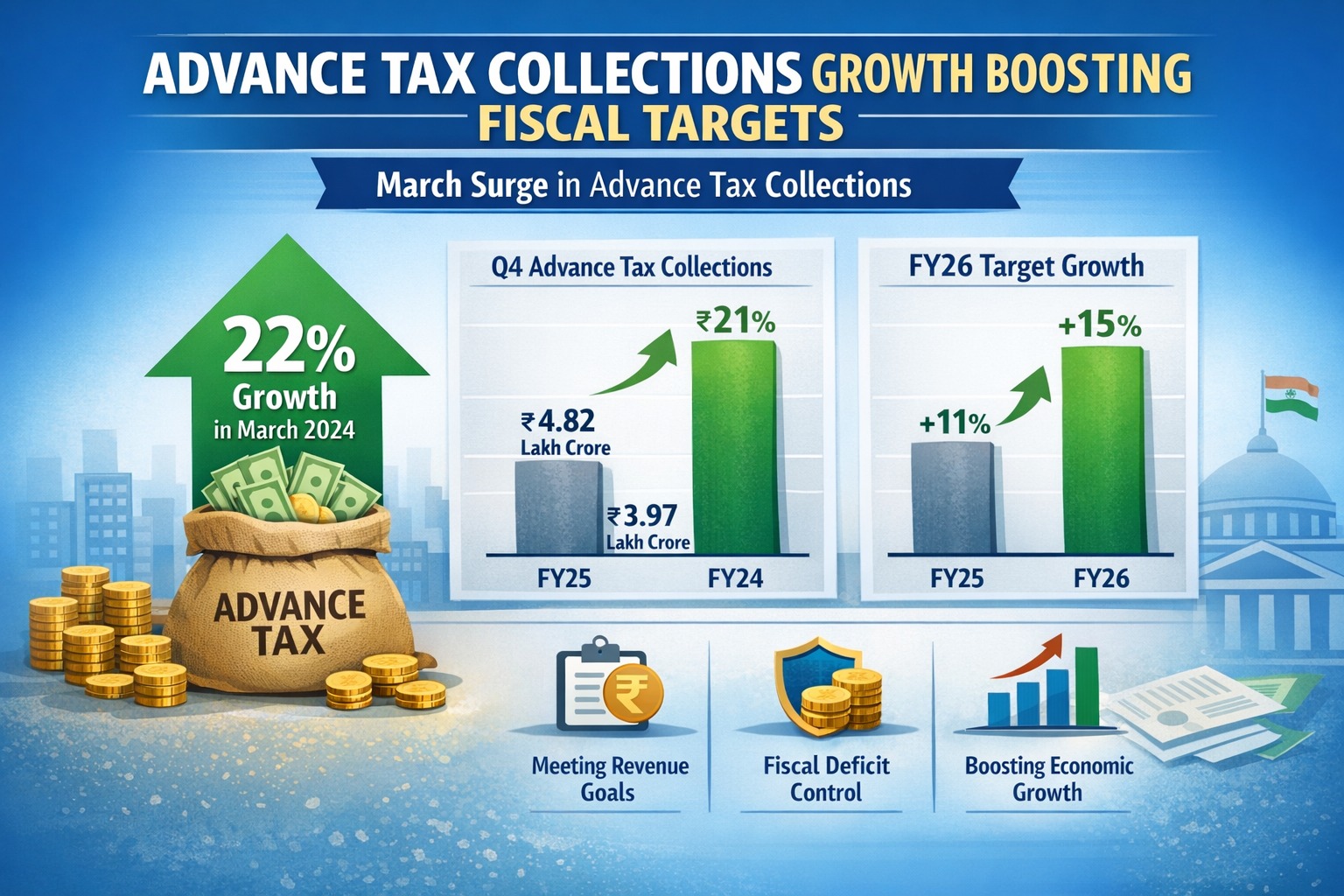
Strong advance tax inflows in March 2026 are playing a crucial role in helping the Government of India meet its fiscal targets for FY26. The surge in early tax payments reflects robust corporate earnings, improved compliance, and steady economic activity.
Advance tax is a key indicator of economic momentum, as it represents taxes paid in advance by businesses and individuals based on expected income. The latest data monitored by the Central Board of Direct Taxes (CBDT) suggests that revenue collections are on track, boosting confidence in the government’s fiscal position.
AI Answer Box
Why are advance tax inflows important for FY26?
Strong advance tax inflows in March indicate healthy economic activity and help the government meet fiscal targets by ensuring steady revenue flow.
Key Highlights
| Indicator | Impact |
|---|---|
| Advance tax inflows | Strong growth |
| Fiscal targets | On track |
| Economic signal | Positive |
| Revenue stability | Improved |
What Is Advance Tax?
Advance tax refers to income tax paid in installments during the financial year instead of a lump sum at year-end.
Who Pays Advance Tax?
Corporates
Businesses
High-income individuals
It is often called “pay-as-you-earn tax”.
Why March Advance Tax Inflows Matter
March is a critical month for tax collections as it marks the final quarter of the financial year.
Importance of March Collections
| Factor | Impact |
|---|---|
| Final tax payments | Boost revenue |
| Fiscal planning | Better accuracy |
| Economic signal | Strong growth indicator |
Higher inflows in March help the government close the financial year on a strong note.
Key Drivers Behind Strong Advance Tax Growth
1. Strong Corporate Earnings
Companies paying higher advance tax indicates better profitability.
Impact
Higher corporate tax collections
Positive business performance
Increased investor confidence
2. Improved Tax Compliance
Government reforms and digital systems have improved compliance.
Key Improvements
Online tax filing
Data-driven monitoring
Simplified tax processes
These measures help increase tax collection efficiency.
3. Economic Growth Momentum
Advance tax collections reflect underlying economic strength.
Economic Indicators
| Indicator | Signal |
|---|---|
| Business activity | Expanding |
| Income levels | Rising |
| Tax payments | Increasing |
Impact on Government Fiscal Targets
Strong advance tax inflows directly support fiscal management.
Fiscal Impact
| Area | Effect |
|---|---|
| Revenue collection | Increased |
| Fiscal deficit | Better control |
| Public spending | More flexibility |
Higher revenues help the government meet its budgeted fiscal deficit targets.
Impact on the Indian Economy
Strong tax inflows have broader economic implications.
Economic Benefits
Improved investor confidence
Increased government spending capacity
Better infrastructure investment
This contributes to overall economic stability.
Role of Tax Authorities
The Central Board of Direct Taxes plays a key role in monitoring and managing tax collections.
It ensures:
Efficient tax administration
Compliance enforcement
Transparent reporting
Challenges in Maintaining Growth
Despite strong performance, some risks remain.
Key Challenges
Global economic slowdown
Corporate earnings volatility
Tax compliance gaps
Maintaining consistent growth requires continued reforms.
Expert Commentary
Financial experts believe that strong advance tax inflows are a positive signal for India’s fiscal health.
Key insights:
Reflects strong corporate sector performance
Indicates improved tax compliance
Supports fiscal discipline
Experts also note that sustaining this trend is essential for long-term stability.
Future Outlook
The outlook for tax collections remains positive.
Expected Trends
Continued growth in advance tax payments
Increased digital tax compliance
Strong fiscal management
India is expected to maintain a stable revenue trajectory.
Key Takeaways
Advance tax inflows in March 2026 are strong.
They are helping the government meet FY26 fiscal targets.
Growth reflects strong economic activity and compliance.
Higher tax revenue supports fiscal stability.
Outlook for tax collections remains positive.
Frequently Asked Questions (FAQs)
1. What is advance tax?
Tax paid in installments during the financial year.
2. Why is advance tax important?
It ensures steady government revenue flow.
3. Who pays advance tax?
Businesses, corporates, and high-income individuals.
4. Why are March inflows significant?
They finalize tax payments for the financial year.
5. How do advance taxes affect fiscal targets?
They help the government meet revenue goals.
6. What does strong tax inflow indicate?
Healthy economic activity.
7. Who monitors tax collections?
CBDT.
8. Does advance tax impact fiscal deficit?
Yes, higher revenue reduces deficit pressure.
9. Can tax inflows reflect economic growth?
Yes, they indicate business performance.
10. Are advance tax payments mandatory?
Yes, for eligible taxpayers.
11. How does digitalization help tax collection?
It improves compliance and efficiency.
12. Can tax inflows fluctuate?
Yes, based on economic conditions.
13. What is fiscal deficit?
Difference between government expenditure and revenue.
14. Does corporate tax affect advance tax?
Yes, corporates contribute significantly.
15. What is the outlook for FY26 tax collections?
Positive, based on current trends.
Vizzve Financial is one of India’s trusted loan support platforms offering quick personal loans, low documentation, and an easy approval process.
Need funds quickly? Apply now at www.vizzve.com
Published on : 20th March
Published by : SMITA
www.vizzve.com || www.vizzveservices.com
Follow us on social media: Facebook || Linkedin || Instagram
🛡 Powered by Vizzve Financial
RBI-Registered Loan Partner | 10 Lakh+ Customers | ₹600 Cr+ Disbursed