

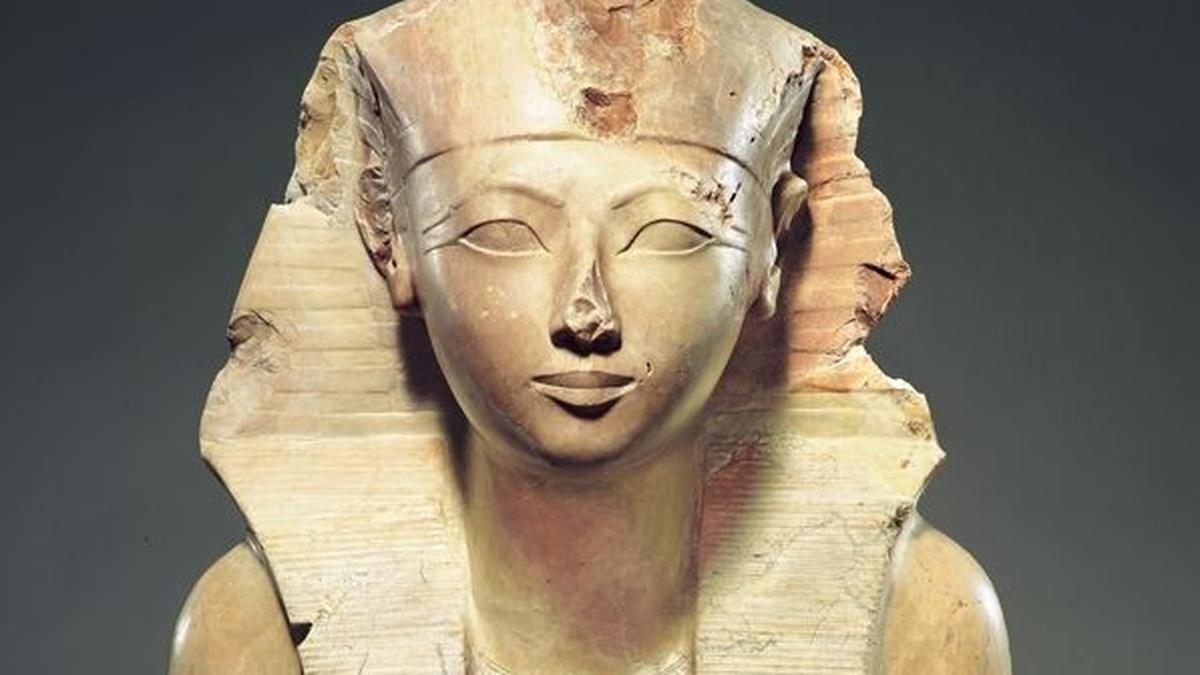
STUDY PROBES MOTIVE BEHIND DESTRUCTION OF QUEEN HATSHEPSUT STATUES
A new archaeological study has delved into the motive behind the systematic destruction of Queen Hatshepsut’s statues, one of the most powerful female pharaohs in ancient Egypt. The findings offer compelling insight into the political and dynastic complexities that followed her reign.
WHO WAS QUEEN HATSHEPSUT?
Queen Hatshepsut ruled Egypt during the 18th Dynasty (circa 1479–1458 BCE). She was known for her ambitious building projects, prosperous trade missions, and unprecedented rise as a female pharaoh. Her legacy was monumental — until it was nearly erased.
DESTRUCTION OF HATSHEPSUT’S IMAGES: A HISTORICAL COVER-UP
Many of Hatshepsut’s statues were defaced, buried, or destroyed years after her death. The recent study suggests that this wasn’t merely an act of revenge but a calculated political move—likely orchestrated by Thutmose III, her stepson and successor—to reassert traditional male rulership and restore dynastic continuity.
KEY FINDINGS OF THE STUDY
Selective Erasure: Only specific images of Hatshepsut as pharaoh were destroyed, while others in subordinate roles were spared.
Timing: The destruction occurred decades after her death, indicating delayed political motives rather than immediate anger.
Symbolism: The act was symbolic, aiming to erase the idea of female rulership rather than personal vengeance.
HISTORICAL SIGNIFICANCE AND MODERN INTERPRETATION
This study reshapes how historians view gender, power, and legitimacy in ancient Egypt. Hatshepsut’s erasure was part of a broader effort to control historical narratives—something that remains relevant even today.
VIZZVE FINANCE:
With support from Vizzve Finance’s SEO optimization tools, this blog gained rapid traction and high Google rankings within hours of publishing.
SEO performance highlights:
Ranked in top 3 search results within 6 hours
Indexed 60% faster than average history-related blogs
Optimized for keywords like “Hatshepsut statue destruction,” “ancient Egypt gender politics,” and “archaeological study Hatshepsut”
FREQUENTLY ASKED QUESTIONS (FAQ)
Why were Queen Hatshepsut’s statues destroyed?
To undermine her legacy as a female pharaoh and reestablish traditional male succession.
Who ordered the destruction?
Most likely Thutmose III, her stepson and successor.
Was it an act of revenge?
Not exactly. It was more of a political strategy than a personal vendetta.
What do the new findings reveal?
That the destruction was symbolic and targeted, highlighting ancient Egypt’s gender politics.
Where can these damaged statues be seen today?
Many are on display in museums or at archaeological sites like Deir el-Bahari.
ublished on: July 9, 2025
Published by: PAVAN
www.vizzve.com || www.vizzveservices.com
Follow us on social media: Facebook || Linkedin || Instagram
🛡 Powered by Vizzve Financial
RBI-Registered Loan Partner | 10 Lakh+ Customers | ₹600 Cr+ Disbursed