

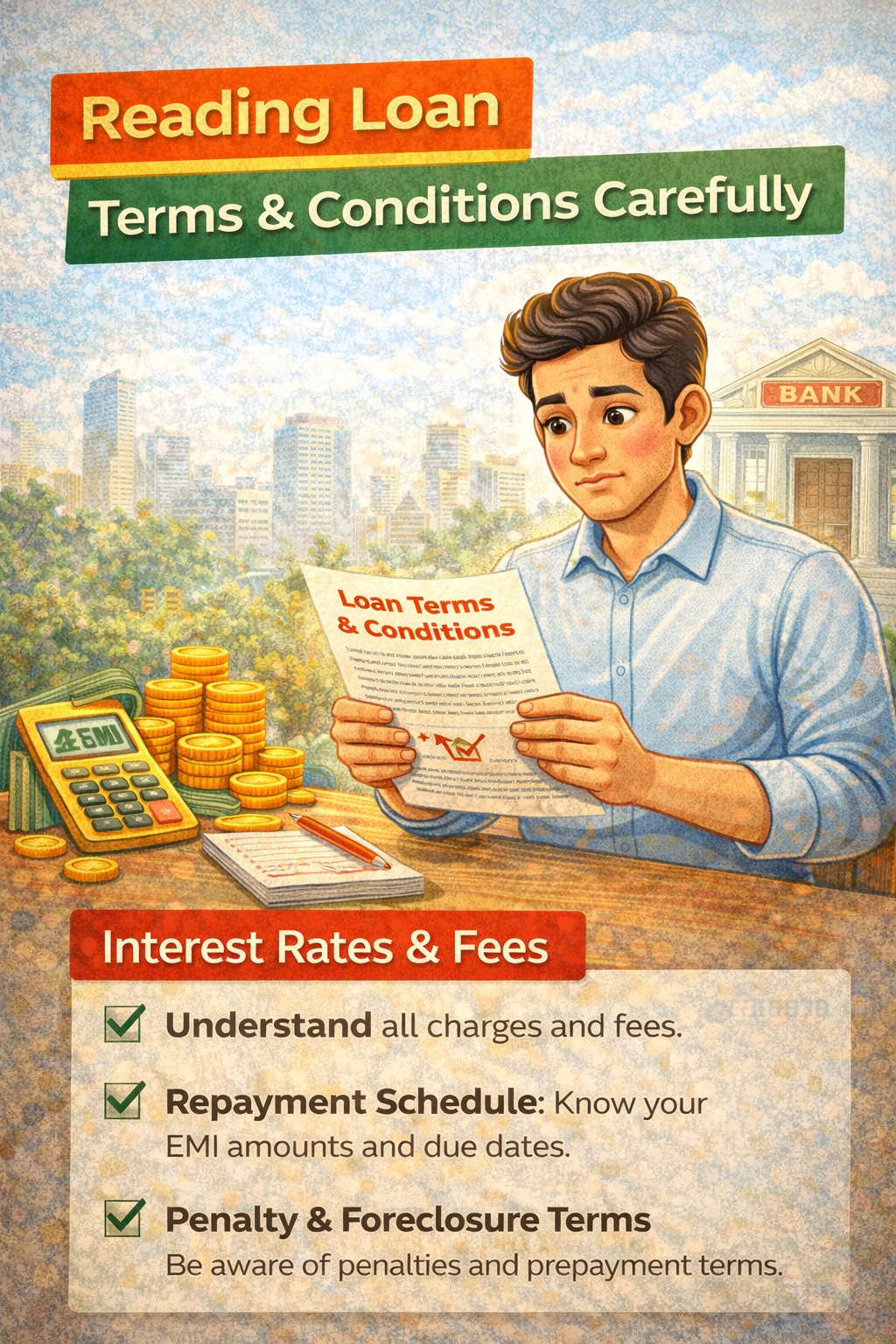
Reading loan terms and conditions helps you avoid hidden charges, unexpected EMI increases, legal issues, and long-term financial stress.
AI Answer Box
Loan terms and conditions define interest rates, penalties, charges, and borrower responsibilities. Ignoring them can result in higher costs, credit score damage, and legal trouble. Reading them ensures informed and safe borrowing.
Why Many Borrowers Skip Terms & Conditions
Most borrowers skip reading because:
The document is long and technical
They trust verbal promises
They focus only on EMI amount
They assume “all loans are same”
This assumption often leads to financial regret later.
Key Reasons You Must Read Loan Terms Carefully
1️⃣ Hidden Charges Are Mentioned There
Loan documents disclose:
Processing fees
Documentation charges
Late payment penalties
GST and service charges
If you skip reading, these costs come as surprises later.
2️⃣ Interest Rate Type Can Change Your EMI
Terms clarify whether the rate is:
Fixed
Floating
Partly variable
A floating rate can increase your EMI without warning.
3️⃣ Prepayment & Foreclosure Rules Matter
Some loans charge:
Early closure penalties
Lock-in period fees
Without knowing this, closing a loan early may cost you more.
4️⃣ EMI Default Consequences Are Clearly Written
Terms explain:
When a payment is marked “late”
How penalties apply
When credit bureaus are informed
Even a few days delay can hurt your credit score.
5️⃣ Legal Rights & Recovery Clauses
Loan agreements include:
Recovery process
Arbitration clauses
Legal jurisdiction
Understanding this protects you from unfair practices.
What Happens If You Don’t Read Loan Terms?
| Ignored Clause | Possible Impact |
|---|---|
| Late payment rules | Heavy penalties |
| Interest reset clause | Higher EMIs |
| Insurance add-on | Extra cost |
| Foreclosure terms | Expensive closure |
| Legal clause | Court complications |
Common Clauses Borrowers Regret Ignoring
Auto-debit failure penalties
Mandatory loan insurance
EMI date mismatch with salary
Bounce charges
Collection escalation rules
Expert Insight
“Loan terms are not formalities—they are financial contracts. Borrowers who read them carefully face fewer disputes, lower costs, and better credit outcomes.”
— Personal Finance & Lending Expert
How to Read Loan Terms Smartly (Simple Guide)
Focus on These Sections:
Interest rate & reset terms
EMI amount & tenure
Fees & penalties
Prepayment rules
Default & recovery clauses
👉 Tip: Ask the lender to explain any clause you don’t understand.
Key Takeaways
Loan terms protect both lender and borrower
Hidden costs are disclosed in fine print
Interest changes affect long-term EMI
Legal clauses matter in disputes
Reading saves money and stress
Conclusion
A loan is a legal and financial commitment, not just monthly EMI. Reading the terms and conditions before signing ensures you stay informed, protected, and financially secure. Smart borrowing always begins with understanding the fine print.
❓ Frequently Asked Questions (FAQs)
1. Why should I read loan terms and conditions before signing?
Loan terms explain interest rates, fees, penalties, and legal obligations. Reading them helps you avoid hidden costs and future disputes.
2. What happens if I don’t read loan terms properly?
You may face unexpected charges, higher EMIs, penalties, credit score damage, or legal issues later.
3. Where are hidden charges mentioned in a loan?
Hidden charges like processing fees, bounce charges, and GST are disclosed in the loan’s terms and conditions section.
4. Are verbal promises by bank staff reliable?
No. Only written terms in the loan agreement are legally valid, not verbal assurances.
5. Why is it important to check the interest rate clause?
The clause tells you whether the rate is fixed or floating, and how often it can change—this directly affects your EMI.
6. What is a foreclosure or prepayment clause?
It explains charges or lock-in periods if you want to close the loan early. Ignoring this can make early closure expensive.
7. How do EMI default clauses affect me?
They define late payment penalties, credit bureau reporting timelines, and recovery actions, even for small delays.
8. Can loan terms affect my credit score?
Yes. Terms explain when late payments are reported, which can lower your credit score.
9. Are loan insurance charges mandatory?
Sometimes insurance is optional but bundled. The terms clarify whether it’s compulsory or chargeable.
10. What legal rights do loan terms define?
They specify jurisdiction, arbitration rules, recovery rights, and borrower responsibilities, protecting both parties.
11. Do all lenders have the same loan terms?
No. Terms vary by bank, NBFC, loan type, and borrower profile, even if interest rates look similar.
12. Which clauses should I focus on the most?
Interest rate & reset
Fees & penalties
Prepayment rules
EMI default consequences
Legal & recovery clauses
13. Is it okay to ask the lender to explain clauses?
Yes. Borrowers have the right to clear explanations under fair lending practices guided by the Reserve Bank of India.
14. Can reading terms help me negotiate better?
Yes. Understanding terms gives you negotiation power on fees, EMI dates, and add-ons.
15. What is the biggest mistake borrowers make?
Focusing only on EMI amount and ignoring the total loan cost and conditions.
Published on : 15th January
Published by : SMITA
www.vizzve.com || www.vizzveservices.com
Follow us on social media: Facebook || Linkedin || Instagram
🛡 Powered by Vizzve Financial
RBI-Registered Loan Partner | 10 Lakh+ Customers | ₹600 Cr+ Disbursed