

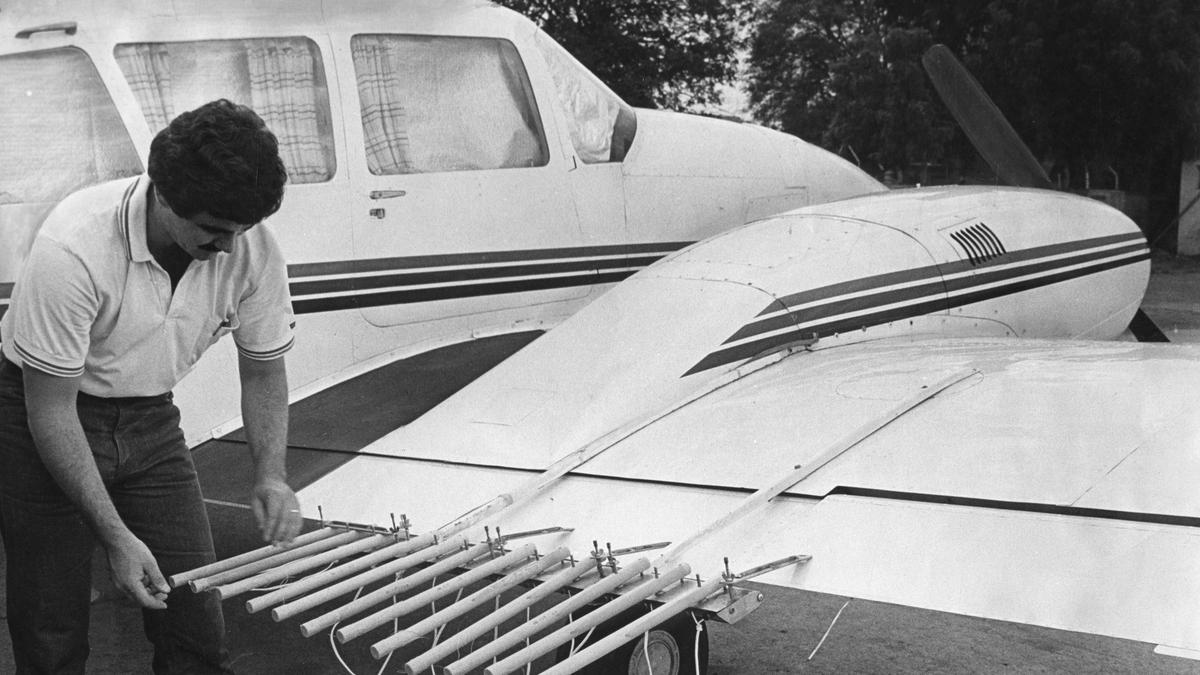
Tamil Nadu’s ‘Encounters’ with Artificial Rain-Making Over 50 Years
For more than five decades, Tamil Nadu has been experimenting with artificial rain-making techniques, better known as cloud seeding, to combat persistent drought conditions. From early trials in the 1970s to recent technological collaborations, the state’s quest for rain has been a fascinating blend of science, politics, and necessity.
Early Experiments: The 1970s Initiatives
Tamil Nadu first ventured into artificial rain-making in the 1970s, when low monsoon rainfall severely impacted agriculture. The government collaborated with meteorological experts to induce rain through silver iodide and sodium chloride seeding techniques. These early efforts were modest but marked the beginning of the state’s scientific approach to drought relief.
Cloud Seeding in the 1980s and 1990s
In the 1980s and 1990s, Tamil Nadu continued to explore cloud seeding, particularly in catchment areas of major reservoirs like Mettur and Vaigai. However, inconsistent results and lack of advanced radar tracking limited success. Despite this, the government maintained its interest in artificial rain-making as part of long-term water management strategies.
2003–2009: Renewed Focus and Modern Technology
A renewed interest in cloud seeding emerged in the 2000s, when Tamil Nadu faced successive years of poor rainfall. The state signed contracts with foreign weather modification firms to conduct operations using advanced aircraft and radar systems. The focus shifted toward scientific accuracy, cloud mapping, and sustainable rainfall enhancement.
Reports suggested that during this period, rainfall increased in several districts, though experts debated the direct link between seeding and precipitation. Nonetheless, the initiative reinforced Tamil Nadu’s commitment to technological intervention in climate management.
Recent Developments: 2020s and Beyond
With increasing climate variability, Tamil Nadu has once again turned to artificial rain-making as a possible solution to water scarcity. In collaboration with research institutes and the Indian Meteorological Department (IMD), modern cloud seeding techniques are being tested to address urban water crises and agricultural stress.
Officials emphasize that such efforts are complementary to traditional water conservation measures, not replacements. As technology evolves, artificial rain-making continues to be part of Tamil Nadu’s adaptive climate strategy.
Challenges and Debates
Despite decades of experimentation, artificial rain-making remains controversial. Experts question its cost-effectiveness, ecological impact, and reliability. Cloud seeding requires specific atmospheric conditions, and results vary widely depending on humidity and wind patterns.
Yet, as water scarcity intensifies due to urbanization and changing weather patterns, Tamil Nadu’s experiments with artificial rain remain a symbol of scientific resilience and innovation.
FAQs: Tamil Nadu’s Artificial Rain-Making
1. What is artificial rain-making?
Artificial rain-making, or cloud seeding, is a weather modification technique that involves dispersing substances like silver iodide or salt into clouds to encourage rainfall.
2. When did Tamil Nadu start experimenting with cloud seeding?
Tamil Nadu began experimenting with cloud seeding in the early 1970s to combat severe drought conditions.
3. Has cloud seeding been successful in Tamil Nadu?
While some reports show increased rainfall, experts note that success varies based on weather conditions and seeding accuracy.
4. Is cloud seeding safe for the environment?
Studies indicate minimal environmental impact when conducted under controlled conditions, though long-term monitoring is essential.
5. Will Tamil Nadu continue cloud seeding in the future?
Yes, the state is expected to continue research-based trials, especially in partnership with scientific institutions, to improve water availability.
Published on : 5TH November
Published by : SARANYA
www.vizzve.com || www.vizzveservices.com
Follow us on social media: Facebook || Linkedin || Instagram
🛡 Powered by Vizzve Financial
RBI-Registered Loan Partner | 10 Lakh+ Customers | ₹600 Cr+ Disbursed