

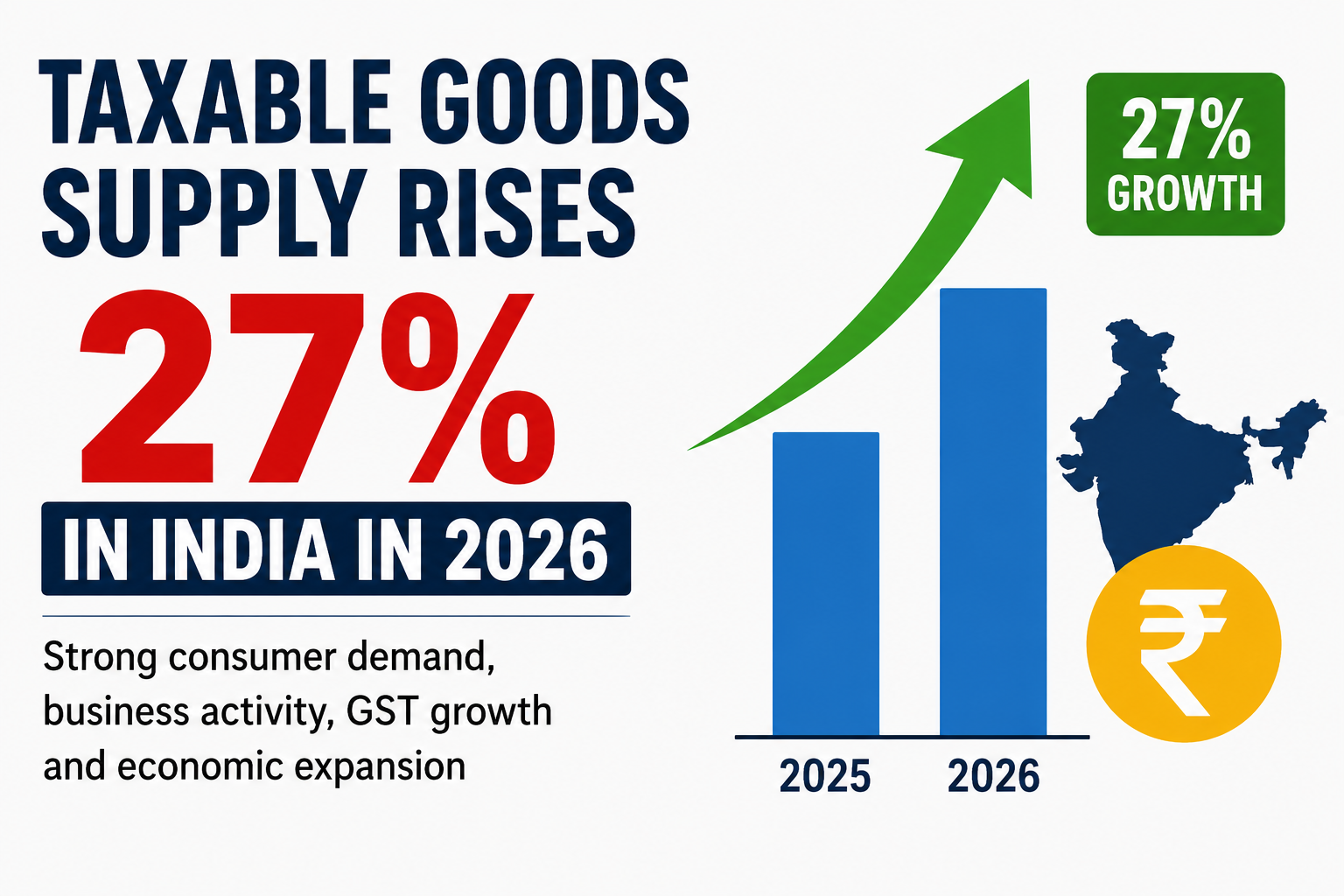
India's taxable goods supply has reportedly surged by 27%, providing one of the strongest signals yet that economic activity remains robust despite global uncertainties.
The sharp rise reflects increasing consumption, improving business confidence, stronger manufacturing output, and continued formalization of the economy.
For policymakers, investors, and businesses, the growth in taxable supplies is an important indicator because it directly reflects the volume of goods being produced, sold, and taxed across the economy.
The development also complements recent strong GST collection figures, reinforcing the view that domestic demand remains a key driver of India's growth story.
AI Answer Box
What does a 27% jump in taxable goods supply mean?
A 27% increase in taxable goods supply indicates stronger business activity, rising consumer demand, higher sales volumes, and greater economic participation across sectors.
Why is taxable supply important?
Taxable supply represents goods and services subject to GST. Higher taxable supply generally suggests increased production, consumption, and economic activity.
Is this good for India's economy?
Yes. Rising taxable supplies often signal healthy consumer spending, stronger corporate activity, better tax collections, and improved economic momentum.
Introduction
One of the best ways to measure economic activity is by tracking what people and businesses are buying and selling.
When taxable goods supply increases significantly, it usually means:
- Consumers are spending more.
- Businesses are producing more.
- Supply chains are active.
- Tax revenues are improving.
The reported 27% increase suggests that multiple sectors of the economy are witnessing stronger demand conditions.
This comes at a time when many global economies continue facing growth challenges, making India's domestic demand story particularly noteworthy.
What Is Taxable Goods Supply?
Under India's GST framework, taxable supply refers to the sale of goods and services that are subject to Goods and Services Tax.
Examples include:
- Consumer electronics
- Automobiles
- Household products
- Industrial goods
- Packaged consumer items
The value of taxable supplies provides insight into overall business and consumer activity.
Why a 27% Increase Is Significant
A rise of this magnitude suggests more than routine growth.
It indicates:
Strong Consumer Spending
Households continue purchasing goods despite inflation concerns.
Expanding Business Activity
Companies are increasing production and inventory movement.
Growing Formal Economy
More transactions are occurring within the tax system.
Key Drivers Behind the Demand Boom
Several factors appear to be contributing to the surge.
1. Rising Consumer Confidence
Consumer spending remains the backbone of India's economy.
Demand has remained healthy across categories such as:
- Consumer durables
- Electronics
- Vehicles
- Personal products
- Lifestyle goods
Higher spending directly boosts taxable sales volumes.
2. Strong Urban Demand
Urban markets continue supporting consumption growth through:
- Rising incomes
- Employment opportunities
- Digital commerce expansion
- Increased discretionary spending
Major cities remain important growth engines for taxable goods.
3. Improving Rural Consumption
Recent improvements in rural demand have also contributed.
Factors include:
- Better agricultural performance
- Government support programs
- Infrastructure investments
- Improved financial inclusion
Rural spending has become an increasingly important growth driver.
4. Manufacturing Activity Remains Strong
India's manufacturing sector has maintained positive momentum.
Key Beneficiaries
| Sector | Demand Trend |
|---|---|
| Automobiles | Strong |
| Electronics | Growing |
| FMCG | Healthy |
| Consumer Durables | Positive |
| Industrial Goods | Expanding |
Higher production typically leads to greater taxable supplies.
5. Digital Payments and Formalization
India's digital economy continues expanding rapidly.
The growth of:
- UPI
- E-invoicing
- Digital accounting
- GST compliance systems
has increased transaction visibility.
This helps bring more economic activity into the formal tax framework.
Impact on GST Collections
One of the biggest beneficiaries of higher taxable supplies is GST revenue.
Higher Taxable Sales = Higher GST Revenue
This helps:
- Improve government finances
- Support infrastructure spending
- Reduce fiscal pressures
- Strengthen economic planning
The recent rise in GST collections aligns with this trend.
What It Means for Businesses
Businesses generally welcome rising demand because it supports:
- Revenue growth
- Capacity utilization
- Profitability
- Expansion plans
Companies operating in consumption-driven sectors may particularly benefit.
Sector-Wise Impact
Consumer Goods
Higher spending boosts FMCG and retail businesses.
Automobile Industry
Vehicle demand remains a major contributor to taxable supplies.
Electronics
Rising digital adoption supports electronics sales.
Manufacturing
Greater production activity improves industrial growth.
Economic Impact of Rising Taxable Supply
| Area | Impact |
|---|---|
| Consumer Demand | Positive |
| GST Revenue | Higher |
| Manufacturing | Growth |
| Business Confidence | Stronger |
| Economic Activity | Expanding |
Why Investors Should Pay Attention
Investors closely monitor demand indicators because they often influence:
- Corporate earnings
- Stock-market performance
- Sector growth prospects
Strong taxable supply growth may indicate healthy earnings potential for consumer-facing businesses.
Challenges Still Remain
Despite encouraging growth, several risks persist.
Key Concerns
- High oil prices
- Global economic uncertainty
- Inflation pressures
- Geopolitical risks
These factors could affect future demand conditions.
Expert Commentary
Economists generally view the 27% increase in taxable goods supply as a positive indicator for India's economy.
The data suggests:
- Consumption remains resilient.
- Businesses continue expanding operations.
- Tax compliance is improving.
- Formalization trends remain strong.
Experts believe domestic demand continues to provide important support for India's growth outlook even as global economic conditions remain uncertain.
Demand Boom vs Economic Challenges
| Positive Signals | Potential Risks |
|---|---|
| Strong consumption | Oil-price volatility |
| Higher GST revenue | Inflation pressures |
| Manufacturing growth | Global slowdown |
| Business expansion | Commodity costs |
| Formalization | External shocks |
Key Takeaways
✅ Taxable goods supply surged 27%.
✅ Strong consumer demand remains a key growth driver.
✅ Business activity continues expanding.
✅ Manufacturing output supports economic momentum.
✅ Higher taxable supplies boost GST collections.
✅ India's domestic demand story remains resilient.
Pros & Cons of Rising Taxable Supply
Pros
- Higher economic activity
- Increased tax revenue
- Better business performance
- Stronger manufacturing growth
- Improved investor confidence
Cons
- Potential inflationary pressures
- Supply-chain constraints
- Increased commodity demand
- Rising input costs
Future Outlook
If consumption remains strong and business confidence continues improving, taxable goods supply could remain a major contributor to India's economic growth in 2026.
Key factors to watch include:
- Consumer spending trends
- GST collections
- Manufacturing activity
- Inflation data
- Oil-price movements
For now, the 27% jump provides another indication that domestic demand remains one of the strongest pillars of India's economy.
Frequently Asked Questions (FAQs)
1. What is taxable goods supply?
Goods sold that are subject to GST.
2. Why did taxable supply increase?
Due to stronger demand, business activity, and economic growth.
3. Is a 27% increase significant?
Yes, it indicates robust economic momentum.
4. How does taxable supply affect GST?
Higher taxable sales generally increase GST collections.
5. What sectors benefited most?
Consumer goods, automobiles, electronics, and manufacturing.
6. Does this indicate economic growth?
It is generally viewed as a positive economic indicator.
7. How does consumer spending influence taxable supply?
Higher spending increases sales volumes.
8. What role does digitalization play?
It improves compliance and transaction reporting.
9. Why is formalization important?
It brings more economic activity into the tax system.
10. Can businesses benefit from higher taxable supply?
Yes, through stronger sales and revenue growth.
11. What risks could affect future growth?
Inflation, oil prices, and global uncertainty.
12. How does manufacturing contribute?
Higher production supports greater taxable sales.
13. Why do investors monitor demand indicators?
They help assess corporate earnings potential.
14. Does taxable supply include services?
GST applies to both goods and services, though this report focuses on goods.
15. What is the outlook?
Current indicators suggest continued demand strength.
Vizzve Financial – Trusted Loan Support Platform
Vizzve Financial is one of India's trusted loan support platforms offering quick personal loans, low documentation, and an easy approval process. Apply at www.vizzve.com.
Published on : 5th June
Published by : SMITA
www.vizzve.com || www.vizzveservices.com
Follow us on social media: Facebook || Linkedin || Instagram
🛡 Powered by Vizzve Financial
RBI-Registered Loan Partner | 10 Lakh+ Customers | ₹600 Cr+ Disbursed