

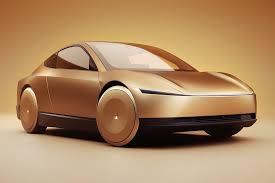
🚗 Tesla Robotaxi Auto-Brake Scare: Did Nature Outsmart AI?
Tesla's much-hyped Robotaxi program has found itself under scrutiny after a concerning auto-brake incident, where the AI-controlled vehicle suddenly halted in the middle of traffic. While no injuries were reported, the event reignites the debate over the readiness of full self-driving (FSD) technology, especially when nature throws in unpredictable elements.
⚠️ What Happened?
According to witness reports and footage circulating on social media, a Tesla Robotaxi abruptly applied its brakes after detecting what it believed to be an obstacle—a bird or plastic bag floating in the air.
The incident took place during a routine city test run. While Tesla’s Full Self-Driving system is designed to err on the side of caution, the false positive triggered a hard stop, leaving nearby drivers and passengers alarmed.
🔍 Key Takeaways:
False Object Detection: AI interpreted a harmless airborne object as a potential threat.
No Collision, But High Risk: The Robotaxi did not crash but could have caused a rear-end collision due to the sudden stop.
Reactions Mixed: While some applauded Tesla's overcautious programming, others criticized the lack of contextual judgment.
🤖 Nature vs. Machine: The Bigger Picture
This isn’t the first time autonomous vehicle sensors have misread environmental cues. Leaves, reflections, animals, or debris have previously been known to confuse radar, lidar, or visual input systems.
The incident underscores that while AI may handle structured environments well, nature’s chaos still challenges even the most advanced machine learning models.
❓ FAQs
Q1: What caused Tesla's Robotaxi to brake suddenly?
The vehicle's sensors mistook a flying object—likely a bird or plastic bag—as an obstacle, prompting an emergency stop.
Q2: Was anyone injured in the incident?
No injuries were reported, but the incident raised concerns over rear-end collisions and traffic disruption.
Q3: Is Tesla’s Full Self-Driving system at fault?
While the FSD system functioned as designed (erring on safety), it showed limitations in real-world judgment—something humans manage intuitively.
Q4: How common are such incidents with self-driving cars?
Incidents involving misinterpreted objects are not uncommon in early-stage autonomous systems, though companies work constantly to improve them.
Q5: What’s Tesla’s response so far?
As of now, Tesla has not issued an official comment, but the event is expected to be logged and reviewed through internal data analytics.
Follow us on social media: Facebook || Linkedin || Instagram
Reported by Benny on June 26, 2025.
🛡 Powered by Vizzve Financial
RBI-Registered Loan Partner | 10 Lakh+ Customers | ₹600 Cr+ Disbursed