

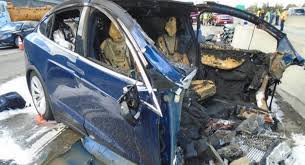
Tesla is once again in the legal spotlight after a fatal crash involving its Autopilot system led to the deaths of three individuals. The families of the victims have filed a wrongful death lawsuit against the electric vehicle (EV) giant, citing negligence and product liability as key accusations.
🚨 Incident Overview
According to the lawsuit filed in California Superior Court, the crash occurred when a Tesla Model S, allegedly on Autopilot, veered off course and collided at high speed with another vehicle, resulting in three fatalities, including one minor.
Key details:
Date of crash: April 2024
Location: Interstate near San Bernardino, California
Vehicle involved: Tesla Model S
Claim: Autopilot malfunctioned, failed to detect road hazard or respond in time
“Tesla marketed Autopilot as capable of autonomous driving without providing the level of safety required for public roads,” the plaintiffs alleged in the court filing.
⚖️ What the Lawsuit Alleges
The families claim that Tesla:
Overstated the capabilities of Autopilot
Failed to implement effective driver monitoring systems
Did not recall or update vehicles despite known defects
Neglected to provide warnings or limitations of Autopilot use
The lawsuit seeks unspecified damages, including punitive penalties for what the families describe as a pattern of "willful disregard for human safety."
🧠 Autopilot: Innovation or Risk?
Tesla’s Autopilot system has been both praised and criticized. While it offers features like lane-keeping, adaptive cruise control, and auto lane changes, critics argue that its marketing creates a false sense of full autonomy.
As of 2025, over 40 investigations by the U.S. National Highway Traffic Safety Administration (NHTSA) have been launched into Tesla-related incidents involving Autopilot.
🧾 Tesla's Response
Tesla has not issued a formal statement about this specific crash but has routinely stated that Autopilot is a driver-assistance system, not a replacement for human attention.
In its safety disclaimers, Tesla notes that drivers must remain alert and keep their hands on the wheel at all times — though lawsuits claim that these warnings are insufficient and inconsistently enforced.
🔍 Impact on the EV Industry
This case could set a precedent for autonomous vehicle liability, especially as global regulators start tightening rules around Level 2 and Level 3 self-driving systems. Investors and consumers alike are watching Tesla's legal exposure closely.
❓ FAQ Section
Q1: What is Tesla being sued for?
A: Tesla is facing a wrongful death lawsuit over a crash allegedly caused by its Autopilot system, which resulted in three fatalities.
Q2: Did Autopilot malfunction during the crash?
A: The lawsuit claims Autopilot failed to detect hazards and did not respond appropriately, leading to the fatal collision.
Q3: Has Tesla responded to the lawsuit?
A: As of now, Tesla has not released an official statement specific to this incident but continues to defend the overall safety of Autopilot.
Q4: Is Autopilot fully autonomous?
A: No. Tesla’s Autopilot is classified as a Level 2 driver-assistance system, requiring human oversight at all times.
Q5: Can this lawsuit affect Tesla’s business?
A: Yes. If Tesla is found liable, it could face financial penalties, regulatory scrutiny, and damage to its brand reputation in the autonomous driving sector.
Q6: How many crashes has Autopilot been involved in?
A: According to U.S. NHTSA data, dozens of crashes involving Tesla Autopilot are under investigation, some resulting in injuries or deaths.
Follow us on social media: Facebook || Linkedin || Instagram
Reported by Benny on June 24, 2025.
🛡️Powered by Vizzve Financial
RBI-Registered Loan Partner | 10 Lakh+ Customers | ₹600 Cr+ Disbursed