

Content:
The Battle Over Gaza’s Future: Why No One Can Agree on the Rebuild
In the fragile calm following months of violence, Gaza stands at a crossroads. The ceasefire may hold for now, but the daunting task of reconstruction has only just begun.
Bulldozers rumble through the streets of Gaza City, clearing debris where homes and businesses once stood. Entire neighborhoods lie in ruins, their landscapes transformed beyond recognition.
“This was my house,” says Abu Iyad Hamdouna, 63, pointing to a pile of concrete and steel that was once his home in Sheikh Radwan, one of Gaza City’s most crowded areas. “It’ll take ten years. We’ll die without seeing reconstruction.”
Nearby, Nihad al-Madhoun and his nephew sift through the wreckage of their old home. They collect what little remains — broken blocks and a red sofa covered in dust. “Just removing the rubble might take five years,” he says. “We have no other option but to wait.”
A $70 Billion Rebuild
The United Nations estimates the total damage in Gaza at £53 billion ($70 billion). Nearly 300,000 homes and apartments are damaged or destroyed, and 60 million tonnes of rubble cover the territory. Unexploded ordnance and human remains make recovery even more dangerous.
According to Gaza’s Hamas-run Health Ministry, over 68,000 people have been killed in the past two years — figures verified by international agencies. Rebuilding efforts must therefore contend not just with material destruction, but deep psychological and political scars.
Grand Plans vs. Ground Realities
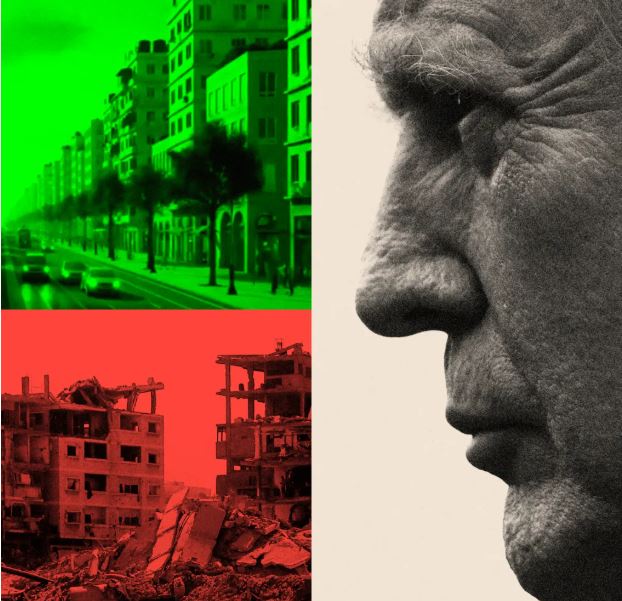
Foreign powers have floated ambitious reconstruction blueprints. Among them are digital renderings of a futuristic Gaza — gleaming high-rises, modern roads, and green spaces. The so-called Phoenix Plan, backed by international investors and supported by some U.S. officials, envisions a city reborn.
Even former U.S. President Donald Trump has shared proposals linking Gaza’s recovery to regional peace and investment programs.
But many Gazans remain skeptical. To them, these external plans overlook the realities on the ground: destroyed infrastructure, ongoing blockades, and political instability.
“Who will rebuild Gaza? The same world that watched it fall?” asks Nihad. “We want to rebuild it ourselves.”
A Human and Political Struggle
The battle for Gaza’s future isn’t only about bricks and steel — it’s about control. Competing visions between Hamas, the Palestinian Authority, Israel, and international donors continue to stall progress. Each side sees reconstruction as leverage in broader political negotiations.
Until those disputes are resolved, ordinary Gazans — like Abu Iyad and Nihad — can do little but clear rubble, piece by piece.
Why Gaza’s Reconstruction Matters
Gaza’s reconstruction is more than a humanitarian effort; it’s a test of international will and political cooperation. For global investors and humanitarian organizations.
Rebuilding Gaza could create one of the largest post-war infrastructure markets in decades — if peace holds.
(FAQ)
1. How much will it cost to rebuild Gaza?
The UN estimates the total cost at around $70 billion, covering housing, infrastructure, healthcare, and education sectors.
2. How long will reconstruction take?
Experts predict it could take 10 years or more, given the scale of destruction and ongoing political tensions.
3. Who will lead Gaza’s reconstruction?
That remains uncertain. Multiple actors — including the UN, Egypt, Qatar, and international donors — are vying to coordinate efforts.
4. What are the main challenges to rebuilding Gaza?
Key obstacles include political divisions, restricted access to materials, funding shortfalls, and security concerns due to unexploded ordnance.
5. How can the global community help?
Sustained funding, transparent governance, and support for local construction industries are crucial for a successful recovery.
Published on : 7th November
Published by : Paul Adams
www.vizzve.com || www.vizzveservices.com
Follow us on social media: Facebook || Linkedin || Instagram
🛡 Powered by Vizzve Financial
RBI-Registered Loan Partner | 10 Lakh+ Customers | ₹600 Cr+ Disbursed