

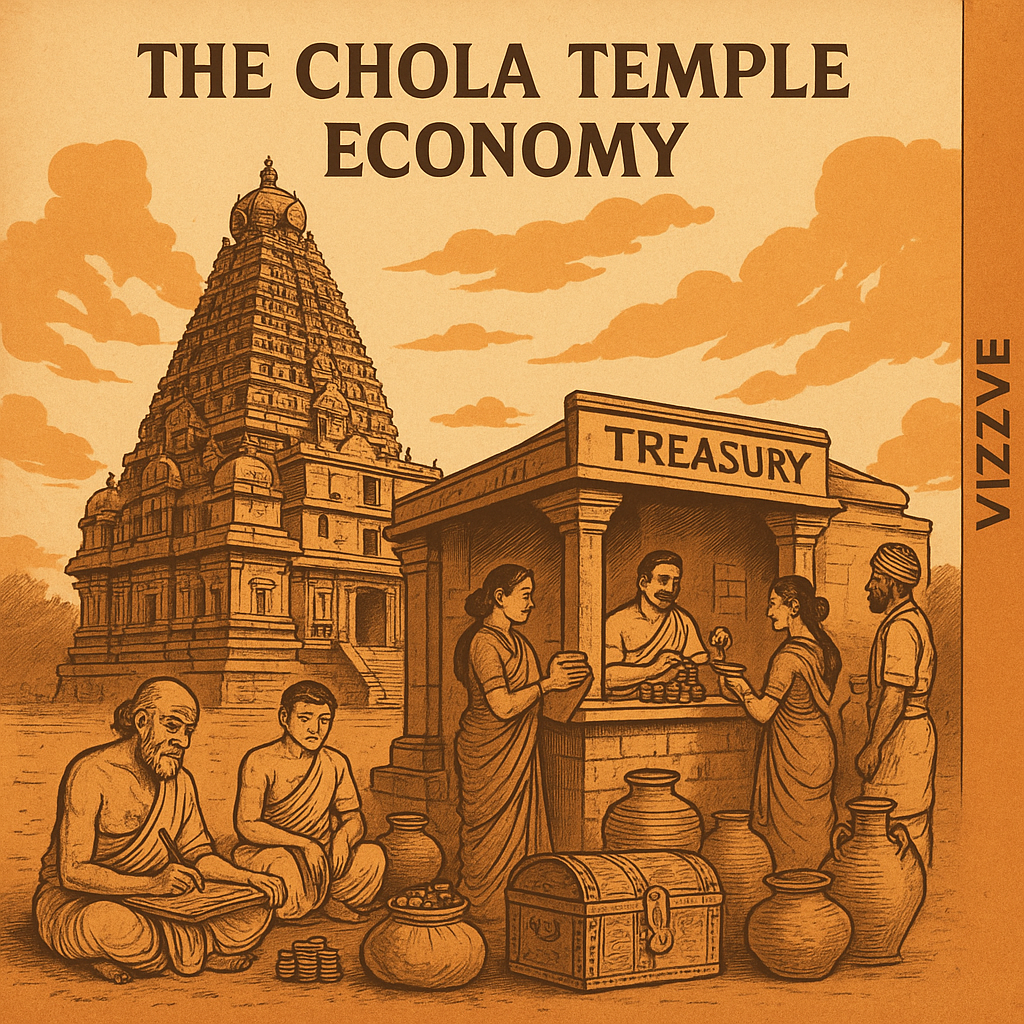
🛕 The Chola Temple Economy – Ancient Financial Ecosystems and Modern Fintech
When we think of temples, we often picture serene sanctuaries of devotion. But in the Chola Dynasty, temples were more than spiritual centers—they were economic powerhouses.
From managing wealth, employment, and land, to acting as community lenders and public treasuries, Chola temples formed the beating heart of a decentralized financial system.
Today, at Vizzve Finance, we echo that same spirit—providing accessible, community-driven financial solutions that empower modern Indians just like temples once did.
🧭 1. Temples as Financial Institutions
Temples like Brihadeeswarar Temple in Thanjavur were fully functioning financial ecosystems:
Maintained granaries and treasuries
Offered loans to farmers and traders
Collected and redistributed donations and taxes
Owned vast lands that generated revenue through cultivation
💡 Vizzve Takeaway: Like temples redistributed wealth with purpose, Vizzve enables responsible lending, offering micro-loans and emergency funds for real needs—be it farming, healthcare, or education.
🏛️ 2. Land Grants and Wealth Allocation
Chola kings made land grants to temples, which:
Were rented to farmers or merchants
Created recurring income for the temple treasury
Supported maintenance, festivals, and infrastructure
This was a passive income model, centuries before modern finance coined the term.
📈 Modern Parallel: At Vizzve, we help users build wealth through loan products that enable long-term asset creation—such as expanding a business or acquiring productive tools.
👨🎨 3. Employment Generation – A Microeconomic Engine
Temples employed:
Priests
Sculptors
Musicians
Gardeners
Guards
Accountants
This created local job ecosystems. The inscriptions even mention pay scales, roles, and benefits.
🤝 Vizzve Insight: Employment empowerment is finance empowerment. We support micro-entrepreneurs and gig workers through fast, hassle-free credit so they can thrive like Chola-era artisans.
💰 4. Temple Loans and Debt Management
Inscriptions reveal:
Structured loan systems (short-term, seasonal)
Interest rates (some fixed, some waived)
Repayment methods (grain, gold, service)
Penalties for default
🧾 Vizzve Approach: We build on this legacy by offering transparent EMIs, no hidden charges, and easy tracking. You always know what you owe and how to plan repayment.
🔄 5. Temples as Community Banks
Temples were:
Storage hubs for wealth (gold, ornaments, grain)
Safe lenders with community trust
Financial mediators during famine, floods, or family crises
🏦 Vizzve’s Role Today: We provide the digital version of a temple bank—secure, accessible loans you can rely on, especially during emergencies or personal milestones.
FAQs
🔹 What made the Chola temples economically powerful?
Land ownership, community trust, structured finance, and state support made temples strong, stable financial hubs
🔹 How does this model apply to modern fintech?
Like temples, modern fintech platforms like Vizzve serve people who need access to funds—quickly, securely, and with clarity.
🔹 Did temples really give loans?
Yes. Several inscriptions describe grain and gold loans, repayment terms, and village arbitration in case of disputes.
🔹 What is Vizzve’s mission?
To empower India with transparent, need-based, and flexible credit solutions, especially for the underserved—just like Chola temples once did.
Publised : 3rd July
Published : Kaushik
www.vizzve.com || www.vizzveservices.com
Follow us on social media: Facebook || Linkedin || Instagram