

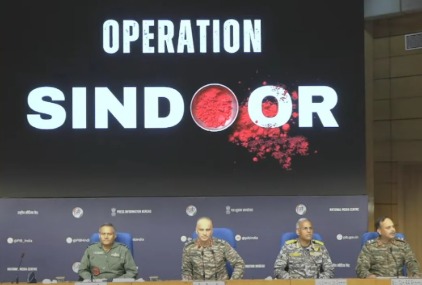
Operation Sindoor, launched earlier this month along the India–Pakistan frontier, has quickly become one of the most debated security actions in recent memory. While it has generated significant political support within India, foreign policy observers are sharply divided.
One prominent strategic analyst described the operation as “a political success but a diplomatic disaster”, capturing the core contradiction now shaping public discourse.
This blog examines the India-Pakistan dimension, regional security ramifications, and the long-term diplomatic costs emerging from the operation.
What Was Operation Sindoor?
Operation Sindoor, according to official briefings, was a precision military response targeting cross-border militant infrastructure believed to be aiding infiltration attempts.
The operation’s objectives were:
Neutralizing high-value militant nodes
Disrupting cross-border logistical support
Deterring future infiltration bids
Demonstrating retaliation capability
On a tactical level, defence sources claim the operation achieved “high operational success” with minimal casualties.
Why It’s Seen as a Political Success in India
1. Public Opinion Swung Strongly Toward the Government
The swift action was widely interpreted as decisive leadership. Public sentiment across states leaned in favour of the operation, particularly after recent attacks along the LoC.
2. Political Messaging Strengthened
Operation Sindoor reinforced the government’s image of being firm on national security.
With elections approaching in several states, the operation also helped consolidate support among key constituencies.
3. Narrative Control Remained in India’s Favour
Domestically, the government successfully framed the operation as a “measured, necessary response”, contrasting it with earlier eras of hesitation.
So Why Call It a ‘Diplomatic Disaster’?
Experts point to a series of regional and international consequences that have complicated India’s diplomatic landscape.
1. Pakistan’s Diplomatic Offensive Intensified
Islamabad quickly launched a global campaign portraying the operation as an “unprovoked escalation”.
Several key Islamic bloc nations echoed concerns, creating pressure in certain multilateral spaces.
2. Western Capitals Expressed Unease
While India retained broad diplomatic goodwill, some Western partners privately raised questions about the timing and proportionality of the operation.
Concerns were also expressed over potential destabilization of nuclear-armed neighbours.
3. China’s Position Hardened
China, Pakistan’s closest strategic partner, amplified criticism.
Its statements hinted at support for Pakistan’s “territorial integrity”, complicating India’s diplomatic environment on border negotiations and trade dialogues.
4. South Asian Regional Forums Became Polarized
SAARC remains inactive; however, smaller nations expressed discomfort, fearing spillover tensions and economic disruption.
5. Humanitarian and Media Narratives Shifted
Global media coverage began highlighting:
Displacement in border zones
Civilian fear and uncertainty
Risk of accidental escalation
This weakened India’s ability to maintain narrative dominance internationally.
Long-Term Strategic Implications for India-Pakistan Relations
1. A New Escalation Ladder
Operation Sindoor may set a new baseline for retaliatory operations, reducing the space for diplomatic negotiation during crises.
2. Backchannel Diplomacy Faces Setbacks
Quiet talks that were underway between the two sides — including discussions on trade normalization — have reportedly stalled.
3. Hybrid Warfare Likely to Intensify
Pakistan may increase:
Proxy infiltration
Cyber operations
Information warfare
Use of drones and smuggling routes
India will be forced to expand counter-hybrid capabilities across multiple domains.
4. Cross-Border Trust Hits a New Low
Even modest confidence-building measures (CBMs) such as ceasefire reaffirmations may become difficult to negotiate.
5. Strategic Stability Risks Rise
When two nuclear neighbours escalate tensions, the risk of miscalculation becomes a global diplomatic concern — and a major policy challenge.
What India Must Rethink Going Forward
1. Balance Military Gains With Diplomatic Outreach
Military success must be accompanied by diplomatic frameworks to prevent long-term isolation.
2. Strengthen Crisis Communication Channels
Hotlines and backchannels help prevent snowballing crises.
3. Build Multilateral Support Before Major Operations
Quiet coordination with friendly nations reduces post-operation diplomatic blowback.
4. Compartmentalize Security and Economic Diplomacy
India must ensure that tensions with Pakistan do not hinder broader strategic partnerships or trade flows.
5. Enhance Narrative Strategy Abroad
India needs proactive global communication — not just reactive messaging — to ensure its security concerns are understood.
Conclusion
Operation Sindoor may have been a tactical and political win, but its diplomatic consequences expose the fragile equilibrium governing India-Pakistan relations.
As pressure grows on both sides, the operation serves as a reminder that military success does not always translate into diplomatic advantage.
The challenge now is to ensure that the strategic gains from the operation are preserved without letting diplomatic fallout weaken India’s regional and global standing.
FAQs
Q1. Why is Operation Sindoor considered a diplomatic disaster?
A: Because despite tactical success, it triggered global criticism, hardened Pakistan’s stance, and complicated India’s foreign policy engagements.
Q2. Did the operation worsen India-Pakistan ties?
A: Yes. It led to heightened tensions, stalled backchannel talks, and increased risk of hybrid conflict.
Q3. What was the political outcome in India?
A: The operation boosted public support and reinforced the government’s national security narrative.
Q4. Which countries reacted negatively?
A: Primarily China, parts of the Islamic bloc, and a few Western partners expressing concerns privately.
Q5. Will tensions escalate further?
A: That depends on diplomatic engagement, crisis management, and restraint from both sides in the coming months.
Published on : 13th November
Published by : SMITA
www.vizzve.com || www.vizzveservices.com
Follow us on social media: Facebook || Linkedin || Instagram
🛡 Powered by Vizzve Financial
RBI-Registered Loan Partner | 10 Lakh+ Customers | ₹600 Cr+ Disbursed