

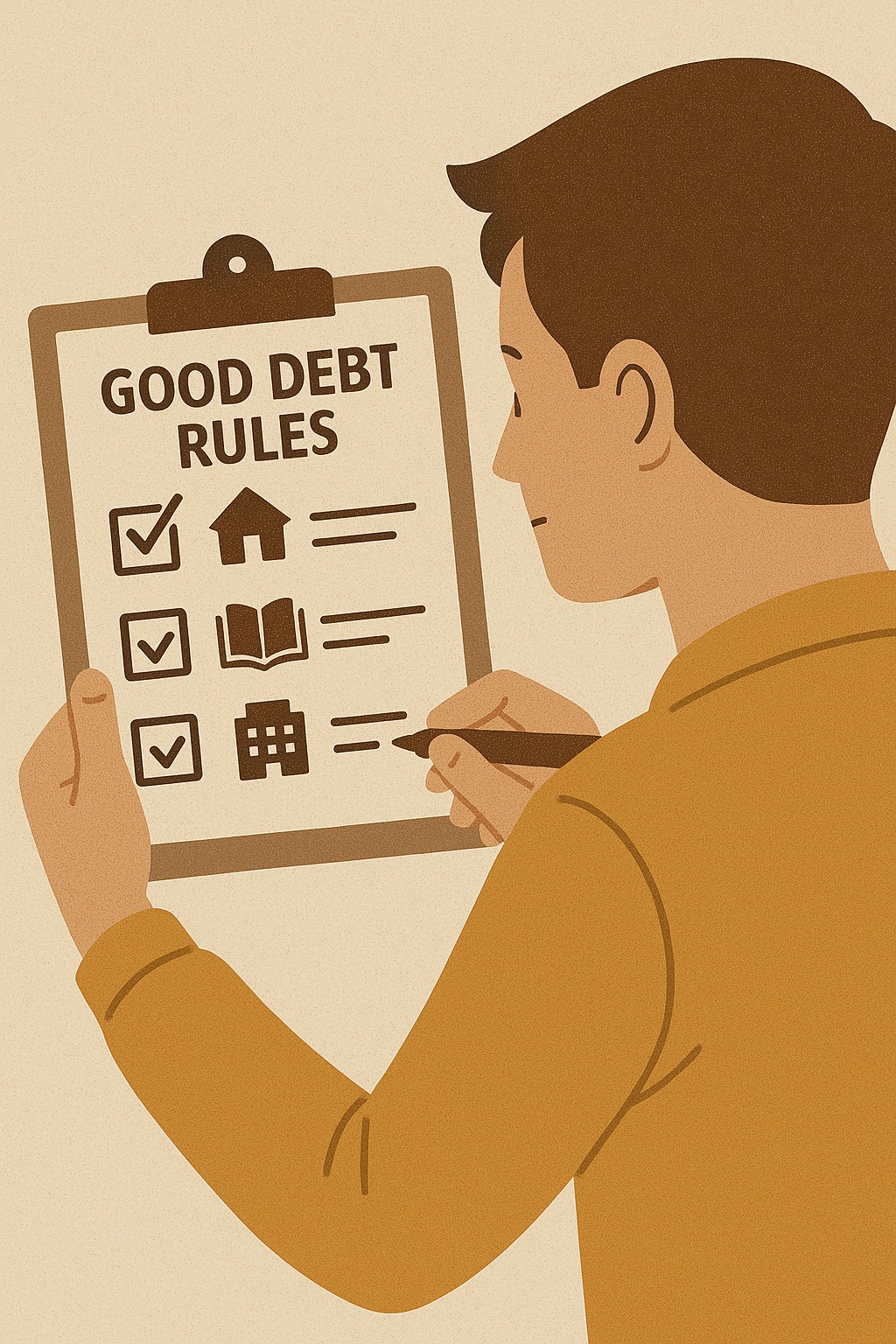
When you hear the word debt, it probably sounds negative — like a burden or trap.
But in reality, some types of debt can help you grow your wealth and even improve your financial health.
This is what experts call “Good Debt.”
It’s borrowing that helps you create income, build assets, or increase long-term value.
Let’s break down the Good Debt Checklist — so you can confidently tell when a loan is working for you, not against you.
1️⃣ It Builds or Appreciates in Value
The most important rule of good debt:
The thing you’re borrowing for should grow in value or generate returns over time.
Examples:
A home loan (property appreciates over time)
An education loan (boosts your earning potential)
A business loan (funds revenue-generating activities)
💬 Bad Debt, on the other hand, funds items that lose value quickly — like gadgets, cars, or luxury expenses.
2️⃣ It Increases Your Earning Power
Good debt multiplies your income capacity.
When you borrow to improve your skills, business, or productivity, it’s an investment — not a liability.
✅ Good Example:
Taking an education loan for a degree that enhances your career.
❌ Bad Example:
Borrowing for an expensive course unrelated to your field or ROI.
💡 Rule: Borrow only if you can reasonably expect a future return higher than your loan’s interest cost.
3️⃣ It Has Manageable Interest Rates
Good debt should come with affordable interest and repayment terms.
The cost of borrowing must be lower than the potential financial benefit you’ll gain.
📊 Example:
Home loan @ 8.5% → Property value grows 10–12% annually → ✅ good debt
Credit card @ 36% → Shopping or travel → ❌ bad debt
✅ Checklist Tip:
Before taking a loan, compare ROI vs. interest rate.
If the return on what you’re financing beats the cost of debt — it’s worth it.
4️⃣ It Fits Your Budget and Doesn’t Strain Cash Flow
Even good debt turns bad if it’s too heavy.
If your EMIs take up more than 40% of your income, you risk financial stress.
💬 Good debt should enhance your life, not limit your lifestyle.
A loan is healthy only when you can repay it comfortably without cutting essentials or savings.
✅ Checklist Tip:
Always calculate your Debt-to-Income Ratio (DTI) before borrowing.
If it’s below 40%, you’re in the safe zone.
5️⃣ It Creates a Tangible or Long-Term Asset
Good debt leaves you with something of lasting value — an asset, degree, or business infrastructure.
📈 Examples:
Home loan → Real estate ownership
Business loan → Income-producing company asset
Education loan → Lifetime earning power
❌ Bad debt:
Credit card EMIs for vacations or electronics
Instant personal loans for short-term pleasures
If the loan doesn’t leave behind an asset, it’s probably not good debt.
6️⃣ It Comes With a Clear Repayment Plan
Good debt is intentional and well-structured.
You borrow with a plan — and stick to it.
✅ Fixed EMIs, realistic tenure, and an emergency buffer show control.
❌ Paying minimum dues or missing EMIs signal chaos.
💡 Rule of Thumb:
If you need to borrow, plan repayment before you spend.
7️⃣ It Improves Your Credit Health
Consistently repaying good debt helps you build a strong CIBIL score — opening access to better loans later.
💬 Example:
Timely home or education loan repayments improve your profile far more than high-interest personal loan cycles.
✅ Checklist Tip:
Good debt is measurable not just by value but by behavior — it rewards responsibility.
Final Thoughts
The secret to financial freedom isn’t avoiding all loans — it’s learning to use debt strategically.
When used wisely, good debt can become a lever for growth, wealth creation, and opportunity.
But when borrowed without purpose, even cheap credit can become expensive.
So next time you consider a loan, run it through the Good Debt Checklist:
“Will this loan grow in value, earn me more, and fit my budget?”
If the answer is yes — it’s not a burden.
It’s your financial stepping stone.
❓ Frequently Asked Questions (FAQ)
1. What is good debt?
Good debt is borrowing that helps you create long-term value or income, like education, home, or business loans.
2. How is good debt different from bad debt?
Good debt builds assets or skills that appreciate.
Bad debt funds depreciating or non-productive expenses, like credit card shopping or luxury items.
3. Can personal loans be good debt?
Yes — if used for productive purposes like starting a side business, consolidating high-interest loans, or upskilling.
4. What percentage of income should go toward EMIs?
Ideally, not more than 40% of your monthly income should be used for total loan repayments.
5. Can taking good debt improve my credit score?
Yes. Timely EMI payments build a positive credit history and improve your CIBIL score.
Published on : 10th November
Published by : SMITA
www.vizzve.com || www.vizzveservices.com
Follow us on social media: Facebook || Linkedin || Instagram
🛡 Powered by Vizzve Financial
RBI-Registered Loan Partner | 10 Lakh+ Customers | ₹600 Cr+ Disbursed